As a behavioral science journalist, I’ve spent my career inside laboratories and corporate boardrooms, trying to understand why we do what we do. But it wasn’t until I stood in a dusty plaza in Kufa, Iraq, watching an Army Major outsmart a mob without firing a single shot, that I truly grasped the terrifying and beautiful power of human habits. The Major had analyzed videotapes of riots and noticed a pattern: violence was always preceded by a crowd growing in size, followed by the arrival of food vendors. When he convinced the local mayor to ban kebab sellers from the plazas, the “habit” of rioting was broken. People got hungry, the vendors weren’t there, and the crowd simply drifted away.
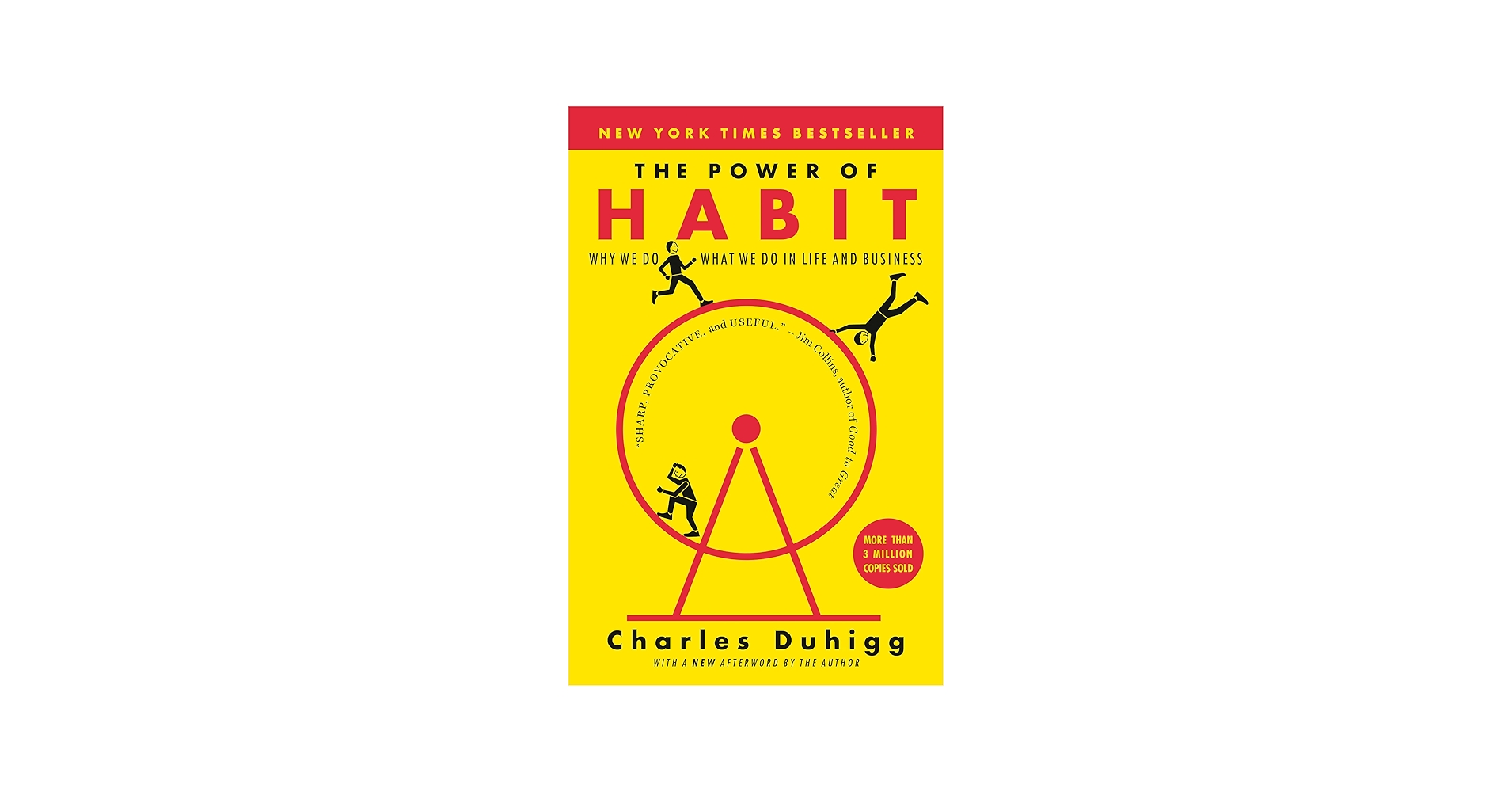
This is the central thesis of Charles Duhigg’s The Power of Habit: our lives are not a series of well-considered choices, but a mass of “chunked” behaviors stored in the ancient structures of our brains. By the time I finished this investigative journey, I realized that understanding the Basal Ganglia isn’t just an academic exercise—it is the prerequisite for personal and professional agency.
——————————————————————————–
1. THE SNAPSHOT
Book Rating: ★★★★☆ (4.8 / 5)
The One-Sentence Verdict: “Once I understood the Cue–Routine–Reward loop, I realized habits are a craftable system, not a fixed destiny.”
Best For:
- Productivity Enthusiasts seeking systemic efficiency.
- Procrastinators looking to redesign their internal triggers.
- Leaders aiming to transform organizational culture.
- Anyone feeling trapped by repetitive behaviors.
Difficulty: Easy / Compelling (Investigative storytelling at its finest).
——————————————————————————–
2. INTRODUCTION: The Basal Ganglia and the Energy-Saving Brain
To understand how a woman like Lisa Allen went from a $10,000-in-debt smoker to a lean marathon runner, we have to look at the center of the skull. Lisa’s transformation began in Cairo, amid the “smell of burning plastic” as she mistakenly tried to light a pen instead of a Marlboro. That moment of desperation triggered a shift in her Basal Ganglia, the golf ball-sized lump of tissue that serves as the brain’s “storage center” for automaticity.
Evolution has designed our brains to be energy-saving machines. In the 1990s, researchers at MIT conducted a pivotal experiment with rats in a T-shaped maze. Initially, when a rat was placed behind a partition and heard a loud “click,” its brain activity was through the roof. It was processing everything: the scent of the walls, the click, the path. However, as the rat repeated the maze hundreds of times, a shift occurred. The rat stopped sniffing and scratching; it zipped straight to the chocolate.
Unexpectedly, the rat’s brain activity decreased during the routine. The brain was Chunking the behavior—converting a sequence of actions into an automatic routine. The Basal Ganglia took over, allowing the rest of the brain to go into a near-dormant state. This effort-saving instinct is a survival advantage that allows us to focus on complex problem-solving, but it is also a modern liability. Because the brain cannot distinguish between a “good” habit and a “bad” one, it encodes them with equal permanence.
The Journalist’s Take The efficiency of the Basal Ganglia is a double-edged sword for the modern professional. In an era of hyper-palatable digital distractions and high-stress environments, our brain’s drive to “power down” means we often default to the path of least resistance. This neurological “autopilot” is why we find ourselves scrolling through social media or reaching for sugar without a conscious decision. The competitive advantage no longer belongs to those who work the hardest, but to those who can audit their own Basal Ganglia. By understanding that 40% of our daily actions are habits, we can stop treating behavioral failures as moral lapses and start treating them as neurological design flaws. The goal of the high-performer is to consciously “script” the routines that the brain will inevitably automate, ensuring that our “energy-saving mode” serves our long-term objectives rather than our immediate impulses.
Read also: A Structural Analysis of Probabilistic Systems
——————————————————————————–
3. THE HABIT LOOP: Deconstructing the Three-Step Framework
If you want to change your life, you must view your behavior as an operating system governed by a three-step loop.
The Cue (The Trigger)
The cue is the signal that tells your brain to go into automatic mode. Investigative research shows cues fall into five categories:
- Location: Walking into the kitchen.
- Time: The 3:00 PM energy slump.
- Emotional State: Feeling bored or anxious.
- Other People: The friend who always orders appetizers.
- Immediately Preceding Action: Checking your phone after an email “ding.”
The Routine (The Behavior)
This is the physical, mental, or emotional action. It is the part of the loop we usually try to “willpower” away, often unsuccessfully.
The Reward (The Payoff)
The reward is why the brain remembers the loop. It provides the Dopamine spike that tells the brain, “This is worth repeating.”
The Secret Ingredient: Craving
Duhigg introduces us to the laboratory of Wolfram Schultz, a professor at the University of Cambridge who speaks with a “Terminator-like” German accent. Schultz studied Julio, a macaque monkey who received blackberry juice for touching a lever when shapes appeared on a screen. Initially, Julio’s brain spiked when he received the juice. But as the habit solidified, his brain began to spike the moment the cue appeared.
He had developed a Craving. When the juice was delayed, Julio became angry; his brain was already experiencing the reward before it arrived. This is exactly how Claude Hopkins sold Pepsodent. He didn’t sell “beautiful teeth”; he sold the Craving for the “cool, tingling sensation” created by citric acid and mint oil. People began to equate that tingle with cleanliness. If the tingle wasn’t there, they felt their mouths weren’t clean.
The Journalist’s Take The discovery of the “craving” neurological spike is the “smoking gun” of behavioral science. It explains why simply knowing a habit is bad isn’t enough to stop it. For the professional, this means that every successful product or personal system must manufacture a “neurological payoff.” If you are building a new fitness routine, the “endorphin rush” or the “satisfaction of a checked box” must be anticipated the moment you see your running shoes. Companies like P&G learned this the hard way with Febreze. Initially, it failed because they marketed it as an odor eliminator—providing a “reward” for a “cue” (bad smells) that most people had become desensitized to. It only became a billion-dollar success when they marketed it as a “mini-celebration” at the end of a cleaning routine. They didn’t sell scentlessness; they sold the Craving for a “clean” smell as the final touch.
Read also: The Timeless Blueprint for Character and Leadership
——————————————————————————–
4. THE GOLDEN RULE OF HABIT CHANGE: The Replacement Strategy
In my own life, I struggled with a mid-afternoon habit of buying a chocolate chip cookie. I thought I lacked discipline. Using Duhigg’s “Golden Rule,” I realized I wasn’t craving sugar; I was craving a “distraction” and “social interaction.”
The Golden Rule states: You cannot extinguish a bad habit; you can only replace it. To change a habit, you must keep the same Cue and same Reward, but insert a new Routine.
Awareness Training
This is the process of “fiddling with the gears.” Take Mandy, a graduate student who bit her nails until they bled. She identified her cue: a physical tension in her fingers. Her reward was physical stimulation. Her therapist didn’t tell her to stop; he gave her a new routine. Whenever she felt that tension, she had to rub her arm or put her hands in her pockets. By keeping the cue (tension) and reward (stimulation) the same, but substituting the routine, the habit was rewired.
The AA Method
Alcoholics Anonymous is a giant machine for the Golden Rule. It forces participants to identify their cues (stress, loneliness) and rewards (relief, companionship) and provides a new routine—meetings and talking with a sponsor—that delivers that same relief without the bottle.
The Journalist’s Take The “Cold Turkey” method is a neurological myth. When we attempt to suppress a habit without replacing the routine, the Basal Ganglia continues to fire the cue-reward signal, creating an agonizing vacuum of Craving. This is why most New Year’s resolutions fail by February. From an analytical perspective, habit change is an engineering project, not a character test. We must become “behavioral architects” who map out the existing infrastructure of our lives. If you want to stop checking your phone during deep work, you must identify the reward you seek—likely a “hit” of distraction or novelty—and provide a non-digital substitute that satisfies that same urge. The Golden Rule works because it respects the brain’s existing pathways while redirecting the flow of behavior. Transformation occurs not through the destruction of old loops, but through the strategic “hijacking” of their rewards.
Read also: A Probabilistic Analysis of Success
——————————————————————————–
5. KEYSTONE HABITS: Small Wins and the Alcoa Transformation
Not all habits are equal. Keystone Habits are small changes that start a chain reaction, creating “small wins” that build a sense of “anything is possible.”
The most striking case study is Paul O’Neill at Alcoa. When O’Neill became CEO of the struggling aluminum giant, he didn’t focus on profits. He focused on worker safety. He mandated that every injury be reported and a solution proposed within 24 hours. To meet this deadline, floor workers had to communicate with managers, who had to communicate with VPs. This requirement forced a new, streamlined communication architecture across the entire company. As safety improved, efficiency and profits followed. By focusing on one keystone habit, O’Neill revolutionized the entire organizational culture.
The Journalist’s Take The Alcoa transformation proves that systemic change is often non-linear. In our professional lives, we often try to fix everything at once, leading to cognitive overwhelm. The “investigative” approach to productivity is to find the single lever that moves the entire machine. For many, exercise is a keystone habit because it naturally leads to better eating, increased focus, and improved sleep. It strengthens the Neuroplasticity of the brain, making other changes feel more attainable. Identifying your personal or organizational keystone habit requires looking for “ripple effects.” Does a specific routine (like a morning “huddle” or a daily planning session) make every other task easier to manage? If so, that is your keystone. Protecting that habit becomes the highest priority because its value is not just in the action itself, but in the “small wins” it generates, which fundamentally shift your identity and belief in what can be achieved.
Read also: Why You Don’t Need a $100,000 Degree to Understand Business
——————————————————————————–
6. WILLPOWER IS A MUSCLE: The Science of Self-Discipline
One of the most profound neurological insights is that willpower isn’t a skill—it’s a fatigable muscle. In research settings, subjects who used their willpower to resist a plate of cookies performed significantly worse on subsequent puzzles. Their “willpower muscle” had tired out.
However, willpower can be strengthened through “pre-programming” for Inflection Points—those moments of high stress when a habit is likely to fail.
The Starbucks “Latte Method”
Starbucks trains employees to handle screaming customers by deciding on their response before the stress occurs. They use the “LATTE” method:
- Listen to the customer.
- Acknowledge their complaint.
- Take action by solving the problem.
- Thank them.
- Explain why the problem occurred.
By deciding on the routine before the cue (the stress) happens, they turn willpower into an automatic habit.
The Journalist’s Take Decision fatigue is the silent killer of professional performance. Every time we “decide” to be disciplined, we deplete a finite resource. The strategic goal is to automate as many “willpower” moments as possible. The Starbucks “LATTE” method is essentially a “mental drill” that prepares the Basal Ganglia for high-pressure Inflection Points. By visualizing our most common triggers—the 4 PM energy crash, the difficult client call, the urge to procrastinate—and writing out a “pre-planned routine,” we bypass the need for raw willpower. We move from “trying to be better” to “executing a script.” This is how elite performers maintain consistency; they don’t have more willpower than you, they just have better-automated responses to the moments where willpower is most likely to fail. Strengthening the willpower muscle in one area, like a consistent morning workout, has a “spillover” effect that enhances self-regulation across all areas of life.
Read also: The Step-by-Step Guide to Discovering Your Purpose
——————————————————————————–
7. CRITICAL ANALYSIS: Duhigg vs. James Clear
The two titans of habit literature are Charles Duhigg and James Clear (Atomic Habits). While they are often grouped together, they serve different strategic purposes.
| Perspective | Charles Duhigg (The Power of Habit) | James Clear (Atomic Habits) |
| Primary Focus | Investigative Neuroscience & Organizational Habits. | Implementation & Practical Systems. |
| Approach | Explains the “Why” through deep-dive case studies (Alcoa, Target, AA). | Explains the “How” through environmental design and “1% improvements.” |
| Tone | Story-driven, analytical, journalistic. | Practical, actionable, workbook-style. |
| Best For | Understanding the neurological mechanics of behavior. | Building a step-by-step daily system for change. |
The Journalist’s Take Understanding Duhigg’s neuroscience is the prerequisite for implementing Clear’s systems. You can try to “stack” habits or “design your environment,” but if you don’t understand the underlying Craving driving your current loop, you are merely painting over rusted gears. Duhigg gives you the blueprint of the house; Clear gives you the hammer and nails. For a professional audience, Duhigg’s work is essential because it addresses the complexity of organizational and social habits—areas where environmental design alone often fails.
——————————————————————————–
8. PROS AND CONS: An Investigative Journalist’s Review
Pros:
- Engaging Storytelling: Duhigg is a master of the narrative arc. Whether it’s the major in Baghdad using habit modification to stop riots or the tragic history of Eugene Pauly, the stories are unputdownable.
- Neuroscience Accessibility: He makes complex concepts like the Basal Ganglia and Neuroplasticity feel intuitive.
- Scope: The book moves seamlessly from individual lives to multi-billion dollar corporations and social movements.
Cons:
- Heavier on Theory: This is not a “30-day workbook.” It requires the reader to do the analytical work of application.
- Academic Density: The third part, dealing with the habits of societies and the neurology of free will, can feel academic for those seeking quick “hacks.”
Read also: The Strategic Power of Thinking in Decades
——————————————————————————–
9. CONCLUSION: The Realization That Habits Are Not Destiny
The most haunting and hopeful story in this investigative journey is that of Eugene Pauly (E.P.). After viral encephalitis destroyed his Medial Temporal Lobe—the area responsible for memory—Eugene couldn’t remember his own age or his grandchildren. He couldn’t draw a map of his house.
Yet, Eugene “sweated a yellow halo of perspiration” onto his sheets and emerged with his habits intact. He could still find the bathroom. He could still cook bacon and eggs. Eugene proved that habits are lodged in the brain even when memory and reason are gone. They are that fundamental.
But unlike Eugene, we have our memory and our reason. We can observe our own loops. Understanding the “Habit Loop” is the ultimate tool for personal agency. It allows us to step outside the “automatic mode” and begin to rebuild our patterns. I didn’t change my mid-afternoon cookie habit because I became “better”; I changed because I learned to see the invisible structure of my life.
My final call to action to you is this: Identify one Cue and one Reward in your life today. Don’t worry about the routine yet. Just observe. Once you see the “click” and the “payoff,” the routine becomes yours to design.