1. THE SNAPSHOT (Strategic Overview)
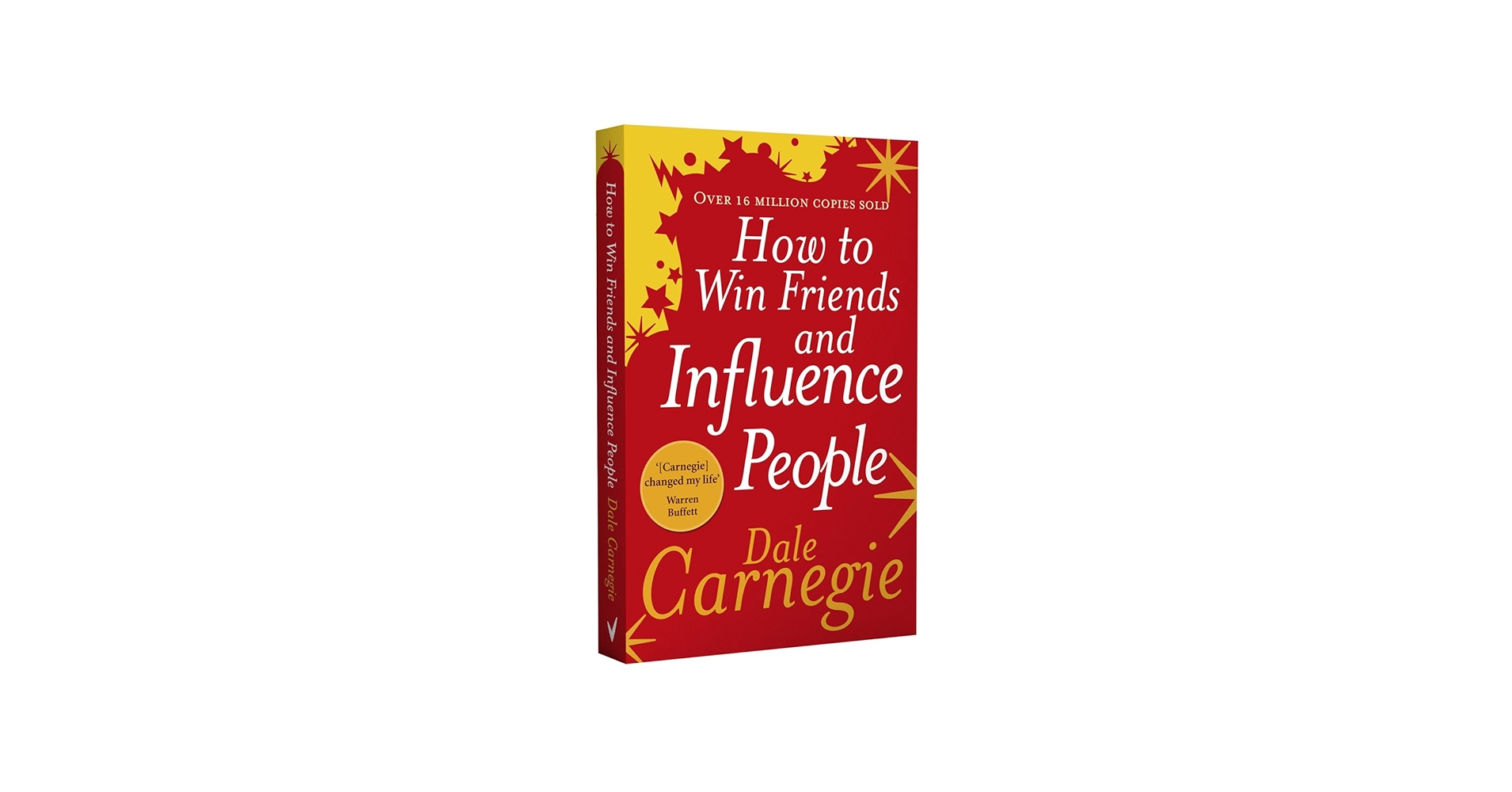
In my years as a persuasion specialist, I’ve seen brilliant technicians—engineers, coders, and architects—hit a glass ceiling not because of their lack of talent, but because they lacked the “human engineering” required to move a room. Success is rarely a solo venture; it is a collaborative performance. Dale Carnegie’s masterpiece remains the gold standard because it provides the script for that performance, shifting the focus from technical IQ to the high-stakes world of emotional intelligence. I once lost a major contract early in my career because I walked in to “prove” my superiority rather than to understand the client’s needs. Carnegie taught me that the most direct route to your own goals is through the genuine fulfillment of others’ desires.
- Star Rating: 5 / 5
- One-Sentence Verdict: A legendary guide to human relationships that proves success is driven by the ability to inspire, influence, and genuinely care about people.
- Best For: Introverts, Managers, Salespeople, Creators, and anyone navigating human systems.
- Complexity: Very Easy (driven by narrative and real-world application).
- Purchase Link: 🛒 Buy on Amazon
This work carries a historical weight that few business books can claim, having survived nearly a century of cultural shifts to remain the definitive manual for professional and personal harmony.
Read also: Strategic Logic in Uncertain Systems
2. THE HOOK: A Legacy Built on Human Nature
Originally published in 1937 against the backdrop of the Great Depression, the book’s 30-million-copy success is a testament to the unchanging nature of the human ego. Carnegie understood that while our tools evolve, the human heart remains static in its hunger for recognition.
The foundation of his work is built on data from the Carnegie Institute of Technology, which revealed a startling 15%/85% rule: Even in technical fields like engineering, only 15% of financial success is attributed to technical knowledge. The remaining 85% is driven by “human engineering”—the personality and the ability to lead people. Most importantly, the source emphasizes that the highest-paid personnel are those who possess technical skill plus the ability to express ideas and arouse enthusiasm in others.
The core realization of this book is that you cannot force action; you must arouse a genuine want in others. Influence is not about coercion; it is about alignment. To master this, we must first learn the “safety valves” that prevent social friction.
3. PART 1: THE FOUNDATIONS OF HUMAN HANDLING
These three principles are the safety valves of professional life. They prevent the “bee-sting” of resentment that can poison a workplace culture for decades.
3.1 Don’t Criticize, Condemn, or Complain
Carnegie analyzes “Two-Gun” Crowley and Al Capone to prove that people rarely blame themselves. Even Capone, the most sinister gang leader in history, viewed himself as an “unappreciated public benefactor” providing the people with lighter pleasures. Criticism is a “homing pigeon”—it always returns to the sender. When we wound a person’s pride, they instinctively justify themselves and harbor a resentment that endures until death.
3.2 Give Honest and Sincere Appreciation
The “craving to be appreciated” is an imperious human hunger. Carnegie distinguishes between “cheap flattery,” which comes from the teeth out and is selfish, and “genuine appreciation,” which comes from the heart out. We nourish the bodies of our employees and families with food, yet we often let them go years without nourishing their self-esteem with a single kind word.
3.3 Arouse in the Other Person an Eager Want
Using his famous “fishing metaphor,” Carnegie notes that while he loves “strawberries and cream,” fish prefer worms. Therefore, when he goes fishing, he baits the hook to suit the fish. To influence others, you must talk about what they want and show them how to get it. Influence, in its purest form, is a service to the other person’s desires.
By mastering these defensive techniques, we clear the field of resentment and set the stage for a much more potent social superpower: the art of being genuinely liked.
Read also: The Neuroscience Behind How I Rewired My Habits
4. PART 2: THE ART OF INSTANT LIKABILITY
Liking is a massive competitive advantage. Rapport is triggered by biological and psychological cues that signal you are a “friend” rather than a “foe.”
4.1 Become Genuinely Interested in Other People
Like “Tippy the Dog,” who makes a living by giving nothing but love, you can make more friends in two months by being interested in others than you can in two years by trying to get others interested in you.
4.2 Smile
A real, heartwarming smile says, “I am glad to see you.” Its value is highest when people are under pressure; for example, a smile at Christmas can be the only “sunlight” a tired department store clerk sees all day.
4.3 Remember Names
To any person, their name is the sweetest sound in any language. Carnegie used his childhood “Rabbit Story” (naming bunnies after neighborhood kids to get them to collect clover) to learn that names grant “naming rights” to cooperation. Later, political master Jim Farley used this to track 50,000 people, proving that a remembered name is a badge of importance.
4.4 Be a Good Listener
Following the examples of the “Botanist” at a dinner party or the focused attention of Sigmund Freud, you realize that most people don’t want a talker—they want an audience for their own ego.
4.5 Talk in Terms of the Other Person’s Interests
Theodore Roosevelt would stay up late the night before a visitor arrived, researching the guest’s specific hobbies. This pre-visit research ensured the royal road to the guest’s heart.
4.6 Make the Other Person Feel Important—Sincerely
Whether dealing with a post office clerk or the legendary George Eastman of Kodak, you must find something in them to honestly admire. When Eastman showed his office, the visitor admired the “English Oak,” which opened a two-hour conversation and a massive business deal.
Winning the heart is the prerequisite for commanding the mind; once you are liked, the door to true persuasion swings wide open.
Read also: A Structural Analysis of Probabilistic Systems
5. PART 3: WINNING HEARTS AND MINDS TO YOUR WAY OF THINKING
Strategic persuasion is the shift from winning an “argument”—which results in an empty victory that leaves the opponent resentful—to winning a person’s goodwill.
5.1 The Humility Approach
Admitting your mistakes quickly and emphatically—as Carnegie did when confronted by a Mounted Policeman or as Robert E. Lee did when he took sole blame for the failure of Pickett’s Charge—removes the opponent’s need to attack. It clears the air and invites a magnanimous response.
5.2 The Socratic Method
This is the “Yes, Yes” response. When a person says “No,” their entire neuromuscular system—glandular, nervous, and muscular—gathers into a state of physical withdrawal. It is a biological retreat. By starting with areas of agreement, you keep the listener’s system in a forward-moving, “open” attitude, making it physically harder for them to retreat into a negative state.
5.3 The Ownership Principle
People have more faith in ideas they discover for themselves. Like Colonel House’s strategy with Woodrow Wilson, you should plant the seed casually and let the other person “cook the idea.” When they feel they created the solution, they will defend it as their own.
Effective persuasion is not about winning; it is about leading others to a conclusion they are happy to adopt.
Read also: The Timeless Blueprint for Character and Leadership
6. PART 4: LEADERSHIP WITHOUT REBELLION
“Carnegie Leadership” is the art of using Emotional Intelligence to drive results without creating a culture of resentment.
The Leader’s Checklist:
- Begin with praise: This acts as a “psychological anesthetic,” allowing you to perform the “surgery” of correction without the patient feeling the pain.
- Point out mistakes indirectly: John Wanamaker realized it was foolish to scold. Like the Safety Coordinator who asked workers if their hard hats were “uncomfortable” rather than barking orders, indirectness preserves dignity and increases compliance.
- Ask questions instead of giving orders: “Do you think this would work?” fosters autonomy and encourages initiative.
- Allow people to “save face”: Consider Lincoln’s “Unmailed Letter” to General Meade. Lincoln was furious that Meade let Lee escape, but he realized that if he had seen the “blood” and heard the “screams” Meade had at Gettysburg, he might not have been so eager to attack either. He spared Meade the rebuke to preserve his future usefulness.
7. CRITICAL ANALYSIS: THE SINCERITY FILTER VS. MANIPULATION
For the modern skeptic, these techniques can feel like “social engineering.” Is this just a handbook for “notorious public enemies” to mask their intentions?
In my view, the distinction lies in the heart. As General Obregon’s philosophy warns: “Don’t be afraid of enemies who attack you; be afraid of the friends who flatter you.” Flattery is counterfeit; appreciation is legal tender.
Carnegie is adamant that these principles “fail instantly” if used as mechanical tricks. Humans possess a “biological radar” for the counterfeit. If you are not genuinely interested in the person—if you don’t sincerely admire their work or their character—they will sense the manipulation. This is not a set of “hacks”; it is a new way of life that requires a deep, driving desire to see the world from another’s perspective.
Read also: A Probabilistic Analysis of Success
8. THE BALANCED REVIEW: PROS AND CONS
Filtering a 1930s text through a 21st-century lens requires us to separate timeless psychology from dated scenery.
| Strengths (Timeless Truths) | Limitations (Dated Contexts) |
| Transformative Storytelling: Uses high-stakes history (Lincoln, Lee, Roosevelt) to make principles unforgettable. | Historical Friction: Some figures (Taft, Albert Fall) and the “slangy” 1930s prose require modern footnotes for younger readers. |
| The 85% Success Rule: Provides a data-backed argument for prioritizing human engineering over technical knowledge. | Victorian-Era Language: Reflects a gendered, formal social climate that may feel jarring in a modern, casual office. |
| Action-Oriented: Designed as a “working handbook” for immediate application in everyday life. | Deceptive Simplicity: The “breezy” style can make complex psychological shifts seem “very easy,” when they require daily discipline. |
9. CONCLUSION: THE HUMAN ENGINEERING REVOLUTION
The core lesson of my journey through Carnegie’s world is this: Technical knowledge creates the opportunity, but human understanding creates the influence. We often live “far within our limits,” possessing powers of persuasion that we habitually fail to use.
Mastering the “85% rule” isn’t about ignoring your craft; it’s about realizing that your craft is only as powerful as your ability to communicate it. I have found that applying even one principle—like the Socratic “Yes, Yes”—can transform a hostile negotiation into a partnership overnight.
Read also: Why You Don’t Need a $100,000 Degree to Understand Business
10. CALL TO ACTION & RESOURCES
Your Immediate Action Step: Tomorrow, when you are tempted to “tell a person a thing or two,” stop. Instead, ask a question that gets a “Yes” response. Stop talking, and start listening with your eyes as well as your ears.
- Get the Book: 🛒 Order Your Copy Here
- Join the Conversation: Have you had a “Carnegie-esque” win where a simple smile or a remembered name changed the outcome of a deal? Share your story in the comments at BuildingTheMind.com.