

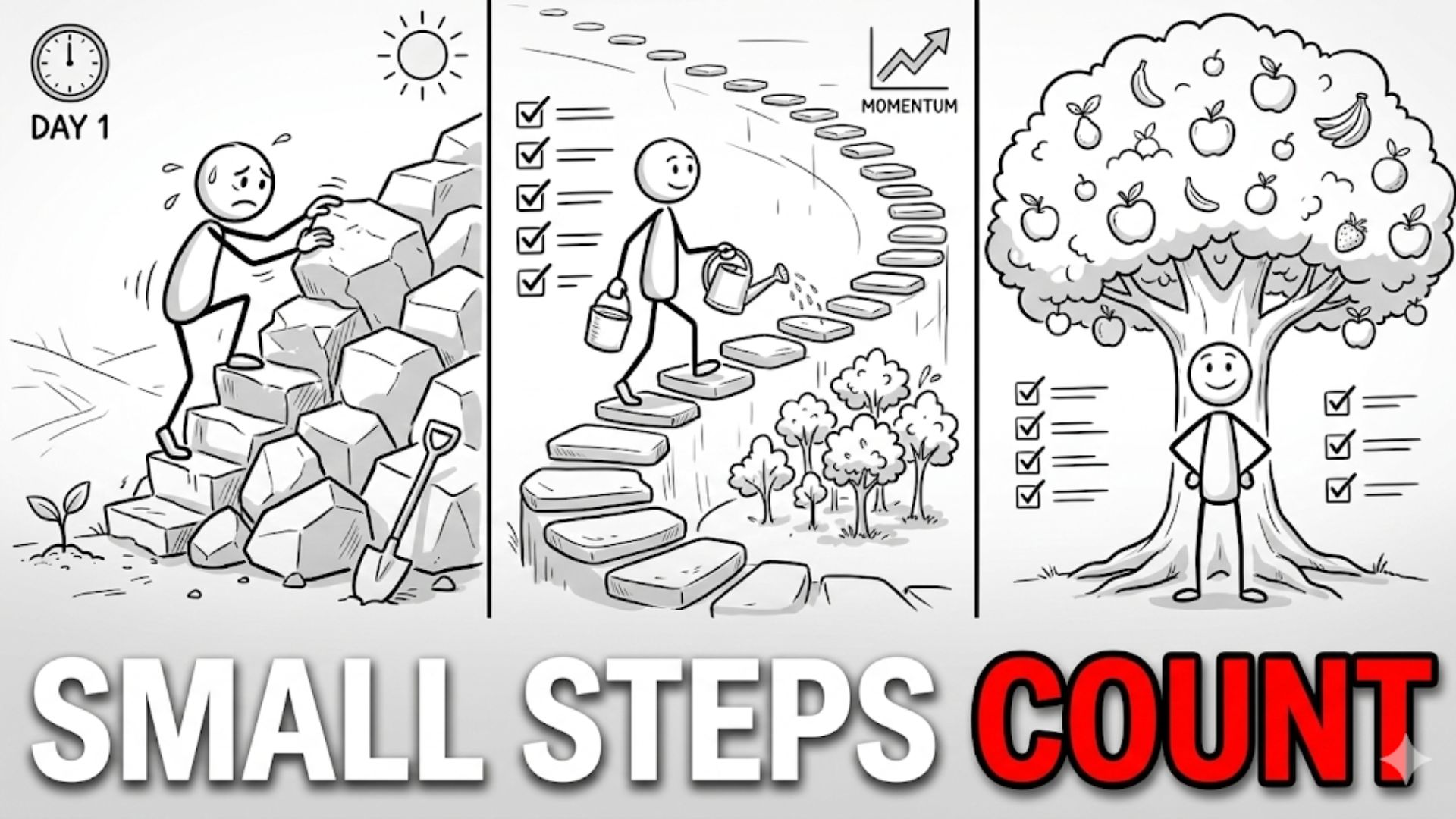
Introduction: Why I View Life Through the Lens of Compounding
After decades spent analyzing the mechanics of decision-making, institutional incentives, and the evolution of complex systems, I have found that very few conceptual models possess the explanatory power of compounding. In the common parlance, compounding is almost exclusively relegated to the domain of finance—a mathematical curiosity involving interest rates and principal balances. However, when we strip away the parochial language of banking, compounding reveals itself as a fundamental structural principle governing the trajectory of human life.
My observation of long-term systems suggests that the most profound differences in life outcomes—whether in intellectual depth, professional influence, or social capital—are rarely the result of singular, heroic interventions. Instead, they are the cumulative result of small, high-frequency decisions operating within compounding systems over extended time horizons. The stakes of these decisions are often invisible in the short term, yet they dictate the terminal state of a life with a mathematical ruthlessness that the human mind, optimized for linear perception, struggles to grasp.
To view life through the lens of compounding is to move away from a “transactional” view of existence and toward a “systemic” one. It requires an understanding that every action taken today is not an isolated event, but a contribution to a base upon which all future outcomes will be built. This article seeks to deconstruct how these mechanisms function across the non-financial domains of skills, reputation, networks, and cognitive frameworks, and why the inability to think exponentially remains one of the greatest structural disadvantages in modern life.
Read also: The Strategic Calculus of Long-Term Compounding
Understanding Compounding Beyond Finance
At its most abstract, compounding is a process where the output of a system in one period becomes the input for the next, creating a feedback loop that results in accelerating growth or decay. In finance, this is expressed as $A = P(1+r)^t$. However, the same logic applies to any asset—tangible or intangible—that can be reinvested.
The Mathematical Logic of Intangible Assets
Consider knowledge accumulation. Knowledge is not a bucket that we fill; it is a web that we weave. Each new piece of information is easier to retain and synthesize if it can be attached to an existing lattice of concepts. Thus, the “rate of return” on learning increases as the “principal” of existing knowledge grows. Similarly, in professional reputation, trust acts as a compounding variable. A person who has consistently delivered value for ten years does not merely have “ten units” of trust; they possess a reputational asset that allows them to bypass the friction, due diligence, and skepticism that a newcomer must endure.
The Cognitive Barrier to Exponential Thinking
The human brain is an evolutionary product of a linear world. In the ancestral environment, if you walked for twenty days, you were twenty times further than you were on day one. Our intuitive physics and social heuristics are calibrated for 1:1 relationships. Exponential processes, by contrast, are deceptive. They begin slowly—often appearing indistinguishable from stagnation—before reaching a “knee of the curve” where growth becomes vertical. This lack of intuitive “fit” explains why most individuals systematically underestimate the long-term impact of small, repeated decisions and why they often abandon compounding paths just as the exponential phase is beginning.
Read also: Why Working IN Your Business Is Slowly Destroying It
The Mechanism of Cumulative Advantage
In sociology and systems theory, the phenomenon where an initial edge leads to further advantages is known as “cumulative advantage,” or the Matthew Effect. Compounding is the engine that drives this divergence.
Early Divergence and the Multiplier Effect
In any competitive system—be it an industry, an academic field, or a social network—small initial advantages in skill or positioning tend to be magnified over time. An individual who is slightly more articulate or slightly better at capital allocation than their peers will be selected for slightly better opportunities. These opportunities, in turn, provide better information, better networks, and better “practice,” further increasing the gap between them and the mean.
Information and Opportunity Access
Compounding creates a structural “funneling” of resources. Those with a larger base of compounding assets (e.g., a prestigious network or a deep skill set) are presented with higher-quality “flow.” In career systems, this manifests as the “hidden job market,” where the most asymmetric opportunities are never publicly advertised but are instead distributed through high-trust nodes. The gap between those inside and outside these compounding loops does not grow linearly; it widens exponentially, as the “insiders” are constantly reinvesting their gains while the “outsiders” must start from a zero-base in every new transaction.
Read also: Why Financial Education Changes Behavior
Time Horizon as the Hidden Variable
The most significant variable in any compounding equation is not the rate of return, but the exponent: time. In my observations of professional trajectories, the length of time over which a strategy is pursued often determines the outcome more than the raw intelligence or intensity of the actor.
Temporal Discounting and Present Bias
The structural difficulty of compounding is that the costs are immediate while the rewards are distant. Behavioral economics identifies present bias as the tendency to overvalue immediate utility relative to future gains. This is why most people opt for “linear” paths—they offer immediate, predictable feedback. Compounding, conversely, requires a period of “latent potential” where effort is high but visible results are marginal.
The Advantage of the Long Horizon
Individuals who can extend their time horizon gain a massive structural advantage because they face less competition. Most market participants are optimizing for the next quarter or the next year. By operating on a ten-year or twenty-year horizon, a person effectively “arbitrages” the impatience of the crowd. They can afford to invest in “boring” structural edges—such as tax efficiency, relationship depth, or foundational skills—that the short-term thinker dismisses as trivial. In the long run, the person who stays on the exponential curve for thirty years will always outperform the “sprinter” who hops from one linear path to another.
Read also: The Psychology of Holding vs Selling Assets
Compounding in Knowledge and Skill Development
Knowledge is the ultimate compounding asset because it is “non-rivalrous” and has no upper bound. Unlike physical capital, which depreciates, intellectual capital grows more efficient the more it is utilized.
The Lattice of Mental Models
Learning is the process of building mental models. In the early stages of a career, learning is difficult because there is no context. However, as one accumulates models from diverse fields—economics, biology, psychology, physics—the “interdisciplinary surface area” increases. A new concept in game theory becomes more valuable if it can be mapped onto an existing understanding of evolutionary biology. This “skill stacking” creates nonlinear returns: being “top 25%” in three disparate but complementary skills is often more valuable than being “top 1%” in a single commoditized domain.
Experience as a Feedback Loop
Skill development is a reinforcing feedback loop. Expertise is essentially the accumulation of “chunked” information that allows for rapid pattern recognition. The more “chunks” an individual has, the faster they can process new environments, leading to more “reps” and further skill acquisition. This explains why the “master” appears to learn faster than the “novice.” They are not necessarily more intelligent; they are simply benefiting from the compounded interest of their previous decades of observation.
Read also: Why Simplicity Wins in Personal Finance
Career Decisions and Compounding
Careers are frequently managed as a series of disconnected jobs. However, from a systems perspective, a career is a single, long-term compounding asset comprised of reputation, trust, and expertise.
Reputation and the Trust Premium
Reputation is the “equity” of a career. It is built through the consistent fulfillment of promises over multiple cycles. In a high-stakes economy, trust is the primary mechanism for reducing transaction costs. A professional with a thirty-year reputation for integrity and excellence does not need to “sell” themselves; their reputation acts as a passive “lead generation” engine.
The Slope of the Trajectory
Early career decisions—industry choice, peer group selection, intellectual habits—determine the “slope” of the compounding curve. A person who enters a declining, low-leverage industry may work just as hard as someone in a high-leverage, growing field, but their “rate of return” is lower. Over thirty years, this difference in “r” (the growth rate) results in vastly different terminal outcomes. Path dependency ensures that once a person is far down a specific compounding path, the cost of switching to a different one becomes prohibitively high, as they must abandon decades of “accrued interest.”
Read also: How Loss Aversion Impacts Portfolio Decisions
Networks and Relationship Compounding
Social capital functions with the same geometric logic as financial capital. Relationships are built on a foundation of repeated interactions and the gradual accumulation of trust.
Network Effects and Information Flow
A network’s value increases exponentially with each new connection (Metcalfe’s Law). A patient professional who has spent twenty years building a deep, diverse network possesses a “social leverage” that allows them to mobilize resources at a scale that is impossible for the unleveraged individual. They are “connected” to the information flow of their industry, meaning they hear about risks and opportunities before they become public knowledge.
Reputation as a Network Filter
Reputation acts as a “filter” in social compounding. High-quality individuals tend to congregate in high-trust networks. Once an individual reaches a certain threshold of reputational capital, they are “pulled” into these networks, where the quality of interactions is higher and the opportunities are more asymmetric. This creates a “virtuous cycle” of social compounding: the better your network, the better the opportunities you are presented with, which further enhances your reputation and network quality.
Read also: The Cost of Overconfidence in Investing
The Role of Feedback Loops
Compounding is, fundamentally, the result of reinforcing feedback loops. To understand why some lives “take off” while others remain stagnant, one must analyze the “loops” in which they operate.
Positive vs. Negative Compounding
Feedback loops can be virtuous or vicious.
- Virtuous Loops: A small success in a project leads to increased confidence and a better reputation, which leads to a more challenging project, which leads to more skill acquisition, and so on.
- Vicious Loops: A small failure or a poor habit (e.g., chronic procrastination or health neglect) creates a slight decrease in productivity, which leads to increased stress and poor decision-making, which further degrades performance and reputation.
In my observation, the “success gap” is often just the difference between someone whose life is characterized by 51% positive loops versus someone at 49%. Over forty years, that 2% difference in the “reinforcement sign” creates divergent worlds.
The Problem of Delayed Feedback
The most dangerous systems are those with long “feedback lags.” In health or long-term career planning, the negative consequences of poor decisions (e.g., smoking or lack of skill reinvestment) are delayed by decades. By the time the feedback is “loud” enough to be heard, the compounding of the damage is often irreversible.
Read also: Why Long-Term Thinking Is a Financial Advantage
Why Humans Struggle With Compounding
The structural power of compounding is matched only by the structural difficulty of sustaining it. The human psyche is essentially a “short-termism” machine.
The Urgency of the Immediate
Present bias creates a state of “temporal myopia.” We are biologically wired to prioritize the immediate relief of a problem over the abstract gain of a decade-distant future. This makes the “maintenance” required for compounding—consistent study, networking, and habit formation—feel like an unnecessary cost. We trade the “exponential” future for the “linear” present.
The Visibility Bias
We live in an “event-driven” culture. We celebrate the “founding of the company” or the “winning of the award,” but we rarely see the thousands of “boring” days of compounding that made the event possible. This creates an “overnight success” myth that encourages people to look for “hacks” or “shortcuts” rather than building compounding systems. When the “hack” fails to produce immediate results, they abandon the path, never realizing that the “short-term” is the enemy of the “long-term.”
Read also: Mastering The 5 AM Club for Elite Performance and Cognitive Sovereignty
Path Dependency and Irreversible Decisions
Compounding interacts with path dependency to create “locked-in” life outcomes. Path dependency is the idea that the set of decisions available to us today is limited by the decisions we made in the past.
The Funnel of Options
Early in life, our compounding potential is high, but our “principal” is low. As we make decisions—choosing a specialization, marrying a partner, settling in a geography—the “principal” grows, but the “optionality” narrows. Each decision “compounds” us into a specific identity and professional niche.
Irreversibility and the “Sunk Cost” Trap
Some decisions are “Type 1” (irreversible) or “Type 2” (reversible). Compounding makes Type 1 decisions particularly significant. A choice to stop learning or to damage one’s reputation in a moment of anger is an irreversible “haircut” to one’s compounding principal. The “interest” lost on that missing principal over the next thirty years is an enormous, invisible cost.
Read also: Why Long-Term Thinking Is a Financial Advantage
Opportunity Cost in Compounding Systems
In a compounding system, the true cost of an action is not the “price” paid, but the foregone interest on the time or capital invested.
The Geometric Cost of Distraction
If an individual spends two hours a day on low-value distraction, the cost is not “two hours.” The cost is the terminal value of the “deep work” that those two hours could have been compounding over forty years. When viewed linearly, a distraction is a minor annoyance. When viewed exponentially, it is a catastrophic leak in the system.
Selective Compounding
Because we have finite time, we must choose what to compound. One cannot be a master of ten disparate fields. Opportunity cost forces us to be selective. The “jack of all trades” is someone who starts a hundred compounding engines but never lets any of them run long enough to reach the vertical phase. They possess a large amount of “Year 1” experience, but no “Year 20” expertise.
Read also: How Anchoring Bias Affects Financial Choices
Misconceptions About Compounding
A failure to understand the limits and risks of compounding can lead to “fragile” life strategies.
- Compounding is Not Linear Growth: People often expect steady, incremental progress. In reality, compounding systems are characterized by “long periods of boredom followed by moments of explosive change.”
- Patience is Not Passivity: Strategic patience is an active process of “staying in the game.” It requires the constant management of risk to ensure that an “absorbing barrier” (e.g., bankruptcy or reputational ruin) does not reset the principal to zero.
- The “Lindy Effect” and Obsolescence: While knowledge compounds, it can also become obsolete. Compounding “buggy whip” manufacturing skills in the age of the automobile is a path to irrelevance. One must compound in “Lindy” (durable) assets—founding principles, human psychology, and foundational communication—that increase in value with age.
Compounding as a Framework for Understanding Life Outcomes
When I look at the wide disparities in wealth, influence, and intellectual depth among individuals of similar initial talent, I almost always find the answer in the “duration” and “consistency” of their compounding.
- Wealth Accumulation: The difference between the moderately successful and the extraordinarily wealthy is often just the “age at which they started” and the “lack of interruptions” in their capital allocation.
- Intellectual Development: The polymath is not a person with a “special brain”; they are someone who has been compounding mental models across disparate fields for decades.
- Career Trajectory: The “industry leader” is someone who has allowed their reputation and trust networks to compound within a single domain until they became “one-of-one.”
Read also: Why Cash Flow Thinking Beats Net Worth Obsession
Conclusion: A Long-Term Perspective on Decision Systems
After many years of observing the trajectories of individuals and institutions, I have reached a singular conclusion: life is a game of duration. The structural power of compounding is the silent architect of our outcomes. It rewards the consistent, the patient, and the systemic, while it punishes the impulsive, the reactive, and the short-termist.
The most important decision we make is not which “transaction” to pursue today, but which “system” we are choosing to feed. Every skill learned, every trust-based relationship nurtured, and every healthy habit maintained is a deposit into a principal that will eventually yield a harvest far beyond its initial cost. Compounding is not merely a financial tool; it is the fundamental logic of progress. To understand it is to gain the ultimate leverage; to ignore it is to ensure that you will always be working for those who don’t.
Next Step: Would you like me to develop a “Compounding Audit”—a series of analytical questions designed to help you identify which of your life systems (skills, networks, habits) are currently in an exponential phase and which are suffering from “frictional leaks” or linear stagnation?

