The Snapshot
- Star Rating: 4.7 / 5
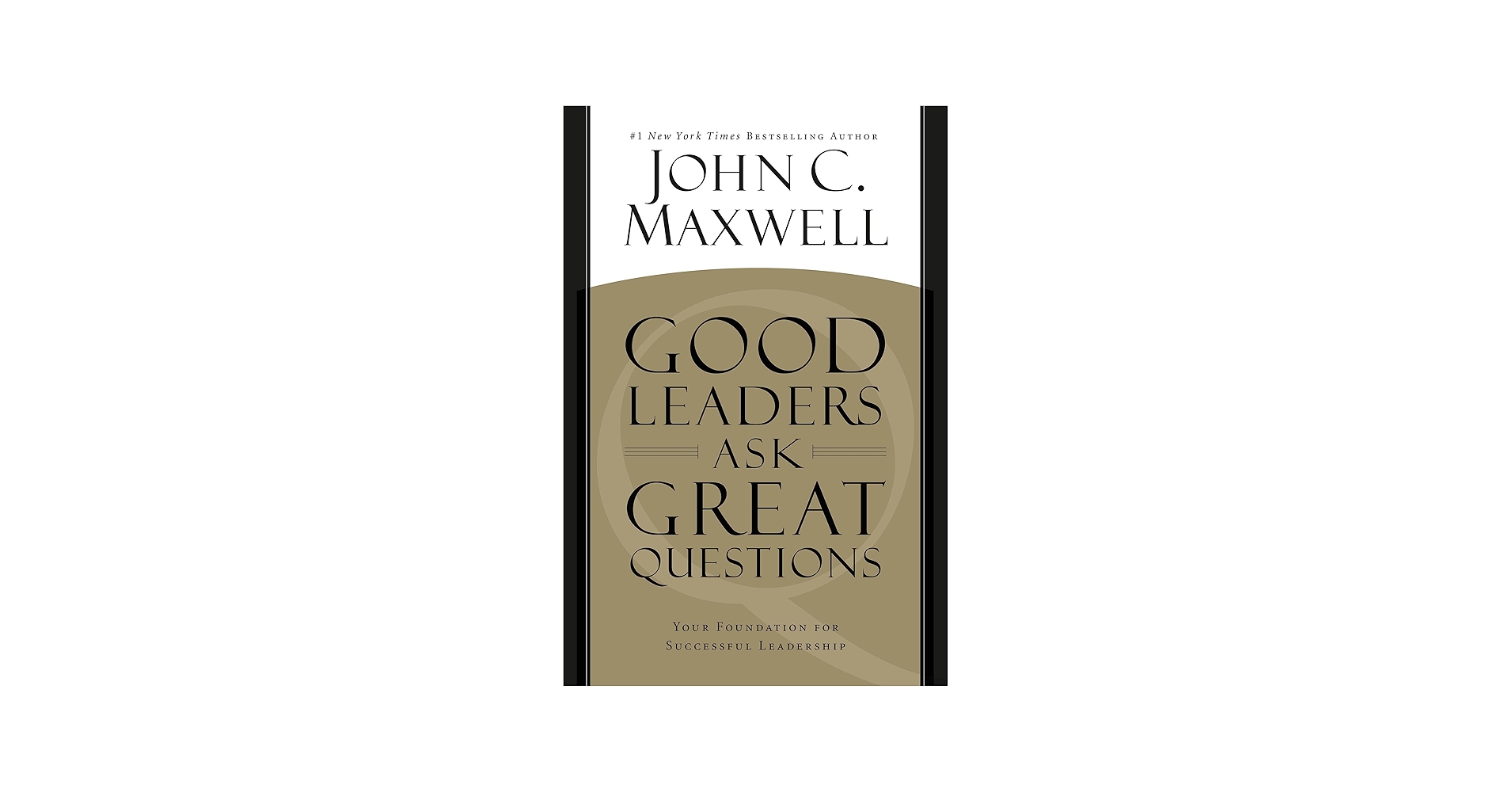
- One-Sentence Verdict: True influence flows not from having all the answers, but from having the humility to ask the right questions.
- Best For: CEOs, mid-level managers, parents, and anyone looking to develop people rather than just direct them.
- Difficulty: Very Easy / Conversational
The Analytical Layer: This book offers a profound sense of “relief” for the high-pressure executive. It deconstructs the exhausting myth of the omniscient leader, proving that your value isn’t found in your expertise, but in your inquisitiveness. As Richard Thalheimer once said, “It is better to look uninformed than to be uninformed.”
——————————————————————————–
INTRODUCTION: Overcoming the “Leader’s Anxiety”
I remember the early days of my leadership journey vividly. I was gripped by what I call “Leader’s Anxiety”—that heavy, nagging belief that to be a leader meant I had to be an all-knowing oracle. I thought that if someone asked a question and I didn’t have a quick, clever answer, I was failing.
For years, I fell into the trap of “faking it ’til I made it.” But let me tell you from experience: that leads to a lot of faking and very little making. It is a posture of pride, not power. When we protect our image of “the expert,” we actually distance ourselves from the very people we are trying to lead.
Let me ask you a mentor’s question: When was the last time you sat in a meeting and deliberately spoke last instead of first?
The core thesis of my life’s work in leadership is simple: Questions are the keys that unlock better ideas, stronger relationships, and deeper understanding. Seeking better answers requires a radical shift in our habits—moving from a posture of authority to a posture of inquiry. But before we can lead others through the power of questions, we must first turn the mirror on ourselves.
Read also: Structural Mechanisms of Asymmetric Discovery
——————————————————————————–
PART 1: THE INTERNAL COMPASS—QUESTIONS I ASK MYSELF
Self-leadership is the foundation of all external influence. If we cannot lead ourselves through honest self-interrogation, we will never have the credibility to lead others. I’ve found that I must be proactive in asking myself the tough questions before life—or my team—is forced to ask them of me.
Am I investing in myself? (The Growth Question)
The most important investment you will ever make is in yourself; it determines the return you get out of life. As my mentor John Earl Shoaff once told Jim Rohn, “Work harder on yourself than you do on your job.” I’ve learned that my willingness to invest in myself is tied to my self-image. You will never bet on yourself unless you truly believe in yourself.
Am I genuinely interested in others? (The Motive Question)
There is a massive difference between manipulation and motivation. To keep my natural selfishness in check, I must evaluate the Four Selfish Drivers:
- Power: The love of control.
- Position: Using titles as “ego food.”
- Money: Using people for financial gain.
- Prestige: Caring more about looking good than being good.
Why are these so dangerous? Because they turn the people you lead into “ego food.” When we lead for these reasons, we reduce the value of others to add value to ourselves.
Am I adding value to my team? (The Value Question)
Coach John Wooden asked himself every day: “How can I make my team better?” This shifts a leader from “control” to “contribution.”
Deep Analysis: Ego and the Success Gap The greatest barrier to honest self-reflection is the Ego. Egotistical leaders create a “Success Gap”—a perceived distance between themselves and their team. They protect their image and stay above the crowd. Authentic leaders, however, work to close that gap. They realize that authenticity is the new authority. Admitting “I don’t know” doesn’t diminish your leadership; it humanizes it.
Once you’ve taken that hard look in the mirror, it’s time to look across the table at the people entrusted to your care.
Read also: Why Winning in Business Is the Wrong Goal
——————————————————————————–
PART 2: THE EMPOWERMENT SHIFT—QUESTIONS I ASK MY TEAM
Moving from “Answer-Giver” to “Question-Asker” changes your culture. It moves the spotlight from your brilliance to the team’s potential.
“What do you think?”
This is the “midwifery” of thoughts. As Mark Cole, the CEO of my organizations, insightfully says: “When you ask for my skills, you get my strengths. When you ask for my passion, you get my heart. When you ask for my ideas, you get my mind. But when you ask me for answers, you get my strengths, heart, and mind.”
“How can I serve you?”
I never want to be the “bottleneck” for my team. By asking this, I identify where I am holding them up. It prevents me from developing a positional mind-set where I think I am “over” the team rather than “with” them.
“What did you learn?”
Experience isn’t the best teacher—evaluated experience is. When my children, Elizabeth and Joel, were young, I’d always ask them two things: “What did you learn?” and “What did you love?” Asking what they loved helped me connect with their hearts; asking what they learned helped them grow. This works just as powerfully in the boardroom as it does at the dinner table.
Synthesis: Building Trust As I always say, “People don’t care how much you know until they know how much you care.” By asking questions, you prove that you value their mind and heart.
Read also: Why Experimentation Functions as the Primary Engine of Innovation
——————————————————————————–
PART 3: THE EXECUTIVE VAULT—ANSWERING COMMON LEADERSHIP QUESTIONS
Leadership is a set of reproducible skills, not a mystical gift. If you can influence one person, you are leading.
Focus Area: Leading Yourself (“Just for Today”)
Leading yourself is the hardest task you’ll face because of your “blind spots.” To stay on track, I follow a “Just for Today” contract with myself—my Daily Dozen. Key disciplines include:
- Values: I will embrace and practice good values.
- Generosity: I will plan for and model generosity.
- Priorities: I will act upon important priorities.
- Thinking: I will develop good thoughts.
- Faith: I will deepen and live out my faith.
Focus Area: The Influence Model (The 5 Levels)
Leadership is not a title; it is influence. I use the 5 Levels of Leadership to show the “escalator” of growth:
- Level 1: Position (Rights). The lowest level. People follow because they have to.
- Level 2: Permission (Relationships).
- Level 3: Production (Results).
- Level 4: People Development (Reproduction).
- Level 5: Pinnacle (Respect).
Focus Area: 360-Degree Leadership
The ultimate “relief” for an executive is realizing that you don’t need to be at the top to lead. You can lead Up (lightening your leader’s load), Across (helping peers), and Down (mentoring others).
Read also: My Journey Through the Timeless Art of Connection
——————————————————————————–
CRITICAL ANALYSIS: THE HUMILITY PARADOX
Many leaders fear that asking questions makes them look weak. This is the Humility Paradox. In reality, weak leaders rely on control and the illusion of certainty. Strong leaders rely on development.
Admitting you don’t have all the answers requires more confidence than “faking it.” This transparency actually increases your authority. When you are honest about what you don’t know, people trust you more when you speak about what you do know. If you are building a pedestal, you are alone; if you are building a bridge through questions, you have a team.
——————————————————————————–
THE MENTOR’S EVALUATION: PROS AND CONS
| Pros | Cons |
| Immediate Applicability: You can start asking “What do you think?” in your very next meeting. | Potential Repetitiveness: Long-time followers may recognize core frameworks like the 5 Levels. |
| Pressure Relief: Shifts your role from “Expert” to “Facilitator,” significantly reducing burnout. | Anecdotal Weight: Relies heavily on personal stories rather than hard data or statistics. |
| Cultural Growth: Moves the organization from “command and control” to a “growth” mindset. | Patience Required: Developing people through questions takes much longer than issuing orders. |
——————————————————————————–
CONCLUSION: THE LEGACY OF THE INQUISITIVE LEADER
The most transformative lesson I can share is this: Leadership is defined not by the answers you hold, but by the people you develop.
Questions are the primary tool for human development. They open doors that would otherwise remain closed and build a bridge between your vision and your team’s heart. Good questions inform; great questions transform.
Read also: Strategic Logic in Uncertain Systems
——————————————————————————–
CALL TO ACTION (CTA)
My challenge to you is simple but profound: Stop telling your team what to do. Start asking them what they think.
The next time you are tempted to provide a solution, pause. Ask a question instead. You might be surprised by the brilliance that has been sitting right in front of you all along.
Stay curious, stay humble, and keep adding value.
Warmly,
Your Master Leadership Mentor