1. THE SNAPSHOT (Executive Summary)
Quick Summary: The Definitive Culture-Building Playbook
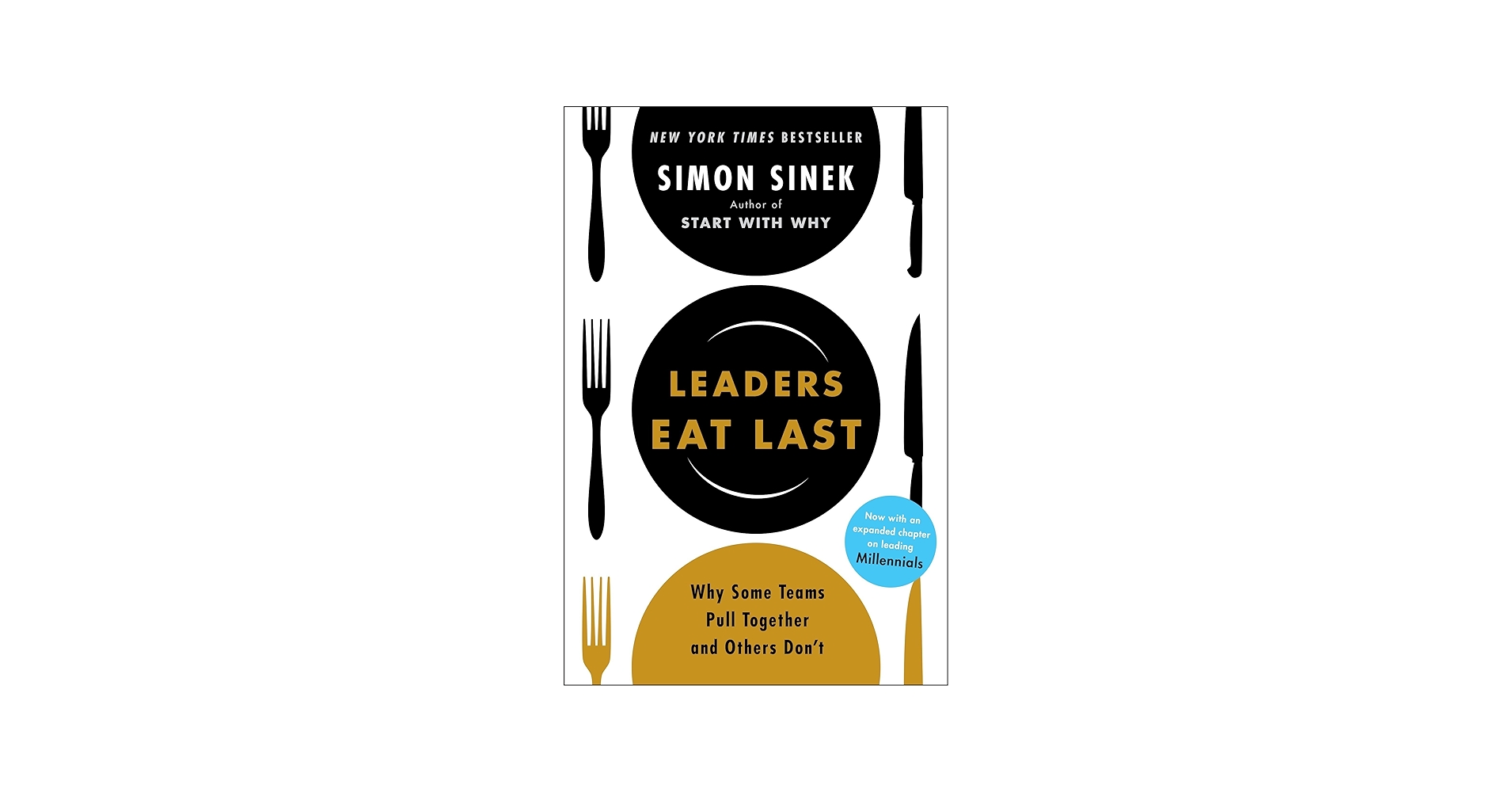
Simon Sinek’s Leaders Eat Last is not merely a business book; it is a profound exploration of the biological social contract that has governed our species for 50,000 years. Sinek argues that modern organizations fail when they ignore our Paleolithic “Social Machine”—the evolutionary drive to protect the tribe. By re-establishing a “Circle of Safety,” leaders can leverage our innate biology to foster trust, innovation, and long-term resilience in an era of numerical abstraction.
- Star Rating: 4.9/5
- One-Sentence Verdict: Leadership is a biological obligation to sacrifice one’s own interests for the group, triggering the chemical rewards of trust and cooperation necessary for survival.
- Best For: CEOs, HR leaders, and managers dedicated to moving beyond “management” toward true tribal leadership.
- Difficulty: Deeply narrative and accessible, though its biological insights challenge the foundations of traditional corporate hierarchy.
- Call to Action: [Find it on Amazon]
Connective Tissue: To understand Sinek’s verdict, we must move past the sterile boardroom and toward the front lines, where the ancient rituals of human sacrifice are still practiced in their purest form.
——————————————————————————–
2. INTRODUCTION: THE MARINE CORPS MANDATE
In high-stakes environments, leadership is defined by rituals that reinforce the biological bond between the leader and the led. Sinek opens this Leaders Eat Last summary by highlighting a profound tradition within the United States Marine Corps: “Officers eat last.” In the mess hall, the most junior Marines eat first, while the most senior officers wait at the back of the line. This is not a matter of etiquette; it is a strategic mandate.
This ritual stands in stark contrast to the “Take rewards first, push risk down” mentality prevalent in toxic corporate cultures. When leaders prioritize their own perks and sacrifice their people to save the quarterly numbers, they shatter the “Circle of Safety.” As an anthropological expert, I see this as a violation of the “Social Machine” that allowed our hominid ancestors to survive a world of saber-toothed tigers. Sinek’s directive is clear: the primary responsibility of a leader is to provide top cover so that the tribe can look out for one another.
Connective Tissue: Shifting from this military anecdote, we can define the “Circle of Safety” as the essential anthropological framework for any organization hoping to survive the modern subsistence economy.
Read also: The Hidden Distribution of Breakthrough Ideas
——————————————————————————–
3. THE CIRCLE OF SAFETY: SHIELDING THE TRIBE
The “Circle of Safety” functions as a massive competitive advantage by reducing internal friction. While leaders have no control over external threats—the volatile stock market, aggressive competition, or shifting technology—they have total control over the internal conditions.
The Spartan Analogy
Sinek draws on the history of the Spartan warriors to illustrate the priority of the collective. For a Spartan, losing a helmet or breastplate was excusable, but losing one’s shield resulted in the loss of all citizenship. As Steven Pressfield noted in his account of the Battle of Thermopylae, “A warrior carries helmet and breastplate for his own protection, but his shield for the safety of the whole line.”
Impact Evaluation: Outcomes of the Tribal Shield
When a leader successfully establishes a Circle of Safety, the “So What?” becomes a measurable reality:
- Energy Redirection: People stop spending energy protecting themselves from their own colleagues and start focusing on external growth.
- Information Fluidity: Trust allows information to flow freely, ending the “hoarding” of data that characterizes toxic silos.
- Collaborative Innovation: Employees feel safe enough to admit mistakes and take risks, knowing the leader has their back.
- Biological Resilience: The group naturally pulls together to weather external storms rather than fracturing under pressure.
Connective Tissue: This “feeling” of safety is not mystical; it is the physical result of our evolutionary biology and the chemical incentives that reward social behavior.
Read also: What I Learned About Leading Without Having All the Answers
——————————————————————————–
4. THE BIOLOGY OF LEADERSHIP: DECONSTRUCTING THE EDSO FRAMEWORK
A biological understanding of human behavior is essential for modern management. Our ancestors survived the “austere conditions” of the Paleolithic era through a system of chemical rewards. Sinek categorizes these into “Selfish” and “Selfless” chemicals, which act as the backbone of the Circle of Safety.
The “Selfish” Chemicals (Individual Achievement)
- Endorphins: These function as a natural opiate, masking physical pain with pleasure (the “Runner’s High”). In the workplace, laughter releases Endorphins, helping to reduce the fear and tension inherent in high-stress projects.
- Dopamine: This is the chemical of progress and goal-setting. We get a “hit” when we see a tangible target (like a fruit-filled tree or a quarterly metric) and work toward it.
- The Fine Print: Dopamine is highly addictive—akin to gambling or alcohol. Without the balance of social chemicals, it drives short-termism. We become addicted to the “ding” of a notification or the rush of a bonus, often at the expense of the long-term health of the tribe. Dopamine offers no social bond; it is a solo chemical.
The “Selfless” Chemicals (Social Bonding)
- Serotonin: Known as the “Leadership Chemical,” it provides the pride we feel when we perceive others respect us. It reinforces the bond between the leader and the follower. However, it requires a “Ceramic Cup” vs. “Styrofoam Cup” awareness—the perks belong to the rank, not the person.
- Oxytocin: This is the “Social Compass.” It is the chemical of trust, generosity, and deep bonding. Unlike the quick hit of Dopamine, Oxytocin is long-term and essential for the immune system. It is the literal glue of the Circle of Safety.
Connective Tissue: While these four chemicals build the tribe, a biological antagonist exists that can systematically destroy it: the stress hormone known as Cortisol.
Read also: Structural Mechanisms of Asymmetric Discovery
——————————————————————————–
5. THE SILENT KILLER: CORTISOL AND THE TOXIC WORKPLACE
Management by fear is a physiological hazard. When we feel unsupported at work, our bodies release Cortisol, the hormone responsible for the “fight or flight” response.
- The Biology of Stress: Cortisol is designed to alert us to danger. To save energy for survival, it shuts down non-essential systems like digestion and, most dangerously, the immune system.
- The Strategic Impact: Continuous Cortisol flow kills creativity and collaboration. Sinek cites the “Whitehall Studies,” which found that stress is not caused by the weight of responsibility, but by a lack of control. Workers lowest in the hierarchy had death rates four times higher than those at the top because they lacked the agency to manage their environment.
Connective Tissue: When Cortisol dominates, people stop being humans with potential and start being viewed as mere “Numerical Abstractions.”
——————————————————————————–
6. ABSTRACTION VS. EMPATHY: THE MILGRAM WARNING
As organizations scale, the distance between leaders and the people they impact increases, eroding the leader’s moral compass.
The Milgram Experiment and “Following Orders”
Sinek references the Yale study where 65% of participants were willing to administer fatal electric shocks to a stranger because an authority figure told them the “experiment required they continue.” The takeaway: Distance allows for inhuman behavior.
The Numerical Abstraction
In modern business, we see this when people are viewed as “expenses.” Sinek points to the Peanut Corporation of America (PCA), where the president, Stuart Parnell, complained that salmonella testing was costing the company “huge dollar dollar dollar.” He chose the metric over the “Souls on board.” This mirrors the Titanic disaster, where owners complied with the letter of the law regarding lifeboats but ignored their moral obligation to the human beings they served.
Connective Tissue: This cold abstraction is the opposite of the “Social Machine” found in high-performing, human-centered companies.
Read also: Why Winning in Business Is the Wrong Goal
——————————————————————————–
7. SCALE AND EMPATHY: OBEYING DUNBAR’S NUMBER
A foundational anthropological concept in the book is Dunbar’s Number—the biological limit of approximately 150 people with whom we can maintain close relationships. Sinek explains that beyond this number, we cannot “keep it real”; the person to our left becomes a stranger.
- WL Gore Example: To maintain the Circle of Safety, WL Gore caps their factories at 150 people. Once they hit that limit, they build a new factory right next door. Bill Gore understood that at 150, “everyone knows everyone,” and the social pressure to help the tribe replaces the need for rigid, Cortisol-inducing bureaucracy.
Connective Tissue: Respecting these biological limits allows leaders to implement the “I intend to” frameworks that define modern success stories.
——————————————————————————–
8. PROVEN LEADERSHIP IN ACTION: THE CASE FOR HUMAN-CENTERED DESIGN
Prioritizing people over numbers provides a measurable ROI.
- Barry-Wehmiller: When the 2008 crash hit, CEO Bob Chapman refused layoffs. Instead, he instituted a furlough where everyone took four weeks of unpaid leave. His reasoning: “It is better that we all suffer a little so that none of us has to suffer a lot.” The result was a spontaneous “tribal” effort where those who could afford the hit took extra weeks to protect those who couldn’t.
- Next Jump: CEO Charlie Kim implemented “Lifetime Employment.” By removing the fear of being fired, he saw turnover drop to 1% while revenue growth skyrocketed.
- USS Santa Fe: Captain David Marquet moved from “Leader-Follower” to “Leader-Leader.” By using the “I intend to” framework, he empowered his sailors to take ownership, transforming a bottom-ranked crew into the highest-rated in Navy history.
Read also: Why Experimentation Functions as the Primary Engine of Innovation
——————————————————————————–
9. THE TRIBAL LEADER’S FIELD GUIDE
To rebuild the biological social contract, utilize this anthropological checklist:
- Provide Top Cover: Deflect hierarchy pressures so your team can focus on the “Social Machine.”
- Treat Employees as “Someone’s Son or Daughter”: You are responsible for precious lives, not just “headcount.”
- Sacrifice the Numbers to Save the People: Long-term survival depends on the tribe’s trust, not a single quarter’s metrics.
- Give Time and Energy, Not Just Money: Oxytocin is earned through presence. You cannot buy loyalty; you must earn it through sacrifice.
- Establish Clear Standards for Entry: Like adopting a child into a home, be discerning about who enters your Circle of Safety.
——————————————————————————–
10. CRITICAL ANALYSIS: IDEALISM VS. REALITY
Skeptics argue that human-centered leadership is “soft.” However, the anthropological evidence suggests that Dopamine-driven companies (like Enron or Lehman Brothers) are prone to catastrophic collapse, while those with a strong Circle of Safety out-innovate and out-weather competitors.
| Pros of the Framework | Potential Challenges/Cons |
| Provides a clear biological roadmap for trust. | Biology is somewhat simplified for a general audience. |
| Directly addresses the root causes of stress-related illness. | Deeply confronting for leaders in current toxic hierarchies. |
| Proven ROI through case studies like Barry-Wehmiller. | Requires a long-term commitment that quarterly markets resist. |
| Re-humanizes the workplace through empathy. | Hard to implement in organizations that over-rely on metrics. |
——————————————————————————–
11. CONCLUSION: THE CERAMIC CUP LESSON
The core takeaway of Leaders Eat Last is that leadership is a choice, not a rank. To illustrate this, Sinek shares the story of a former Under Secretary of Defense who spoke at a conference.
The year prior, while still in office, he had been flown business class, met at the airport, and handed coffee in a beautiful ceramic cup. Speaking a year later as a civilian, he had flown coach, took a taxi, and poured his own coffee into a Styrofoam cup. He told the audience: “The ceramic cup was never meant for me. It was meant for the position I held. I only ever deserved a Styrofoam cup.”
True leaders understand that the trappings of power are temporary. Your strength comes from the people you protect. When you prioritize their well-being, they will naturally pull together to achieve the remarkable.
——————————————————————————–
12. CALL TO ACTION: EXPANDING YOUR CIRCLE
Who is inside my Circle of Safety—and how can I expand it today?
Leadership is not about being in charge; it’s about taking care of the person to your left and the person to your right. Start building your tribe today.