1. Quick Snapshot & Verdict
For the aspiring Founder, the gap between a “lightbulb moment” and a sustainable Enterprise is often cluttered with technical Jargon, Administrative Hurdles, and the daunting prospect of Financial Risk. The following evaluation deconstructs the foundational roadmap provided by the “How to Start Your Own Business” framework, specifically through the lens of a Visual Business Strategist.
| Metric | Details |
| Rating | 4.8 / 5 |
| Verdict | A high-impact Visual Toolkit that transforms abstract Business Concepts into a concrete, sequential Action Plan. |
| Best For | First-Time Entrepreneurs, Visual Learners, and Side Hustlers aiming to professionalize their Business Model. |
| Difficulty | Very Easy |
The “So What?” Layer: Why Accessibility is a Strategic Advantage
The “Very Easy” difficulty rating of this guide is not an indicator of shallow content; rather, it is a calculated strategic entry point for the Novice Founder. Most Entrepreneurs suffer from Analysis Paralysis—a psychological state where the sheer volume of choices regarding Legal Structures, Tax Obligations, and Market Research leads to total inertia. By lowering the barrier to entry through Visual Learning, this framework removes the initial friction of “getting started.”
In the high-stakes environment of the First 1,000 Days of operation, momentum is the most valuable Asset. By simplifying the “technical” and amplifying the “visual,” this guide allows a Founder to secure “small wins” early. These early victories build the Entrepreneurial Self-Efficacy required to eventually tackle more complex challenges like Scaling, Equity Financing, and Exit Strategies.
While the snapshot above defines the “what” of the journey, we must now peel back the layers to understand the “how,” beginning with the internal Mindset shift required to move from an Employee role to a Leadership position.
Read also: Mastering The 5 AM Club for Elite Performance and Cognitive Sovereignty
——————————————————————————–
2. Introduction: From Business Dream to Actionable Reality
Every Global Brand began as a single, fragile dream. However, the reality of Business Ownership is frequently an overwhelming barrage of technical questions: Should I form an LLC? How do I forecast Cash Flow? Is a 50-Page Business Plan a requirement or a relic? This transition is the “Valley of Death” where most potential Startups fail before they even issue their first Invoice.
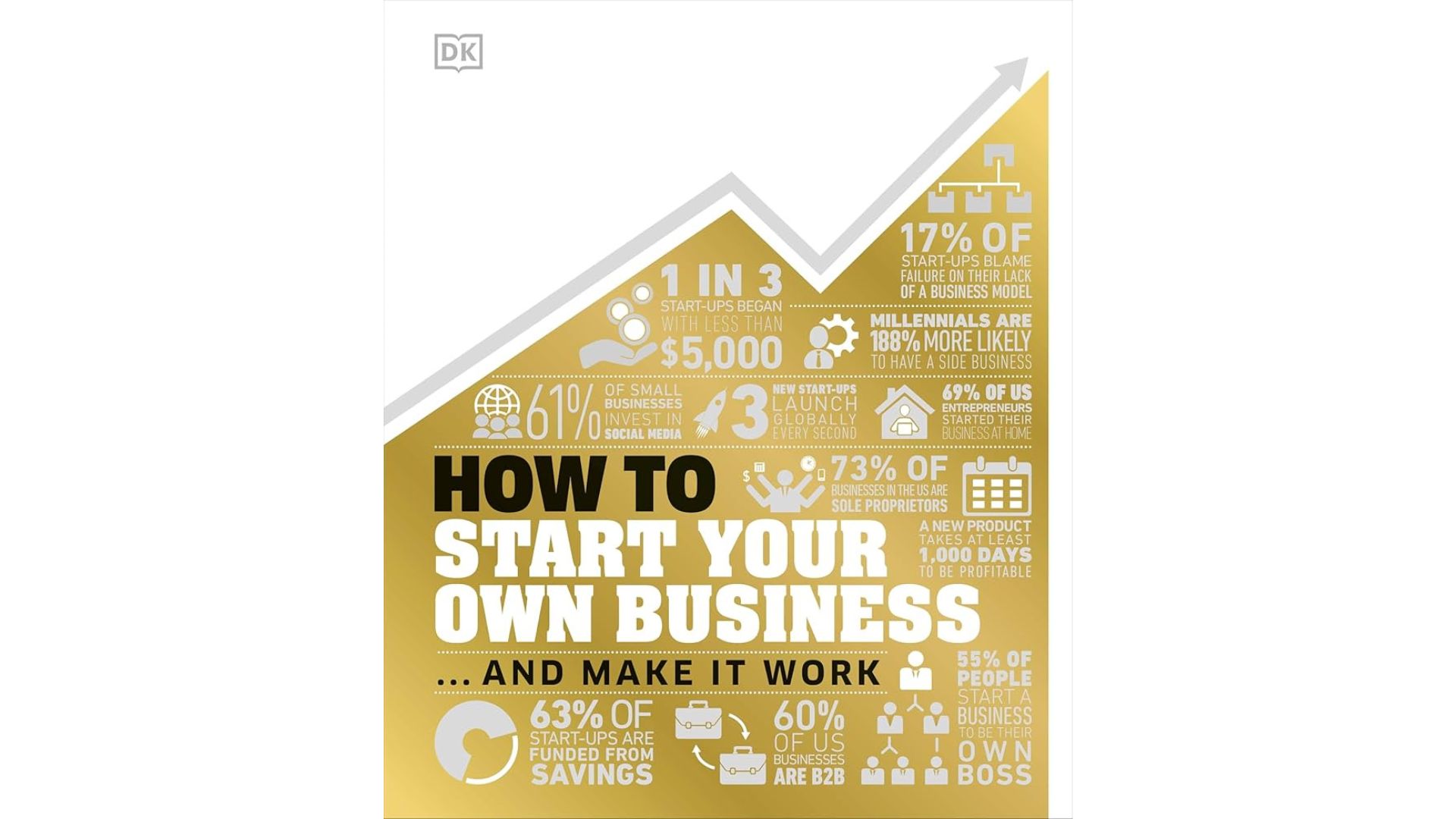
The primary psychological barrier is “not knowing where to begin.” This abstract anxiety is often more paralyzing than the actual work of the Business. Fortunately, we live in an era of Unprecedented Access. Technological Advances have democratized Information, Talent, and Global Markets, making this the most fertile time in history for the Micro-Entrepreneur. With 3 Startups Launching Globally Every Second, the speed of the Marketplace requires a Visual Roadmap—a tool that translates complex Systems Thinking into a sequence of logical, manageable steps.
By framing Business Ownership as a Toolkit rather than a mysterious art form, Founders can systematically dismantle the hurdles of Idea Validation, Legal Formation, and Market Entry. The first major hurdle, however, is not a legal filing; it is the internal decision to abandon the perceived safety of a Traditional Paycheck.
Read also: How Anchoring Bias Affects Financial Choices
——————————————————————————–
3. Making the Big Leap: Mindset and Motivation
Before a single dollar of Seed Capital is invested, a Founder must conduct a rigorous Strategic Self-Assessment. Starting a Venture is a high-pressure Long-Term Commitment that demands massive Job Satisfaction to endure the inevitable Financial Risk and Long Hours. The “Big Leap” requires a clear-eyed comparison between the stability of Employment and the autonomy of being The Boss.
Employment vs. Entrepreneurship: A Strategic Comparison
| Feature | The Company (Employee) | My Company (The Boss) |
| Pros | Financial Security, regular Paychecks, Vacation Pay, and company-funded Training. | Potential for Higher Earnings, total Strategic Control, Flexibility, and pursuing a Dream. |
| Cons | Limited Earnings, working for another’s Vision, and lack of Autonomy. | Financial Risk, Isolation, Responsibility for Failure, and no Paid Leave. |
The “So What?” Layer: Risk Mitigation via the Side Hustle
The modern strategist views the Side Hustle—a Business Venture started while maintaining primary Employment—as a vital Risk-Mitigation Strategy. Rather than a total leap of faith, the Side Hustle acts as a “springboard” or a Pilot Program. It allows you to test the Viability of a Product or Service without total Financial Exposure.
This trend is non-negotiable for the next generation of leaders; Millennials are 188% More Likely to have a Side Business than previous generations. Furthermore, considering that 69% of US Entrepreneurs Start at Home, the “garage startup” is no longer a cliché but a standard Operational Model. By leveraging a Home-Office and your existing salary to fund initial Market Testing, you effectively Bootstrap your way to Proof of Concept, ensuring that when you finally quit your job, you are stepping onto a solid Financial Foundation rather than thin air.
Once the Entrepreneurial Mindset is solidified and the internal risks are accounted for, the focus must shift to external validation: proving that your idea actually solves a problem in the Marketplace.
Read also: Why Cash Flow Thinking Beats Net Worth Obsession
——————————————————————————–
4. The Foundation: Idea Validation and The Modern Business Plan
A Business Idea does not need to be a radical Invention to succeed, but it must satisfy an underserved Need or fill a Gap in the Market. Strategic Founders do not rely on “gut feelings”; they use Data and Checklists to verify Viability.
The Good Idea Checklist
A successful Venture typically satisfies several of these strategic criteria:
- Fills a Gap in the Market: Offers an untapped Product or Service.
- Innovates: Solves a problem better than Existing Alternatives.
- Challenges Alternatives: Offers a disruptive new way of doing things.
- Stands Out: Is clearly Differentiated from the Competition.
- Meets Customer Expectations: Delivers a specific level of Quality.
- Offers Good Value: Creates a sense of Value for Money.
- Has a Purpose: Connects with the Customer’s Values.
- Harnesses Your Strengths: Leverages your Professional Skills and Contacts.
- In a Growing Market: Serves an expanding Demand.
- Can be Scaled Up: Sales can grow without Operating Costs rising at the same rate.
Case Study: Honest Tea and the Middle Ground
Seth Goldman, the co-founder of Honest Tea, provides a masterclass in Idea Validation. He identified a “Gap in the Market” between sugary Soft Drinks and flavorless Bottled Water. By noticing a lack of low-calorie, organic options during his own runs in Central Park, he moved from Problem Identification to a Viable Solution. His success was not luck; it was the result of recognizing that Demand existed for a Niche Product that the Mass Market giants were ignoring.
The “So What?” Layer: Clarity Over Length
In today’s Fast-Paced Marketplace, the Business Plan has evolved. Think of the Modern Business Plan not as a static, 50-page document gathering dust on a shelf, but as a dynamic GPS. A 50-page plan is often obsolete by the time the ink dries. Strategic Founders focus on Clarity and Agility, creating a concise Action Plan that allows for quick Pivots based on real-time Customer Feedback.
Strategic Analysis Tools
- SWOT Analysis: A framework to identify internal Strengths and Weaknesses alongside external Opportunities and Threats. It is the ultimate tool for Risk Management.
- Unique Selling Proposition (USP): This is your Competitive Advantage. Whether it is a Cost Advantage (lower price) or a Differentiation Advantage (unique features), the USP is the specific reason a customer chooses you over a Rival.
Having validated the idea and identified a USP, the Founder must now choose the Legal Vehicle that will protect their Assets and facilitate Growth.
Read also: The Difference Between Volatility and Risk
——————————————————————————–
5. Choosing Your Path: Legal Structures Simplified
The Legal Structure of your Business is not merely a box to check on a form; it is a strategic decision that dictates your Liability, your Tax Obligations, and your capacity to Raise Capital.
Sole Proprietorship (Sole Trader)
This is the most common entry point, accounting for 73% of All US Businesses.
- Pros: Minimal Startup Costs, total Operational Control, and simple Tax Filings (personal income tax).
- Cons: Unlimited Debt Liability. There is no “Corporate Veil” here. If the Business fails or is sued, your Personal Assets—your home, car, and savings—are fully exposed to creditors.
LLC (Limited Liability Company)
An LLC is a robust structure that creates a legal separation between the individual and the entity.
- Pros: It provides Limited Liability, meaning your Personal Assets are generally protected from Business Debts. It is the preferred structure for Scaling.
- Cons: Requires more rigorous Record Keeping, Annual Accounts, and potentially higher Administrative Costs.
Partnerships and the Family Charter
In a Partnership, two or more people share Ownership, Risk, and Profits. While Partnerships bring more Capital and diverse Skills, they are also a primary source of Legal Conflict.
- Strategist’s Tip: If you are starting a Family Business, a Family Charter is mandatory. This is a non-legally binding Written Agreement that outlines Accountability, Authority, Wealth Sharing, and Succession Planning. It ensures that “Family Logic” (emotion) does not sabotage “Business Logic” (profit).
Alternative Models: Franchises and Nonprofits
- Franchises: Buying into an existing Business Model and Brand. It reduces Risk but requires Upfront Investment and ongoing Royalty payments.
- Nonprofits: Cooperatives, Charities, and Social Enterprises. These entities focus on a Social Mission. While they may generate Surplus Revenue, that “Profit” must be reinvested into the cause rather than distributed to Shareholders.
The “So What?” Layer: Structuring for Capital and Growth
Your choice of Legal Entity directly impacts your Growth Potential. A Sole Proprietor has a very low capacity to Raise Capital because they cannot sell Shares (Equity). Conversely, an LLC or a Corporation is structured to attract Angel Investors and Venture Capital. Choosing the right structure on Day 1 is about ensuring your Business has the “room to grow” on Day 1,000.
With the legal framework in place, we must now address the “Lifeblood” of the Enterprise: the movement of money.
Read also: How an Insignificant Ape Conquered the World
——————————————————————————–
6. The Lifeblood: Finance, Funding, and Break-Even Points
Financial Mismanagement is the silent killer of Startups. Statistics show that 17% of Startups blame their failure specifically on the lack of a clear Business Model, and many more fail because they run out of Liquidity, even while “on paper” they are profitable.
Key Financial Terminology
- Capital: The initial “fuel” or money required to launch and sustain the Business.
- Cash Flow: The movement of money in and out. Negative Cash Flow (money leaving faster than it enters) is the most common cause of Bankruptcy.
- Bootstrapping: Relying entirely on Personal Savings and Initial Revenue to grow. This keeps Equity in the Founder’s hands. Note that 63% of Startups are Funded from Savings.
- Angel Investors: High-net-worth individuals who provide Seed Capital in exchange for Equity or Convertible Debt.
- Crowdfunding: Raising small amounts of Capital from a large number of people, usually via the internet. This also acts as a form of Market Validation.
Visualizing the Break-Even Point: From Red to Black
For a Visual Learner, the Break-Even Point is the moment the Revenue line on a graph finally crosses the Total Cost line.
- The Visualization: Imagine a graph where your Fixed Costs (rent, salaries) start at a high point on the vertical axis. As you sell more, your Total Cost line rises slowly, but your Revenue line starts at zero and climbs steeply. The Break-Even Point is that “Golden Intersection” where you stop losing money and start generating Net Profit. Before this point, you are “In the Red”; after this point, you are “In the Black.”
Data Insights for New Founders
- 1 in 3 businesses begin with less than $5,000 in Startup Capital.
- It typically takes 1,000 Days (roughly three years) for a new Product to become consistently profitable.
The “So What?” Layer: Survival in the First 1,000 Days
Understanding the difference between Revenue (money in) and Profit (money kept) is the single most critical factor for survival. A Business can have millions in Sales but still fail if its Profit Margins are razor-thin and its Operating Expenses are bloated. As a strategist, your goal is to manage the Burn Rate—the rate at which you spend your Capital before reaching the Break-Even Point.
Once the financial engine is humming, we must build the “Channels” that lead customers to your door.
Read also: Why One Index Fund Can Buy Your Freedom
——————————————————————————–
7. Connecting with the World: The Marketing Mix and Sales
Marketing is no longer the act of “shouting” at a crowd; it is the strategic act of Solving a Customer Problem. You are not selling a Product; you are selling a Transformation.
The 4 Ps: The Marketing Mix
- Product: What is the USP? What specific “Pain Point” does it alleviate?
- Price: Does your Pricing Strategy signal Luxury or Value? Be careful: a Cost Advantage is easily undercut by Rivals.
- Place: Where is the Point of Sale? Is it Online/E-commerce, Bricks and Clicks (hybrid), or traditional Retail?
- Promotion: The methods used to communicate your Value Proposition to your Target Market.
Market Segmentation and the B2B2C Model
To avoid wasting your Marketing Budget, you must segment your audience into a Customer Avatar:
- Demographic: Age (e.g., Millennials), Income, and Occupation.
- Geographic: Where they live and work.
- Psychographic: Their Values, Interests, and Personality Traits.
- Behavioral: Their Shopping Habits and Brand Loyalty.
Strategist’s Definition: Many modern businesses use the B2B2C (Business-to-Business-to-Consumer) model. In this setup, a Manufacturer (B) sells to a Wholesaler or Retailer (B), who then sells to the Final Consumer (C). For example, a soft drink company markets to you (the consumer) but actually sells its product to a supermarket. Understanding this chain is vital for managing your Supply Chain and Sales Strategy.
The “So What?” Layer: The Digital Competitive Landscape
Digital Marketing has leveled the playing field. 61% of Small Businesses now invest in Social Media to build their Brand Identity. While giants have larger budgets, a Small Business has the “Agility Advantage.” You can use Social Media to provide a personal, human connection that a Global Corporation cannot replicate. In a crowded Marketplace, “Human Connection” is often your strongest Differentiator.
Read also: Why Modern America Feels Lost Despite Having Everything
——————————————————————————–
8. Critical Analysis: The Strategist’s Perspective
From a Strategic Business standpoint, the “Visual-First” methodology of business education is highly effective for Cognitive Retention. By deconstructing complex Systems into “Fact-Rich” visuals, a Founder can see the interconnectedness of all departments—how a choice in Legal Structure impacts Tax Liability, or how Market Segmentation informs Product Development.
The “So What?” Layer: Visual Logic and Cognitive Load
Visual learning works because it reduces Cognitive Load. Traditional business textbooks often bury the “Signal” (the actionable advice) in the “Noise” (dense prose). By using Infographics and Flowcharts, the brain can map the Startup Journey as a series of Logical Steps rather than a chaotic scramble.
However, a strategist must also recognize the limitations. This framework focuses on Fundamentals. It ensures you don’t miss Critical Early Steps—like checking for a Gap in the Market or drafting a Family Charter. It does not cover advanced Corporate Tax Strategies or high-level Mergers and Acquisitions. But for the First-Time Entrepreneur, a “Visual Roadmap” that prevents a fatal Legal or Financial error in the first year is worth more than a decade of advanced Corporate Theory.
——————————————————————————–
9. The Balanced View: Pros & Cons
| Pros | Cons |
| Visual Nature: Optimized for quick comprehension and Information Retention. | Lack of Depth: Does not cover advanced Tax Planning or Complex Legal maneuvers. |
| Beginner-Friendly: Uses accessible language to eliminate Analysis Paralysis. | Generalized: Legal and Tax advice is broad and may vary by Jurisdiction. |
| Full Journey Coverage: Tracks the process from Ideation to Exit Strategy. | Fast-Paced: Topics like Intellectual Property require deeper specialized study. |
| Data-Driven: Grounded in real-world Statistics (e.g., 69% Home-Based start-ups). |
——————————————————————————–
10. Conclusion: Your Roadmap to Being Your Own Boss
Starting a Business is not an insurmountable leap of faith; it is a Series of Logical Steps. While 55% of People start a business with the simple motivation to Be Their Own Boss, the ones who survive the First 1,000 Days are those who transition from “Dreamers” to “Strategists.”
Case Study: Microsoft and the Power of Vision
When Bill Gates founded Microsoft in 1975, his Vision Statement was simple: “A computer on every desk and in every home.” This was not just a goal; it was a Strategic Compass that informed every Product Development and Marketing decision for decades. As the Market changed, Microsoft pivoted its Vision to focus on “Empowerment.” This illustrates that while your Action Plan must be agile, your Core Purpose—your “Why”—must be the anchor that keeps you steady through the Entrepreneurial Storms.
By utilizing tools like SWOT Analysis, Cash Flow Forecasting, and Market Segmentation, you transform an abstract dream into a professional Enterprise. The Technology is available, the Information is accessible, and the Gap in the Market is waiting for your unique solution.
Read also: Howard Marks & The Art of Second-Level Thinking
——————————————————————————–
11. Call to Action: Take the First Step
The “Overwhelmed” phase ends now. It is time to enter the Action Phase of your Entrepreneurial Journey. Stop researching and start executing. Use the Checklists, define your Unique Selling Proposition, and begin building the life you’ve imagined.
[Get Your Copy of ‘How to Start Your Own Business’ on Amazon Here]