

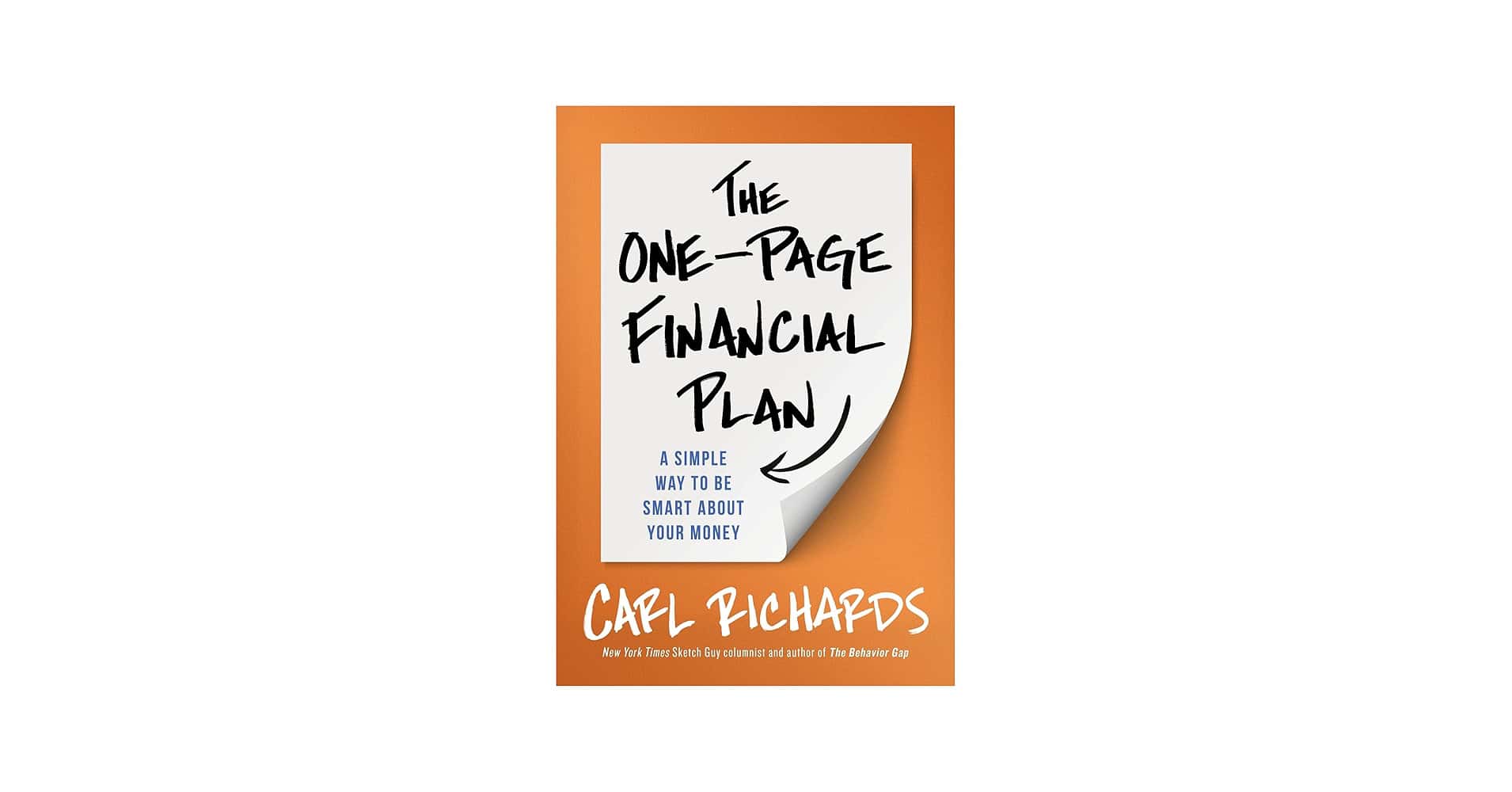
Star Rating: 4.6/5
One-Sentence Verdict: Carl Richards sweeps away the 50-page financial binder and replaces it with a single, Sharpie-sketched page that connects your bank account to your soul.
Best For: High-earning overthinkers, couples who argue about “the numbers,” and anyone paralyzed by the complexity of Wall Street.
Difficulty: Extremely Easy.
The “So What?” Layer: For the high-performing professional, complexity is a hiding place for anxiety. This minimalist strategy is the psychological circuit-breaker you need to stop analyzing and start living. It transforms money from a source of dread into a tool for a meaningful life.
——————————————————————————–
1. INTRODUCTION: The Antidote to Financial Anxiety
Imagine Steve. Steve is a corporate CFO. He spends his days managing multimillion-dollar budgets, navigating complex tax codes, and presenting high-level forecasts to a board of directors. He is, by every definition, mathematically gifted. Yet, when Steve goes home and sees a stack of unopened retirement account statements on his kitchen counter, he feels a familiar wave of nausea. He doesn’t open them. He tells himself he’ll “get to it this weekend,” but the weekend comes and goes. Steve is caught in the complexity trap.
If a man who manages a corporation’s finances is paralyzed by his own checkbook, what hope is there for the rest of us?
Carl Richards, the “Sketch Guy” from The New York Times, wrote The One-Page Financial Plan for every Steve in the world. He recognizes that we are bombarded with a “firehose of data”—market rollercoasters, 24-hour news cycles, and “hot tips” from relatives. This information overload creates a paralyzing fear of doing the “wrong thing,” leading us to do nothing at all.
Richards’ philosophy is a radical simplification. Having spent twenty years as a Certified Financial Planner (CFP), he realized that the industry thrives on making things look complicated so they can charge you to “un-complicate” them. But if you listen to his audiobook—which he narrates himself with a sense of seasoned, honest empathy—you’ll hear a different message: If a plan doesn’t fit on a single page, it’s too complex to follow. He isn’t just giving you a budget; he’s giving you a compass.
——————————————————————————–
2. THE FOUNDATION: Why is Money Really Important to You?
Before we ever pick up a calculator, we have to pick up a Sharpie. Richards argues that the greatest mistake in finance is starting with “the recipe for your money buckets” (what the pros call asset allocation) before you even know what you’re cooking.
The Power of “Why”
Traditional planning asks: “How much do you want to have when you’re 65?” Richards asks: “Why is money important to you?”
To illustrate this, imagine Carl sitting across from his friends, Sara and Mark. They were high-achieving professionals, much like Steve, yet their financial conversations were often cold and tense. When Carl asked Sara why money was important, she gave the standard answer: “Freedom.”
Carl didn’t stop there. He leaned in and asked, “Why is freedom important?” There was a long silence. The tension in the room was thick. Finally, Sara’s voice softened. She admitted that she felt like she was on a treadmill. She didn’t want “freedom” in the abstract; she wanted time. She wanted to know they had enough of a cushion so she could scale back her hours and finally start a family without the constant hum of financial panic.
That shift—from “Freedom” to “Time for Family”—changed everything. It wasn’t about the rate of return anymore; it was about the life they were building.
The Doctor Analogy
Richards often uses the “doctor analogy” to ground this. If you walk into a doctor’s office and they immediately hand you a prescription for a blue pill without asking where it hurts, you’d walk out. You expect an examination first. Financial planning should be no different. You must “examine” your values before you “prescribe” a savings rate.
Read also: Think and Grow Rich Summary: The 13 Principles of Success (2026 Guide)
Actionable Command: Finding Your Why
To build your plan, you need to find your “North Star.” Use the Three-Why Rule to get past the surface:
- [ ] Step 1: The Initial Answer. Ask yourself, “Why is money important to me?” (Common answer: “Security.”)
- [ ] Step 2: The First Drill-Down. Ask, “Why is security important?” (Common answer: “So I don’t have to worry.”)
- [ ] Step 3: The Deep Value. Ask, “Why is not worrying important?” (Real answer: “So I can be present with my kids instead of checking my phone for stock updates.”)
- [ ] The Goal: Write that final answer at the top of a blank sheet of paper. This is the “Title” of your financial life.
The “So What?” Layer: When the market enters a rollercoaster phase and the headlines scream for you to sell, a plan titled “Wealth Accumulation” will fail you. But a plan titled “Being Present for My Kids” acts as a behavioral anchor. It reminds you that the money is just a tool for that specific, sacred goal.
——————————————————————————–
3. MAPPING THE JOURNEY: Guessing Your Way to Success
We are obsessed with precision. We want to know exactly what the inflation rate will be in 2038. Richards calls this the “illusion of certainty.” In reality, a 30-year financial projection is just a spreadsheet full of guesses.
The Starting Line: No Shame, No Blame
To know where you’re going, you have to be honest about where you are. This requires a “Personal Balance Sheet,” but it must be executed with a policy of “No Shame, No Blame.”
Richards is remarkably vulnerable here. In his writings and audio sessions, he shares his own professional “failure”—the short sale of his own home during a difficult period. This isn’t a guy lecturing from a mountain of gold; this is a guy who has “broken a financial sweat.” If a CFP can have a real estate deal go south, you can forgive yourself for your student loans or your credit card balance.
- List What You Own (Assets): Your house, your savings, your 401(k).
- List What You Owe (Liabilities): Your mortgage, that car loan, the credit card.
- The Truth: Subtract what you owe from what you own.
This isn’t a judgment on your character; it’s just a coordinate on a map.
The Finish Line: Goals are Just Guesses
Richards encourages you to embrace “the beauty of the guess.” Your goals are not set in stone. Life happens—twins arrive when you budgeted for one, or a “secure” job disappears. Instead of a rigid itinerary, view your plan as a vacation sketch. You know you want to head West; you’ll figure out the specific pit stops as you drive. This flexibility reduces the “analysis paralysis” that keeps people from starting.
——————————————————————————–
4. THE PRAGMATIC DEBATE: Paying Off Debt vs. Investing
For the high-earner, debt is often shrouded in shame. You feel “stupid” for having a balance when you have a six-figure salary. Richards deconstructs this tension by looking at the two sides of the coin.
The Mathematical vs. Emotional Perspectives
Mathematically, debt is a “risk-free return.” If you pay off a 12% interest credit card, you have effectively “earned” a 12% return on that money, guaranteed. You won’t find that in the stock market.
But we aren’t robots. We are “emotional creatures.” Sometimes, paying off a small, annoying debt gives you the psychological momentum to tackle the big ones. Richards advocates for a “Balanced Approach.”
| Feature | Mathematical Perspective | Emotional Perspective |
| Primary Goal | Minimize interest paid. | Maximize peace of mind. |
| Strategy | Pay highest interest first. | Pay smallest balance first (The Snowball). |
| View of Debt | A negative number. | A heavy weight on your shoulders. |
| The “So What?” | Focuses on the spreadsheet. | Focuses on the “No Shame” policy. |
The “So What?” Layer: The One-Page Plan cures the “debt shame” by reframing repayment as an investment in your “Why.” You aren’t just “paying a bill”; you are “buying back your freedom.”
——————————————————————————–
5. BEHAVIORAL FINANCE: Minding the “Behavior Gap”
This is Richards’ most famous contribution to finance. The Behavior Gap is the distance between the returns an investment earns and the returns the investor actually keeps.
The “Big Mistake”
If a fund returns 10% over ten years, why does the average investor only see 4%? Because we are hardwired for survival, which translates to “greed” and “fear” in the markets. We buy when everyone is bragging at cocktail parties (buying high) and we sell when the news looks like an apocalypse movie (selling low).
Richards explains that “bad calls about money aren’t failures; they’re just what happens when emotional creatures make decisions about the future with limited information.” The One-Page Plan is your behavioral circuit breaker. It’s the thing you look at when you’re tempted to chase a “hot tip” from your brother-in-law. If the tip doesn’t align with the napkin sketch of your values, you don’t do it.
The “So What?” Layer: Wealth isn’t built by being a genius trader. It’s built by “behaving for a long time.” The person who can stay calm during a market rollercoaster wins, every single time.
Read also: The Magic Formula Investing Guide: Review of The Little Book That Beats the Market (2026)
——————————————————————————–
6. THE MECHANICS: Budgeting and Saving as Awareness Tools
Richards hates the word “budget” because it sounds like “diet”—restrictive and miserable. Instead, he reframes it as a Tool for Awareness.
The Spending Cleanse
To recalibrate your relationship with money, Richards suggests a “Spending Cleanse.” For a set period (like a week or a month), you stop all non-essential spending. You aren’t doing this to save a million dollars; you’re doing it to see the “stories” you tell yourself. Do you really need that third streaming service, or is it just noise?
The 72-Hour Test
This is a core Richards mechanic. Before any non-essential purchase over a certain dollar amount, you must wait 72 hours. If, after three days, the item still aligns with your “Why,” buy it. Usually, the dopamine hit fades by hour 48, and the money stays in your pocket.
Saving Reasonably
Forget the rigid “15% rule.” Richards argues for “saving as much as you reasonably can.”
- Automation: Make the decision once. Let the computer move the money before you can spend it.
- Windfalls: If you get a bonus, don’t “lifestyle creep.” Use it to fill a bucket on your one-page plan.
——————————————————————————–
7. CRITICAL ANALYSIS: Is One Page Really Enough?
Critics—often those with something to sell—argue that modern finance is too complex for a napkin. They point to tax-loss harvesting, estate planning, and the “recipe for your money buckets.”
Richards counters this with the Compass vs. Map distinction:
- The One-Page Plan is the Compass: It tells you where you are going and why. It is the macro-strategy that you must own.
- Technical Details are the Map: This is the micro-data. This is where you might hire a “Real Financial Advisor” to help with the heavy lifting of tax laws or insurance structures.
The danger is complexity bias. We are conditioned to believe that if a plan is simple, it must be shallow. Richards argues the opposite: a 50-page binder is so complex it becomes a paperweight. A one-page plan is so simple it actually gets executed. You must own the “Why,” even if you delegate the “How.”
——————————————————————————–
8. PROS AND CONS: A Balanced Review
Pros
- Psychological Relief: It replaces financial dread with a sense of “Big Picture Clarity.”
- Spousal Harmony: It’s hard to argue over a 50-page spreadsheet; it’s easy to align on a single page of shared values.
- Behavioral Protection: It provides a “North Star” to prevent you from making the “Big Mistake” during market crashes.
- Accessible: Richards’ “Sketch Guy” style removes the wall of jargon that keeps beginners out.
Cons
- Lacks Granular Data: You won’t find specific ticker symbols or “recipe” percentages here.
- Requires Honesty: The “Why” exercise is emotionally demanding. It’s easier to look at numbers than to look at your soul.
——————————————————————————–
9. CONCLUSION: Money as a Tool, Not a Goal
The ultimate message of The One-Page Financial Plan is a permission slip. It gives you permission to stop overthinking and start living.
Wealth is not the number at the bottom of a spreadsheet. Wealth is the ability to spend your “life energy” on the things that matter. Richards reminds us that money is a tool—like a hammer. If you spend your whole life polishing the hammer but never build the house, you’ve missed the point.
Embrace “the beauty of the guess.” Understand that your priorities will shift, and your one-page plan will shift with them. By simplifying your finances, you aren’t being “lazy”—you’re being strategically smart. You’re clearing the brush so you can finally see the path.
——————————————————————————–
10. CALL TO ACTION: Build Your Plan
You don’t need a math degree. You just need a Sharpie and ten minutes of honesty.
- Step 1: Grab a napkin or a single sheet of paper.
- Step 2: Write at the top: “Why is money important to me?”
- Step 3: Use the Three-Why Rule to find your core value.
- Step 4: List your “best guess” goals (e.g., “Pay off the house in 10 years,” “Take a family trip every summer”).
Ready to bridge the gap?

