

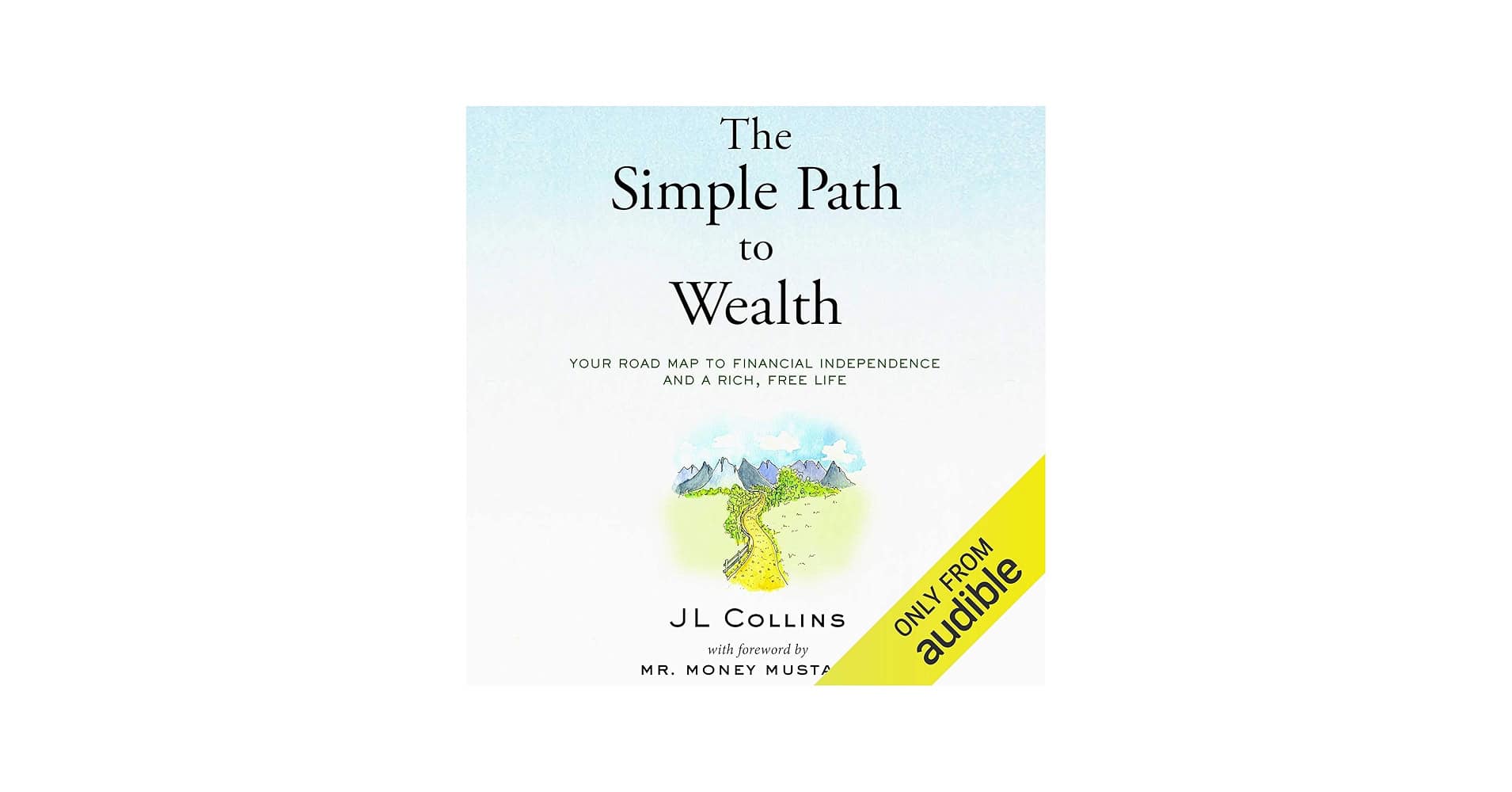
1. THE SNAPSHOT
Now, listen closely. Investing often feels like walking into a storm of jargon, complex charts, and conflicting advice designed to make you feel small. This snapshot is your essential starting point because it strips away the noise. It is the “North Star” for anyone who wants the power of money without the headache of managing it. We begin here because financial success isn’t about being a math whiz; it’s about having the right roadmap.
- Star Rating: 5/5
- One-Sentence Verdict: A radically simple blueprint showing that financial freedom requires far less complexity than Wall Street suggests.
- Best For: Beginners, risk-averse investors, and FIRE followers.
- Difficulty: Extremely Easy.
- Call to Action: [Get the book on Amazon here]
While these stats provide the “what,” understanding the “why” requires us to look at the heart behind the numbers—a father’s desire to see his child live a life of total autonomy.
——————————————————————————–
2. INTRODUCTION: A FATHER’S LEGACY OF LIBERATION
In the world of finance, clarity is a strategic advantage. Most people lose money not because they aren’t smart, but because they are overwhelmed. JL Collins understood this deeply when he began writing a series of letters to his daughter. She told him: “I know money is important. I just don’t want to spend my life thinking about it.” This was his “aha” moment. Most people have better things to do than stare at ticker tapes—they have diseases to cure, children to teach, and mountains to climb.
Wall Street profits from your confusion. If they can make investing feel like a dark art, you are forced into their “waiting arms,” paying high fees for complex products that are less effective than simple ones. This book is a manifesto for liberation. It argues that “Radical Simplicity” is actually more powerful than any complex strategy. By owning the entire market, you stop being a consumer of financial products and start being an owner of the global economy.
This shift in mindset leads directly to the most powerful concept in the book: the ability to walk away.
——————————————————————————–
3. THE PHILOSOPHY OF “F-YOU MONEY”
My dear reader, mindset is the foundational engine of wealth. Before you can grow your bank account, you must decide that freedom is more valuable than luxury. Collins introduces the concept of “F-You Money”—having enough invested assets to walk away from a toxic job, a bad boss, or a life-draining situation. It is your “escape hatch” and your “moat.”
To build this moat, you must first address the “silent predator”: Debt. Debt is a “hair-on-fire” emergency. It is a financial prison that steals your peace and your future options. If you have debt, make its destruction your obsession. Use the Avalanche Method: list your debts by interest rate and throw every extra dollar at the highest-interest one first. It is the most mathematically efficient way to kill the beast.
Principles of Freedom > Luxury:
- Delayed Gratification: Every dollar saved today is a “worker” sent out to buy your future time.
- Intentional Spending: Frugality isn’t deprivation; it’s choosing time over “stuff.”
- Ownership over Consumption: Stop asking “What can I buy?” and start asking “How can I make this money work for me?”
So What? Having an “escape hatch” fundamentally changes your power dynamic. When you have FU Money, you act from a place of strength, not desperation. You carry yourself differently in negotiations, and you are less likely to tolerate burnout because you aren’t financially coerced into staying.
Read also: Why Modern America Feels Lost Despite Having Everything
——————————————————————————–
4. MARKET CRASHES: EMBRACING THE “CLEANSING”
Once you start investing, the biggest threat to your wealth isn’t the market—it’s your own heartbeat. You must develop “emotional armor” to handle the inevitable storms. Market crashes are not disasters; they are a normal, frequent part of a “self-cleansing” process. During a crash, the market naturally removes weak, poorly managed companies, while your index fund reallocates your capital to the strong survivors.
Truths to Relieve Anxiety:
- The market trends upward: Over any 20+ year period, the market has always recovered and reached new highs.
- The only true loss comes from Panic Selling: The market is a roller coaster; the only people who get hurt are those who jump off mid-ride.
- Crashes are “Sales”: For those in the accumulation phase, a crash is a gift—it’s the universe putting your favorite companies on a 30% to 50% discount.
So What? Investors who attempt to time the market usually fail because they have to be right twice: once on the way out and once on the way back in. The disciplined investor who stays the course wins by simply refusing to flinch.
——————————————————————————–
5. THE CORE STRATEGY: THE MIGHTY VTSAX
Why juggle twenty different funds when one will do the job better? Collins advocates for a single tool: the Vanguard Total Stock Market Index Fund (VTSAX) or its ETF equivalent, VTI. This approach is superior because it is “boring brilliance”—it avoids the emotional roller coaster of stock picking and shields you from the high costs of active management.
| Feature | VTSAX Description |
| Ownership | Instant ownership of over 4,000 public U.S. companies across every sector. |
| Maintenance | Self-cleansing; winners naturally grow while losers drop off the index. |
| Cost | Ultra-low expense ratio (approx. 0.04%), meaning you keep 99.96% of your gains. |
So What? Trying to find the “needle” (the next Tesla) is a gambler’s game. By “owning the whole haystack,” you are guaranteed to own every winner that pulls the entire market upward.
——————————————————————————–
6. THE TWO PHASES OF WEALTH
Stop thinking about your age. Instead, think about your objective. Are you trying to grow your pile of gold, or are you trying to live off it?
The Wealth Accumulation Phase
Stop what you are doing and aim for a 50% savings rate. If you can live on half of what you earn, you can buy your freedom in 15–17 years rather than 50.
- Strategy: 100% VTSAX.
- Action: Save, invest, and ignore the headlines. Every dollar is a seed.
The Wealth Preservation Phase
Once you have reached your “Freedom Number,” transition to protecting what you’ve built. You must add bonds (like VBTLX) to dampen the volatility.
- Example Allocation: 75% Stocks / 25% Bonds.
- Purpose: Bonds provide a “cushion” so you never have to sell stocks during a market dip to pay your rent.
- Read also: The Blueprint for Permissionless Wealth and Perpetual Peace
——————————————————————————–
7. THE 4% RULE: THE MATHEMATICS OF RETIREMENT
How do you know when you are truly free? Look to the Trinity Study, which established the 4% Rule. This is the guideline for defining Financial Independence (FI).
- The Math: If you withdraw 4% of your portfolio in year one and adjust for inflation thereafter, your money is statistically likely to last forever.
- The Rule of 25: Multiply your annual expenses by 25 to find your FI Number. (If you spend $40,000 a year, you need $1 million).
So What? The 4% rule is a guideline, not a guarantee. Reaching your FI Number is the precise moment you stop being a servant to the paycheck. It transforms money from a “master” into a “tool” that serves your life.
——————————————————————————–
8. WHY WALL STREET IS NOT ON YOUR SIDE
The financial industry thrives on complexity because complexity generates fees. Most advisors are salespeople in disguise.
- Fiduciary: A professional legally obligated to put your interests first. Ask them: “Are you a fiduciary 100% of the time?” If they hesitate, walk away.
- Suitability Standard: A salesperson who only has to suggest products that are “suitable,” even if they carry high commissions that bleed you dry.
- The “Hidden Tax”: A seemingly small 1% fee can strip 20-30% of your final portfolio. On a 100k investment over 30 years, that 1% difference can cost you nearly **187,000** in lost growth.
So What? You are the person most qualified to manage your own money. Using low-cost index funds removes the middleman and keeps the “magic of compounding” in your own pocket.
——————————————————————————–
9. EVALUATING THE SIMPLE PATH: PROS & CONS
To walk this path, you must understand both the strength of the road and the steepness of the hills.
Pros:
- Extreme reduction in financial anxiety and decision fatigue.
- Ultra-low costs (0.04% vs. the industry average of 1.0% or higher).
- Mathematically grounded in historical data and the Trinity Study.
Cons:
- Heavy U.S. Concentration: You are betting on the U.S. economy. (Note: Collins justifies this because VTSAX companies derive significant revenue internationally).
- Psychological Demand: It requires immense discipline to buy more when the world is panicking.
- Minimal Diversification: It ignores alternative assets like real estate or gold.
——————————————————————————–
10. CONCLUSION: BUY THE HAYSTACK, BUY YOUR FREEDOM
A rich life is a free life. Money can buy many things, but nothing is more valuable than your freedom. If you follow the “Simple Path,” you aren’t just building a portfolio; you are building a legacy of autonomy.
The Four Golden Rules:
- Spend less than you earn.
- Invest the surplus in VTSAX.
- Avoid all debt.
- Ignore the noise.
My final fatherly advice is this: Don’t let the pursuit of “more” distract you from the beauty of “enough.” Use money to buy your time back, because time is the only thing you can’t earn more of.
——————————————————————————–
11. CALL TO ACTION
Keep it simple. Buy the book, then buy the whole haystack.

