1. THE SNAPSHOT (Executive Quick-Reference)
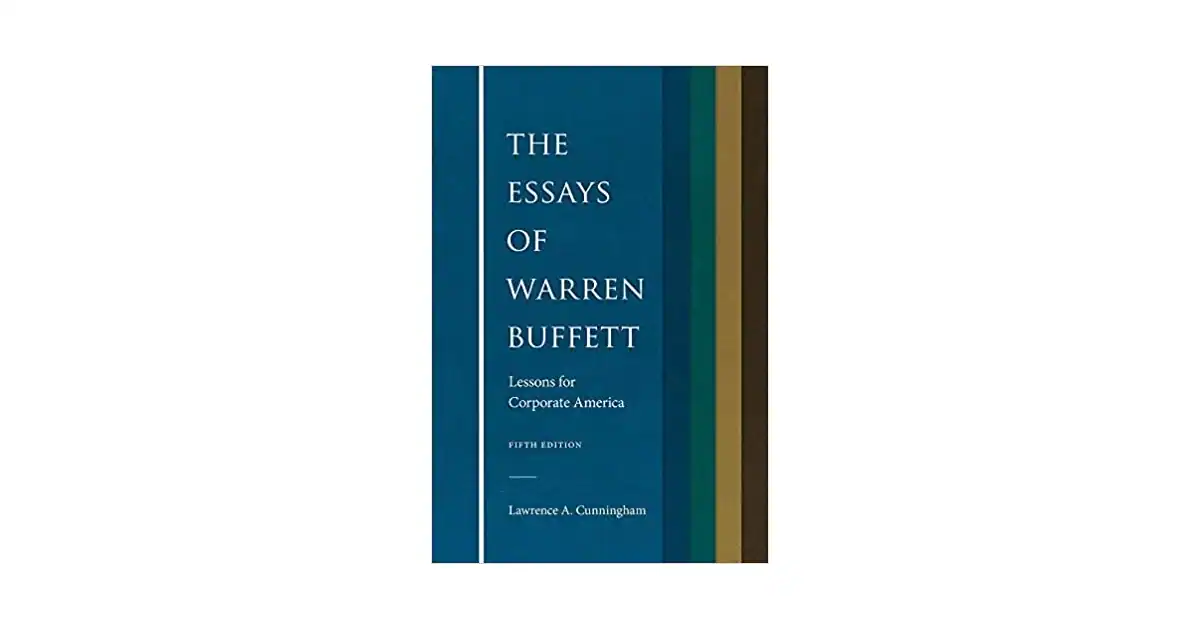
For over half a century, the annual letters of Warren Buffett have served as the “Bible of Investing,” providing a report of stewardship that transcends typical corporate communication. However, the brilliance of these letters was historically fragmented by their chronological delivery. Lawrence Cunningham’s thematic arrangement performs a vital service for the sophisticated investor by synthesizing decades of scattered wisdom into a coherent philosophy of capital. By grouping these letters into pillars such as corporate governance, finance, and accounting, Cunningham reveals the internal consistency of Buffett’s ethics and logic. Reading this arrangement provides a significant strategic advantage over consuming the raw letters, as it allows for a rigorous cross-examination of the “Oracle’s” mind, transforming historical data into a masterclass on long-term value creation.
- Star Rating: 5/5 (Masterpiece Status)
- One-Sentence Verdict: The definitive collection of letters that teaches you how to think like a business owner, not just a stock picker.
- Best For: Serious Investors, Business Owners, CEO aspirants, and Capital Allocators.
- Difficulty: Hard / Dense (Focusing on the “Owner’s Manual” complexity and accounting nuances).
This collection serves as the ultimate grounding mechanism for professionals navigating increasingly volatile global markets.
——————————————————————————–
2. INTRODUCTION: The Antidote to “Get Rich Quick” Culture
Warren Buffett has never authored a formal textbook. Instead, he has produced a series of “reports of stewardship,” characterized by a degree of radical candor that stands in stark contrast to the sanitized narratives of modern corporate PR. In an era dominated by a “get rich quick” speculative culture—where crypto-assets and high-frequency trading are often “gloriously uncoupled” from business reality—Buffett’s philosophy offers the ultimate antidote. His is a “get rich slow” compounding model built on the bedrock of economic substance.
Lawrence Cunningham’s thematic organization is the superior way to internalize this wisdom because it reveals the architectural integrity of Buffett’s logic. Buffett’s “partnership” approach to shareholders represents a radical departure from conventional governance. While many CEOs view shareholders as a “revolving door” of nameless capital providers, Buffett treats them as life-long co-venturers. This orientation governs every strategic decision at Berkshire Hathaway, shifting the focus from ephemeral price fluctuations to the persistent health of the business engine.
——————————————————————————–
3. THE BIG IDEA: The “Owner-Orientation” Philosophy
The most strategic pivot an investor can make is moving from the mindset of a “stockholder” to that of a “business owner.” This is the cornerstone of the Berkshire model. Buffett characterizes this relationship as a “Partnership Model,” anchored in 13 Owner-Related Business Principles.
The Partnership Model in Practice:
- Principle 1 (Partnership Attitude): Buffett and Munger do not view Berkshire as the ultimate owner of assets, but as a conduit through which shareholders own those assets.
- Principle 11 (Reluctance to Sell): Berkshire remains a “forever” home for businesses, refusing to sell good operations and remaining reluctant to dump even sub-par businesses as long as they generate cash and maintain good labor relations.
- Principle 13 (Candor and Secrecy): While Berkshire is radically candid about business performance, it maintains strict secrecy regarding its activities in marketable securities to prevent competitive appropriation of its best ideas.
- Eating Our Own Cooking: To solve the Agency Problem, Buffett and Munger keep virtually their entire net worth in Berkshire stock, ensuring their financial suffering is proportional to that of their partners when mistakes occur.
By viewing a stock as fractional ownership of a farm or an apartment house, the professional investor becomes insulated from “Mr. Market’s” daily mood swings. One does not sell a family farm simply because a neighbor offers a low price on a Tuesday; similarly, the owner-oriented investor ignores market volatility in favor of long-term earnings progress.
——————————————————————————–
4. FIVE CORE LESSONS FROM THE ORACLE
These lessons are the structural pillars of a multi-billion dollar enterprise, designed to survive and thrive across decades of disruption.
Lesson 1: Mr. Market
Using Ben Graham’s allegory, Buffett describes the market as an emotionally volatile partner. Mr. Market is there to “serve you, not guide you.” His daily price quotes are reflections of his manic-depressive nature, not necessarily the business’s value.
- Real World Application: During market downturns, do not let the market’s “voting machine” influence your judgment. Instead, use the discount it offers to buy high-quality businesses at a fraction of their Intrinsic Value.
Lesson 2: The Circle of Competence
Risk is not mitigated through broad diversification, but through the intensity of focus. Buffett argues that “I don’t know” is a valid and powerful investment position. Stepping outside what you fundamentally understand is where permanent capital loss occurs.
- Real World Application: Resist the Institutional Imperative—the lemming-like urge to mimic peers by piling into “hot” sectors or complex technological trends that fall outside your specialized knowledge.
Lesson 3: Economic Moats
Buffett distinguishes between “Franchise” businesses and “Commodity” businesses. A franchise possesses Economic Goodwill, allowing it to raise prices without losing market share. This is perfectly illustrated by See’s Candy: In 1983, it earned 27 million** pre-tax on just **11 million in net operating assets. By 1995, its pre-tax earnings grew to 50 million** while requiring only **5 million in assets.
- Real World Application: Seek companies where brand power and customer loyalty allow for high returns on Capital Expenditures without requiring constant, massive reinvestment to stay competitive.
Lesson 4: Capital Allocation
The CEO’s most vital role is that of “Chief Capital Officer.” Buffett warns of the “Leaky Boat” theory: even a brilliant manager cannot save a business with fundamentally poor economics. He also warns against the “Parade Analogy”: in commodity industries, companies often stand on tiptoes (reinvesting heavily) to see better, but eventually, everyone’s legs hurt and no one sees any better because the competition does the same.
- Real World Application: Evaluate how a CEO manages Owner Earnings. If they are plowing cash into “leaky boat” industries solely for the sake of expansion, they are destroying shareholder value.
Lesson 5: Ignore the Macro
Buffett ignores interest rate forecasts and political noise to focus on Intrinsic Value, which he defines as “the discounted value of the cash that can be taken out of a business during its remaining life.”
- Real World Application: Focus on the “weighing machine” of earnings. If the long-term cash generation of a business is secure, short-term macroeconomic shifts are merely noise.
——————————————————————————–
5. PERSONAL PERSPECTIVE: Value Investing in the Age of AI (2026)
In an era of high-frequency trading and Artificial Intelligence, critics often claim value investing is obsolete. On the contrary, Buffett’s principles are more relevant than ever. AI can process data at lightning speed, but it cannot replicate human rationality and self-control.
To navigate the “accounting mirages” of tech-heavy balance sheets, investors must look to Buffett’s warning in Ben Graham’s 1936 satire on US Steel. In that satire, Graham showed how a company could theoretically turn a 2.76 per share loss** into a **49.80 profit by writing plant assets down to minus $1 billion to create “appreciation credits.”
Modern investors must use Look-Through Earnings—which include Berkshire’s share of the undistributed earnings of its investees—to identify the “true economic engine” of a holding. While AI focuses on the “voting machine” of data, human rationality focuses on the “weighing machine” of substance. The Margin of Safety remains the ultimate psychological discipline against algorithmic mania.
——————————————————————————–
6. CRITICAL ANALYSIS: THE INVESTOR’S CRITIQUE
Committing to this 200+ page thematic resource requires an understanding of its unique strategic trade-offs.
| Pros | Cons |
| Radical Candor: Unprecedented honesty regarding mistakes, such as the 21-year struggle with the textile mill. | Lacks Technical Charts: No moving averages, “candles,” or technical indicators. |
| Timelessness: Principles remain valid despite shifting tax codes and interest rates. | Repetitive (by design): Core ideas are reinforced through different decades to show consistency. |
| Internalized Wisdom: Teaches a rigorous way of thinking rather than a static set of rules. | High Density: Requires a baseline understanding of accounting to appreciate the nuances of Owner Earnings. |
The lack of technical charts is a feature, not a bug. Buffett views “beta” (volatility) as a flawed measure of risk. For the owner-oriented investor, a drop in price makes a stock less risky because you are obtaining the same assets for a lower price. This debunking of standard dogma is essential for any serious capital allocator.
——————————————————————————–
7. THE FILTER: WHO IS THIS BOOK NOT FOR?
In the spirit of the Circle of Competence, it is vital to know who should avoid this text.
- Day Traders: Those seeking “price wiggles” or short-term momentum will find no solace here.
- Technical Analysts: There are no patterns to follow; only business fundamentals and frictional costs to consider.
- Short-term Speculators: If your holding period is not “forever,” the focus on Margin of Safety and deferred tax compounding will feel frustrating.
Buffett contrasts his approach with the “Cigar Butt” method—buying a failing business because it has “one puff of profit” left. He has learned that time is the friend of a wonderful business and the enemy of a mediocre one.
——————————————————————————–
8. CONCLUSION & FINAL VERDICT
The Essays of Warren Buffett is a lifetime companion, not a one-time read. Its enduring legacy is the ability to move capital from the “impatient to the patient.” The “So What?” is clear: by treating investments as partnerships and demanding a Margin of Safety, you insulate your net worth from the inevitable storms of the global economy.
The Margin of Safety is a life principle, not just a financial one. It means never trading a good night’s sleep for a few extra percentage points of return. As the Oracle reminds us, “To finish first, you must first finish.”
——————————————————————————–
9. CALL TO ACTION
- Purchase the Hardbound Copy: This text belongs on the desk of every serious capital allocator as a permanent reference guide for evaluating corporate integrity and Capital Allocation.
- The Audiobook Advantage: To “listen to the mentor” during your commute, the Audiobook format is highly recommended. It allows the sophisticated wit and authoritative tone of Buffett’s letters to become a regular part of your professional development.
Master the mind of the owner. Ignore the noise of the crowd.