Do you ever feel like you’re stuck on a financial treadmill? You work harder, get a raise, pay your bills, and somehow end up with no more breathing room than before. You run faster and faster, but your financial scenery never changes.
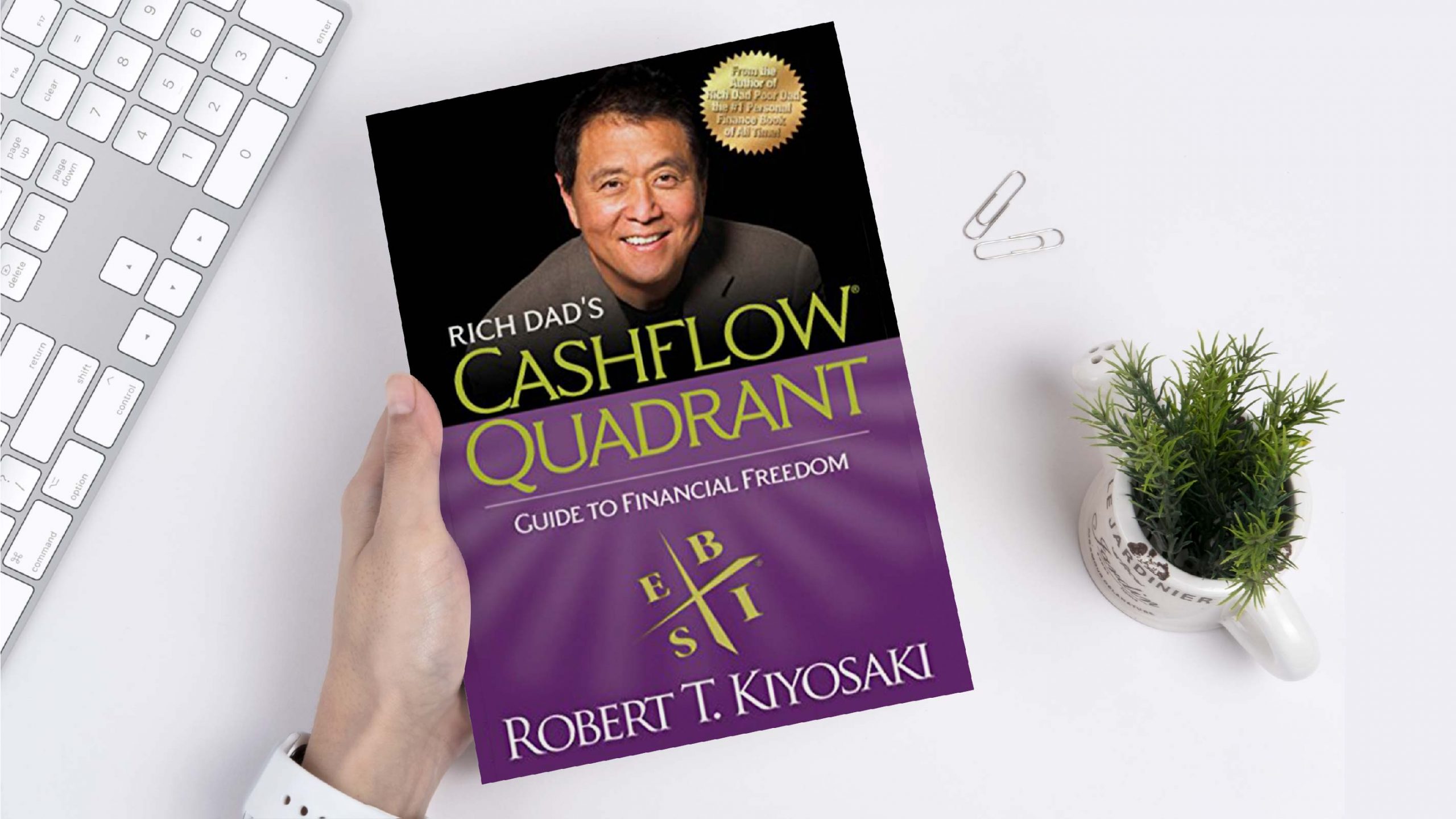
If this sounds familiar, the problem isn’t your work ethic. It’s your financial programming. The world of money has a set of rules most of us were never taught. Robert T. Kiyosaki, in his seminal book Rich Dad’s CASHFLOW Quadrant, tells a simple story that frames this dilemma perfectly: Ed hauls buckets of water for a living, while Bill builds a pipeline. Ed works harder and harder, but he’s only ever paid for the buckets he carries. Bill works hard once to build a system, and the water—and the money—flows forever.
This article distills five of Kiyosaki’s most powerful, counter-intuitive principles. They are mental tools designed to shift your thinking from hauling buckets to building pipelines.
1. It’s Not What You Do, It’s How You Earn
We are conditioned to define our financial identity by our profession—a doctor, a plumber, a programmer. Kiyosaki argues this is a dangerously incomplete picture. His CASHFLOW Quadrant re-categorizes people based on the source of their income, revealing the deep-seated mindsets that drive our financial lives.
The quadrant is divided into four sections:
• E (Employee): You have a job. You earn money working for someone else’s system.
• S (Self-employed): You own a job. You earn money working for yourself, often as a specialist. You are the system.
• B (Business Owner): You own a system and people work for you. Income is generated independent of your direct labor.
• I (Investor): Your money works for you. You earn money from assets that generate more money.
The profound insight isn’t the categories themselves, but the psychological divide between the left side (E and S) and the right side (B and I). The left side is driven by a core need for security. The right side is driven by a quest for freedom.
This isn’t just a career choice; it’s a reflection of how we respond to fear. An E-quadrant person’s vocabulary is shaped by the fear of economic uncertainty, leading them to use words like “secure,” “benefits,” and “steady paycheck.” An S-quadrant person responds to the same fear by seeking control—”If you want it done right, do it yourself.” These core values are so ingrained they often dictate our entire lives.
Changing quadrants is often a change at the core of who you are—how you think and how you look at the world. The change is easier for some people than for others simply because some people welcome change and others fight it.
2. Your Biggest “Asset” Is Probably a Liability
For generations, the most common financial advice has been that buying a home is a sound investment and your primary asset. Kiyosaki demolishes this belief with two brutally simple definitions:
• An asset puts money in your pocket.
• A liability takes money out of your pocket.
By this logic, your primary residence isn’t an asset—it’s a liability. Every month, it takes money out of your pocket through mortgage payments, property taxes, insurance, and maintenance. It doesn’t generate income. In fact, the mortgage on your house is an asset on your bank’s balance sheet, earning them interest every month.
This isn’t just a semantic game; it’s the mechanism of the “Success Trap.” Kiyosaki watched his highly educated dad fall into it. With every promotion and pay raise, his banker and accountant would advise him to buy a bigger house for the “tax break.” This trapped him in a vicious cycle: work harder, earn more, incur more debt, and become even more dependent on his job. He was running faster and faster on the treadmill, mistaking a growing pile of liabilities for wealth. True financial freedom comes not from acquiring things, but from relentlessly acquiring income-generating assets.
3. Why “A” Students Often Work for “C” Students
Traditional schooling is an excellent training ground for the left side of the quadrant. It rewards students for following instructions and punishes them for making mistakes. The path to becoming an “A” student is to make the fewest errors possible.
This conditioning creates what Kiyosaki calls an “emotional psychosis”—a deep-seated fear of failure that leads to “analysis paralysis.” In the real world of business and investing, this is a catastrophic handicap. Entrepreneurs and investors on the right side of the quadrant understand that mistakes are not just possible, but essential. They know that success comes from failing to fail enough times. They act, fail, learn, and act again.
When criticized for making 1,014 mistakes before creating the electric light bulb, Thomas Edison said, “I did not fail 1,014 times. I successfully found out what did not work 1,014 times.”
Think about your own education. Were you rewarded for taking risks or for avoiding them? The emotional fortitude required to build a business or an investment portfolio is fundamentally different from the academic intelligence rewarded in school. It requires embracing mistakes as tuition paid for invaluable lessons.
4. You Can Make the World’s Best Hamburger, But You Can’t Beat McDonald’s System
A critical distinction separates the Self-employed (S) from the Business owner (B). For someone in the S quadrant, they are the system. A brilliant consultant or a freelance artist is the engine of their business. If they stop working, the income stops.
In contrast, someone in the B quadrant owns a system and hires competent people to operate it. Kiyosaki uses a powerful analogy to make this point: countless people can make a better hamburger than McDonald’s, but only McDonald’s created the global business system capable of serving billions of them. Their overwhelming success isn’t in the product; it’s in the system.
The true test of a ‘B’ quadrant business is this: can the owner leave for a year and return to find it more profitable than when they left? For a true ‘S’, if they left for a year, they would have no business to return to. This illustrates the immense power of systems in creating scalable wealth and genuine freedom.
5. Why Saving Your Money Could Make You Poorer
Perhaps the most jarring “Rich Dad” idea is that the most common financial advice given to the poor and middle class—”save your money”—is a losing strategy.
The reasoning is simple but profound. Since the U.S. dollar was removed from the gold standard in 1971, it has been a “fiat” currency backed only by government decree. This allows for constant money printing, which systematically devalues the currency and destroys its purchasing power. Saving a devaluing asset is a guaranteed way to lose real wealth over time. True investors don’t park their money; they move it, constantly acquiring assets that produce cash flow.
This flawed logic is institutionalized in retirement vehicles like the 401(k), which the source material critiques as one of the worst ways to invest. Consider the terms:
• The Risk: The investor puts up 100% of the money and takes 100% of the risk. The fund managers take zero risk.
• The Fees: Fund managers can take up to 80% of the profits in fees, even if the fund loses money.
• The Taxes: Gains are taxed at the highest ordinary income tax rate (around 35%), not the far lower long-term capital gains rate (around 15%).
• The Lack of Protection: There is no insurance against a market crash wiping out your life savings.
This isn’t investing; it’s a gamble where the house has stacked every rule in its favor.
Conclusion: Your Path is Your Goal
These five ideas aren’t just financial tips; they are a new lens for viewing the world of money. They challenge the old script of “go to school, get a secure job, save money, and buy a house.”
This mental shift is captured in the Zen master Thich Nhat Hanh’s teaching: “The path is the goal.” Achieving financial freedom is less about what you do and more about who you choose to become—an employee, a specialist, a systems-builder, or an investor. It means changing your core values from a search for security to a quest for freedom.
For Kiyosaki, this wasn’t an academic exercise. It was driven by the haunting memory of his brilliant, educated father being blacklisted by the state government, left to sit at home waiting for the phone to ring for a job that would never come. That painful image makes the abstract illusion of “job security” terrifyingly real.
Ultimately, the entire Rich Dad philosophy boils down to a single, guiding question you must ask yourself every day:
“Am I building a pipeline or hauling buckets?”