

1. THE SNAPSHOT
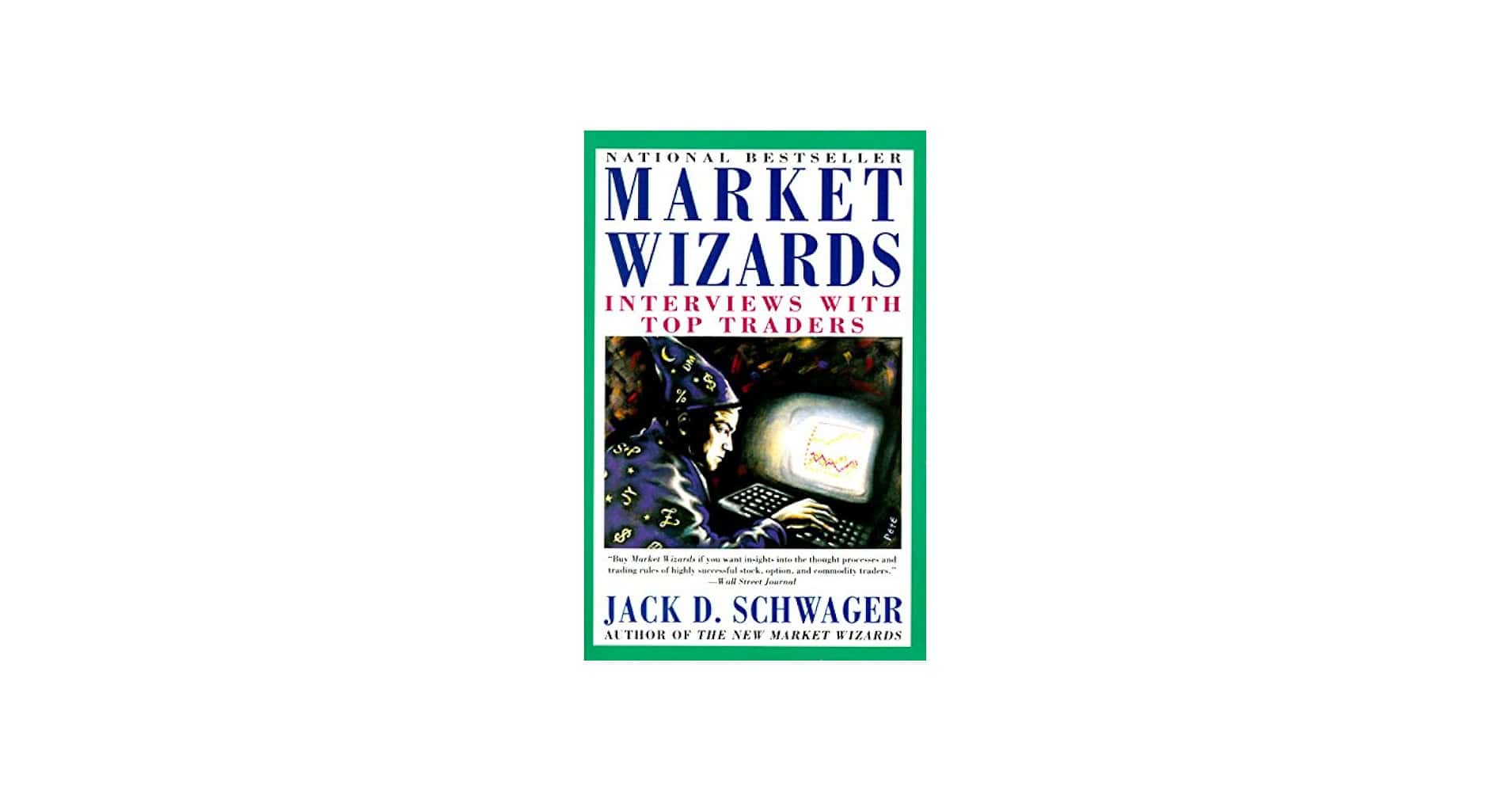
Jack Schwager’s Market Wizards is not merely a collection of interviews; it is a psychological autopsy of the world’s elite financial predators. In an industry obsessed with finding a “magic” indicator, this text serves as a cold splash of water, proving that the distance between a retail loser and a market legend is not measured in software, but in the gray matter between the ears. It remains the definitive pedagogical text for high-performance trading because it moves beyond the mechanics of “how to buy” into the gritty reality of “how to think.”
| Feature | Details |
| Star Rating | 5/5 (The Trader’s Bible) |
| One-Sentence Verdict | Trading success is 10% methodology and 90% the psychological fortitude to execute brutal risk control. |
| Best For | Day Traders, Swing Traders, and Crypto Investors. |
| Difficulty | Medium (Accessible psychology mixed with technical jargon like Elliott Wave and interbank currency spreads). |
To understand the “Wizards,” we must strip away the delusion that the market is a game of chance and analyze the “inner game” that separates the hunters from the prey.
——————————————————————————–
2. INTRODUCTION: Beyond the “How-To”
This document is not a manual for a quick buck; it is a clinical deep-dive into the minds of men who turned thousands into millions by mastering the self. Schwager frames the problem using a metaphor from Kurt Vonnegut’s Slaughterhouse-Five: an Earthling man and woman are kidnapped by extraterrestrials and displayed in a zoo on the planet Zircon 212. Their habitat features a fake “big board” of stock quotes and a news ticker designed to make them perform vividly—to sulk, cheer, or be “scared shitless”—for the Zirconian crowds.
Random walk theorists argue that we are no different from those captives; that our perceived acumen is merely a delusion born of luck. Schwager’s thesis shatters that academic cynicism. After profiling practitioners like Ed Thorp—whose track record was so dominant that the probability of it being “luck” was lower than the number of atoms in the Earth’s mass—a clear truth emerges: successful trading is a skill. While their strategies span from fundamental macro views to mechanical trend-following, every “Wizard” shares a specific psychological substrate. They survive because they adhere to a “Golden Rule” that the retail crowd ignores until they are wiped out.
Read also: Why Structural Consistency Outperforms Tactical Timing
——————————————————————————–
3. THE GOLDEN RULE: SURVIVAL THROUGH RISK MANAGEMENT
The foundation of the “Wizard” archetype is a pathological obsession with survival. In these interviews, profit is always secondary to the preservation of capital. If you cannot protect your stake, you cannot play.
“Don’t focus on making money; focus on protecting what you have.” — Paul Tudor Jones
Legends like Jones and Richard Dennis treat Position Sizing as a sacred law, rarely risking more than 1–2% of total equity on a single trade. More importantly, they view position sizing as a function of the stop-loss. If a technical stop is wide, they “under-trade”—cutting the position size in half or thirds until the risk fits the account reality.
Schwager learned this through his own blood. Early in his career, he ignored his analysis of the cotton market and “bet the whole wad,” losing his entire $2,000 equity. This “single large loss” is the death spiral for most. The Wizards avoid it by ensuring that even a string of failures leaves their capital engine intact.
——————————————————————————–
4. LEGEND 1: ED SEYKOTA (The Zen of Trend Following)
Ed Seykota, an MIT-trained engineer, pioneered computerized trend following, turning $5,000 into $15 million over 12 years. His philosophy is deceptively simple: “The trend is your friend.” Seykota ignores the news, focusing instead on price action and the geometric mean of growth.
To Seykota, the geometric mean is the only metric that matters. It represents the necessity of compounding while avoiding the “catastrophic loss” that can zero out years of gains. If you lose 50%, you need a 100% gain just to get back to even; Seykota’s systems ensure that the engine never stops running.
“Win or lose, everybody gets what they want out of the market.” — Ed Seykota
This is the psychological “So What?” of Seykota’s wisdom. He argues that persistent losers often subconsciously want to lose to fulfill an emotional need—be it drama, sympathy, or the high-stakes thrill of the gamble. Trading is a mirror; if you aren’t winning, the sabotage is lurking in your own psyche.
——————————————————————————–
5. LEGEND 2: PAUL TUDOR JONES (The Contrarian Defender)
Paul Tudor Jones represents the aggressive macro approach. He famously captured a 62% return in October 1987 by anticipating “Black Monday.” While the world was blinded by greed, Jones utilized a 1929 Analog Model—a research tool that superimposed the 1980s market data over the 1920s—to pinpoint the collapse.
Jones is a “Contrarian Defender.” He picks turning points rather than riding the “meat in the middle,” but his aggression is checked by an iron-clad “Defense First” rule. He exits the moment a trade “feels wrong” or hits a mental stop. Jones has no ego; he marks his positions to the previous night’s close every single day, assuming every trade is wrong until it proves otherwise. He would rather be out of the market and wishing he were in, than in the market and wishing he were out.
Read also: How Your Brain Tricks You (And How to Fix It)
——————————————————————————–
6. LEGEND 3: BRUCE KOVNER (The Master of Intermarket Analysis)
Bruce Kovner, a former political scientist, views the world as a multi-dimensional chessboard. His edge is Intermarket Analysis—the study of the invisible threads correlating currencies, bonds, and stocks.
Kovner famously noted the U.S./Canadian trade pact example: the Canadian dollar broke out to the upside before the pact was officially announced. The market had already “voted” on the fundamental shift. Kovner doesn’t wait for the news; he reads the price action to see how the “big money” is voting ahead of time.
Kovner’s most vital lesson is his methodology for Stops. He never uses arbitrary dollar amounts. Instead, he places stops at technical points that, if reached, prove the fundamental trade idea is wrong. If that technical stop is too far for his bankroll, he doesn’t move the stop; he cuts his position size. He under-trades to survive.
——————————————————————————–
7. THE COMMON DENOMINATORS: SCHWAGER’S SYNTHESIS
Across five volumes of interviews, Schwager identifies a universal “Wizard” profile:
- Methodology/Personality Fit: A system must align with the trader’s individual temperament. A high-adrenaline seeker cannot trade a slow-moving mechanical system without self-sabotaging.
- Strict Risk Control: Shared by Seykota, Dennis, and Jones, the habit of managing “Drawdowns” is non-negotiable. They have an exit point before the entry is ever executed.
- Emotional Discipline: The removal of hope and fear. As Kovner notes, the moment a trader begins “hoping” for a recovery, they have stopped diagnosing the market.
- Intellectual Flexibility: The ability to change one’s mind instantly. When the market “votes” against them, Wizards do not argue with the tape—they fold.
——————————————————————————–
8. CRITICAL ANALYSIS: HUMANS VS. ALGOS IN THE MODERN ERA
Critics argue that 40-year-old lessons are obsolete in the age of High-Frequency Trading (HFT) and AI. They are wrong. While the tools have evolved from physical pits to fiber-optics, the Human Element is a biological imperative. Markets are driven by fear and greed—traits that haven’t changed in ten millennia.
Modern computerized trend following has increased “bandwagon effects” and false breakouts—a reality that even Richard Dennis faced in his later years. However, the principles of risk control and contrary thinking are more valuable now than ever. In a world where billions are moved by identical algorithms, the disciplined human who remains rational during a “discontinuous” market shock is the one who survives to collect the profits.
Read also: The Psychology Behind Lifestyle Inflation
——————————————————————————–
9. THE VERDICT: PROS AND CONS
To master the market, you must recognize both the brilliance and the limitations of this text.
Pros
- Timeless Heuristics: The psychological lessons on cutting losses and following trends are universal.
- Documented Skin in the Game: These are not theorists; these are practitioners with multi-million dollar track records.
- Strategic Diversity: Proves there are many paths to the “Holy Grail” (Macro, Technical, and Mechanical).
Cons
- Outdated Technicals: Specific indicators from the 1980s may not translate to 24-hour digital markets.
- No “Plug-and-Play” System: The book teaches you how to think, not exactly what to buy on Monday morning.
- Technical Jargon: Chapters on Elliott Wave or interbank currency spreads can be dense for novices.
——————————————————————————–
10. CONCLUSION: THE HOLY GRAIL IS WITHIN
The search for a “Holy Grail” indicator—the perfect combination of RSI, MACD, and AI—is a fool’s errand. This Market Wizards summary proves that the only Holy Grail is self-mastery. Success is found in the discipline to cut losses when you are wrong and the courage to hold winners when you are right. The market is a massive, complex puzzle, but the most difficult piece to fit is your own mind.
——————————————————————————–
11. CALL TO ACTION (CTA)
Master yourself, master the market.

