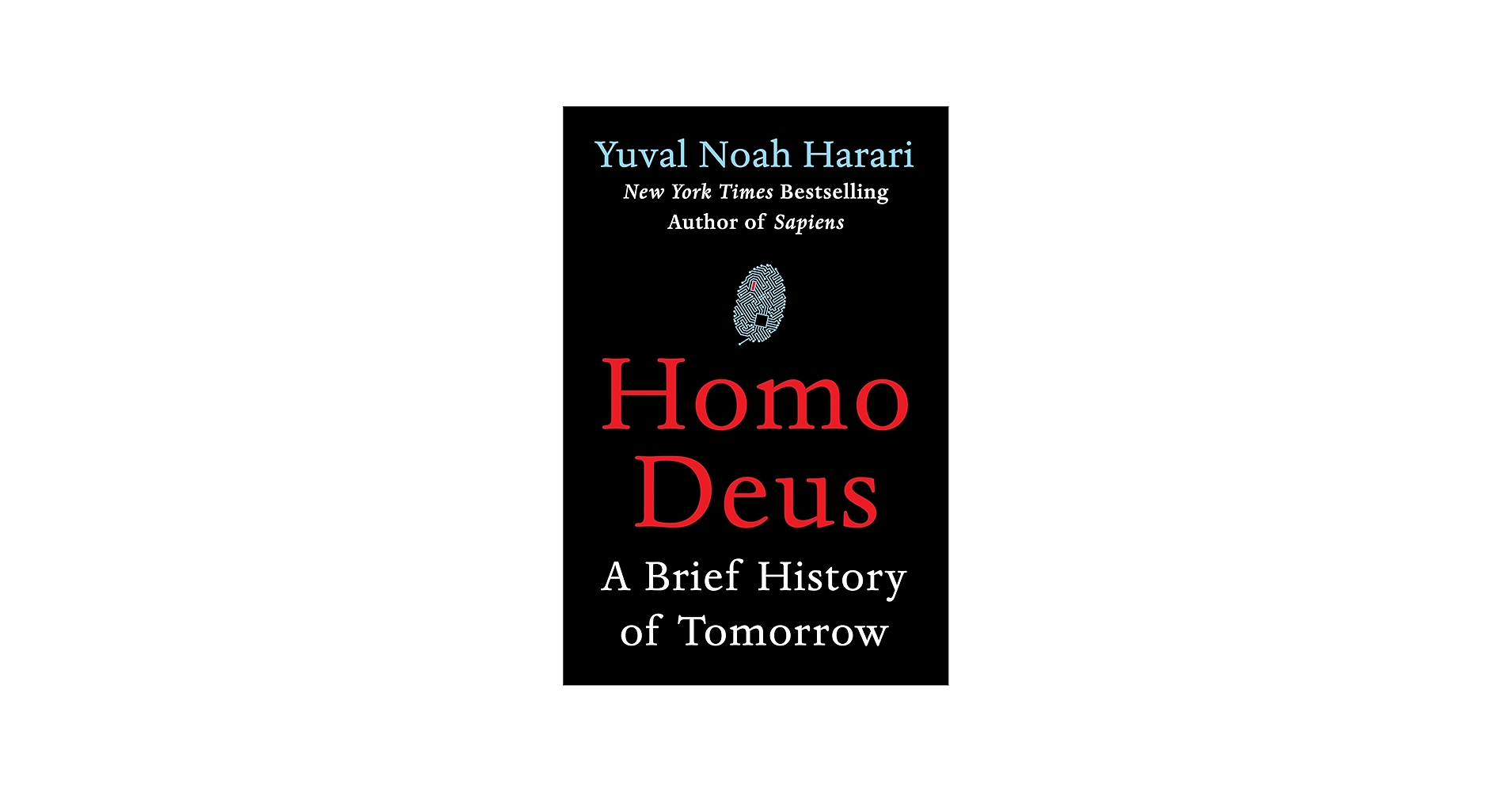
Star Rating: 4.8/5
One-Sentence Verdict: As humanity conquers the ancient “Unholy Trinity” of famine, plague, and war, we are pivoting toward a new agenda of technological divinity—one that threatens to decouple intelligence from consciousness and dissolve the humanist foundations of our civilization.
Best For: Philosophers, macro-historians, radical technologists, and anyone seeking to understand why the 21st century feels like the end of human agency.
Difficulty: Medium
To understand the trajectory of our species in the third millennium, we must first recognize the unprecedented vacuum left by our recent victories. For the vast majority of human history, the “human agenda” was dictated by forces entirely beyond our control. We were a species on the defensive, reacting to the whims of biology, climate, and geography. Today, we stand at a crossroads where our past successes have become the catalysts for a transformation so radical it may terminate the very definition of Homo sapiens. To grasp our future, we must deconstruct how we escaped our past.
1. Introduction: The Conquest of the Unholy Trinity
For thousands of years, the human experience was defined by three inescapable scourges: famine, plague, and war. These were not merely social problems; they were viewed as inevitable forces of nature or expressions of divine will. From the perspective of a medieval peasant or an ancient Egyptian farmer, these were “Acts of God.” At the dawn of the third millennium, however, humanity has achieved a realization that remains largely unacknowledged in our daily discourse: we have managed to rein in the “Unholy Trinity.” We have transformed these incomprehensible forces into “manageable challenges.”
For millennia, the biological poverty line was a razor’s edge. In 1694, a French official in Beauvais described a population driven to madness by hunger, filling the districts with “poor souls, weak from hunger and wretchedness and dying from want.” He recounted how desperate citizens ate cats, the flesh of flayed horses cast onto dung heaps, and the blood that flowed when oxen were slaughtered. During that specific famine, approximately 2.8 million French citizens—15 percent of the population—starved to death while the Sun King, Louis XIV, dallied at Versailles.
Contrast this macro-historical horror with the statistics of 2014: more than 2.1 billion people were overweight, and obesity killed 3 million people globally, while malnutrition killed 1 million. For the first time in history, more people die today from eating too much than from eating too little. The poor of the 21st century do not starve; they gorge on Twinkies and pizza while the rich of Beverly Hills dine on lettuce and quinoa.
Similarly, the “Invisible Armadas” of pathogens have been largely intercepted by the walls of modern medicine. The Black Death in the 1330s killed between 75 million and 200 million people, and the Spanish Flu of 1918 infected a third of the global population, killing up to 100 million in less than a year—more than the 40 million killed in the Great War. Today, while we face outbreaks like Ebola or the tragedy of AIDS, they are no longer viewed as metaphysical punishments but as “technical glitches.” When a plague breaks out, we don’t pray for a miracle; we appoint a commission of inquiry to find out who “screwed up.” We assume that somewhere, a bureaucrat or a scientist was incompetent, because we believe the tools for containment already exist.
Finally, we have seen the breaking of the “Law of the Jungle.” Throughout history, peace was merely a temporary absence of war. In 1913, France and Germany were at peace, but every citizen knew they might be at each other’s throats by 1914. Today, peace means the implausibility of war. In a knowledge-based economy, war is no longer profitable. You can conquer an oil field or a coltan mine in the Congo through violence, but you cannot conquer knowledge through force.
Even more significantly, humanity has broken the Chekhov Law. The dramatist Anton Chekhov famously stated that a gun appearing in the first act must be fired in the third. In history, every new weapon was eventually used. However, since 1945, the nuclear “gun” has remained on the mantle. We have learned to resist the temptation of our own power. In a world where sugar is more dangerous than gunpowder—where more people commit suicide (800,000) than are killed by soldiers and terrorists combined (620,000)—we must ask: what happens to the firefighters when the fire is out?
Read also: Survival in the Age of Irrelevance
2. The New Human Agenda: The Three Pillars of Divinity
History does not tolerate a vacuum. As the traditional threats to survival recede, success breeds ambition. The “New Human Agenda” is not a political manifesto but a historical prediction of where our collective resources are being funneled. This agenda rests on three pillars: the pursuit of amortality, the quest for happiness, and the attainment of divinity.
Amortality: Death as a Technical Problem
Modern science has fundamentally redefined death. It is no longer a sacred metaphysical experience but a technical failure. If the heart stops or a main artery is clogged, it is a glitch that requires a technical solution. The Universal Declaration of Human Rights sanctifies the “right to life” without an expiry date. Consequently, death has become a crime against humanity.
Silicon Valley luminaries like Peter Thiel and Google’s Bill Maris are no longer treating death as an inevitability. Google’s sub-company, Calico, is explicitly “investing in solving death.” Maris has stated that living to 500 is a biological possibility. We are transitioning toward being a-mortal—not immune to accidents, but free from the “natural” expiry date of aging. If you possess a healthy bank account and a healthy body in 2050, you may be able to march into a clinic every decade for a makeover that regenerates decaying tissues and upgrades your organs, outrunning the Grim Reaper indefinitely.
Read also: The Exact Formula for Wealth Creation
Happiness: The Right to Pleasure
The 18th century gave us the “right to the pursuit of happiness,” but the 21st century is demanding the “right to happiness” itself. GDP is failing as a metric; Costa Ricans often report higher satisfaction than the highly productive Singaporeans. However, the biological “glass ceiling” of happiness is held in place by our biochemistry. Evolution did not design us for constant bliss; it designed us for survival.
To break this ceiling, we are moving toward the biochemical manipulation of the human mind. We use Ritalin to help children meet the expectations of schools and antidepressants to help soldiers deal with the trauma of war. If happiness is merely a storm of pleasant sensations, why wait for the slow “journey” of life when you can rig the system through molecular intervention?
Divinity: The Upgrade of the Species
The ultimate goal of the New Agenda is to upgrade Homo sapiens into Homo Deus. This transition is being pursued through three distinct paths:
- Biological Engineering: Rewriting the genetic code to realize the full potential of organic bodies.
- Cyborg Engineering: Merging the organic body with non-organic devices, as seen in the Epicenter high-tech hub in Stockholm where workers use implanted microchips to open doors.
- Non-organic Engineering: Dispensing with organic chemistry altogether in favor of intelligent software that can surf the virtual world free from the limitations of carbon-based life.
3. The Biological Paradigm: Organisms as Algorithms
The foundational shift that allows for the pursuit of Homo Deus is the realization that organisms are algorithms. In the life sciences, decisions are no longer seen as the result of “free will” but as data-processing outputs.
Consider the sensation of a goal being scored. When Mario Götze kicked the winning goal in the 2014 World Cup Final, his ecstasy was not an abstract emotion; it was a storm of biochemical sensations—waves of electricity and “exploding energy balls” within his body. His mind was reacting to internal sensations, not the external ball in the net.
If sensations and emotions are merely biochemical algorithms, then “free will” is a biological illusion maintained by outdated humanist narratives. Evolution controls us through these algorithms; they are “sales gimmicks” designed to keep us eating and mating. If we can rewire these algorithms, we can bypass the “natural” limits of our species.
This leads to a critical distinction: the shift from healing to upgrading. Medicine traditionally aimed to bring people back to the “norm.” But once you have the technology to prevent memory loss in the elderly, you have the technology to enhance memory in the young. We are sliding down a slippery slope toward a “genetic child catalogue.” If your neighbor’s child has a “sunny disposition” and an “above-average memory” engineered into their DNA, can you afford for your child to lag behind?
Read also: A Systems Analysis of Decision Quality
4. The Religion of Dataism
As we move further into the 21st century, Dataism is emerging as the successor to Humanism. Humanism taught that human experience creates meaning: “Listen to your heart” was the mantra for deciding what is good, beautiful, or true. Dataism shifts the supreme value from human experience to the flow of information.
The core tenets of this new “Data Religion” include:
- The Supreme Value: The freedom of information processing is the highest good.
- The Shift in Authority: Meaning no longer originates within the human individual but within the global data-processing system.
- The Mantra: “If it’s not data, it has no value.”
In the Dataist view, a human being is merely a ripple in the data flow. If a human experience cannot be uploaded, shared, or turned into a data point, it effectively didn’t happen. This represents a catastrophic departure from Humanism. While Humanism sanctified the internal, subjective experience of the individual, Dataism sanctifies the external, systemic efficiency of the data-processing algorithm. This leads directly to a separation of human utility and human value.
In the 21st century, the individual is no longer a “user” of the system; the individual is a component of the system. Our smartphones and wearable devices already know our preferences better than we do. We are granting the system more control over our lives in pursuit of health and efficiency, unaware that we are essentially handing over our agency to a non-conscious entity.
5. The Great Decoupling: Intelligence vs. Consciousness
The most significant disruption of the 21st century is The Great Decoupling. For thousands of years, high intelligence and consciousness (the ability to feel things like pain, joy, and love) were inseparable. To solve complex problems, you needed a conscious human being. This marriage is finally ending.
| Feature | Intelligence | Consciousness |
| Definition | High-level problem solving and pattern recognition. | The ability to feel sensations and emotions (pain, joy). |
| Entity | Algorithms, AI, and non-organic software. | Humans, mammals, and organic organisms. |
| Economic Role | Essential for the job market and professional fields. | Historically necessary but increasingly redundant. |
| Future Outlook | Exponential growth and dominance. | A “slow biochemical bottleneck.” |
The “So What?”: The Great Decoupling represents the systematic stripping of human agency in favor of non-conscious, high-performance algorithms. The risk is not a Hollywood robot revolt, but a structural shift where humans become “economically irrelevant.” If an algorithm can diagnose cancer more accurately than a doctor, or drive a truck more safely than a human, the system will favor the algorithm. When intelligence is decoupled from consciousness, the “human spark” becomes a liability—a slow, inefficient, and expensive relic in a world of lightning-fast data processing.
Read also: How Better Thinking Leads to Better Outcomes
6. Critical Analysis: The Paradox of Knowledge
Harari’s framework is built upon the Paradox of Knowledge. He argues that the better we understand our history, the faster that history changes its course. This is why predictions about the future are so difficult: humans react to them, rendering them obsolete.
Consider the example of Karl Marx. Marx reached brilliant insights about the inevitable collapse of capitalism. However, because capitalists also know how to read, they adopted Marxist analysis to improve the lot of workers and integrate them into the political system through the welfare state. By understanding the prediction, they changed their behavior and rendered the prediction false.
This leads to the “History of Lawns.” Why do we have lawns? They produce nothing of value; they are “cultural cargo.” Lawns began as a status symbol for French and English aristocrats to prove they were so rich they could waste land and labor on a “green extravaganza.” Today, millions of people engage in the “suburban liturgy” of mowing the grass, unaware they are following a status symbol bequeathed to them by medieval dukes.
Even more provocatively, look at the Museum of Islamic Art in Qatar. It is flanked by 100,000 square meters of lawn in the middle of the Arabian desert, requiring a stupendous amount of fresh water. This is the ultimate victory of the lawn—a symbol of European authority conquering the most disparate of cultures. This illustrates Harari’s point: our present reality is an accidental chain of events, not an inescapable destiny.
We are already taking the “baby steps” toward Homo Deus. Consider the case of Sharon Saarinen and her daughter Alana, born in 2000. Alana is a “three-parent baby”—her nuclear DNA comes from Sharon and her father Paul, but her mitochondrial DNA comes from a third donor woman to bypass a genetic disease. While the US banned this in 2001, the UK passed a “three-parent embryo” law in 2015. These are the technical foundations for rewriting the human code. Once we begin “fixing” mitochondrial DNA, the logic for “upgrading” nuclear DNA—to increase intelligence or memory—becomes irresistible.
Read also: A Deep Anthropological Review of Simon Sinek’s Leaders Eat Last
7. Evaluation: Strengths and Existential Risks
The thesis presented in Homo Deus offers a sweeping and provocative look at the human condition, yet it carries profound implications that many find unsettling.
| Pros | Cons |
| Visionary Depth: Successfully connects disparate fields like biology, history, and tech into one narrative. | Existential Risks: The shift to Dataism suggests a future where humans lose all intrinsic value. |
| Exceptional Clarity: Simplifies complex concepts like “algorithms” and “decoupling” for a general audience. | Potential for Defeatism: The focus on algorithmic inevitability can lead to a sense of powerlessness. |
| Macro-Historical Context: Grounded in real-world examples, from 1694 famines to modern three-parent babies. | High Abstraction: Some concepts in Part III regarding the “Ocean of Consciousness” remain theoretical. |
8. Conclusion: From Meaning to Data
Humanity is currently undergoing its most profound transformation since the Agricultural Revolution. We are transitioning from a “meaning-driven existence” to a “data-driven system.” We began the third millennium by washing our faces and looking at our wrinkles, only to realize that we now possess the tools to “solve” aging, “fix” happiness, and “upgrade” our very being.
In 1016, it was easy to predict 1050: kings, priests, and peasants would still be there. In 2016, we have no idea how 2050 will look. We don’t know what kind of bodies people will have, or if “people” will even be the dominant political unit. We cannot hit the brakes because no one knows where they are, and our global economy is built on the necessity of constant growth. If we stop the quest for immortality and divinity, the capitalist system collapses.
We are, therefore, rushing toward the great unknown. The pursuit of Homo Deus may lead to the disintegration of Homo sapiens. In our quest for health, happiness, and power, we are gradually changing one feature after another until we will no longer be the kind of animal that wrote the Bible or laughed at Charlie Chaplin. We are becoming like a team of firefighters in a world where the old fires are out, but we are about to start a new, much more dangerous conflagration.
Final Reflection: If we succeed in upgrading ourselves into gods, will we still have a place for the conscious, feeling, “human” experience that gave our lives meaning, or will we find ourselves irrelevant in a universe that only values the flow of data?
Read also: The Hidden Distribution of Breakthrough Ideas
9. Call to Action (CTA)
The future is not a destination we are passively approaching; it is a reality we are actively constructing with every smartphone click, every genetic test, and every medical breakthrough. Understanding these macro-historical shifts is the first step toward regaining some measure of freedom over our collective destiny.