

1. THE SNAPSHOT
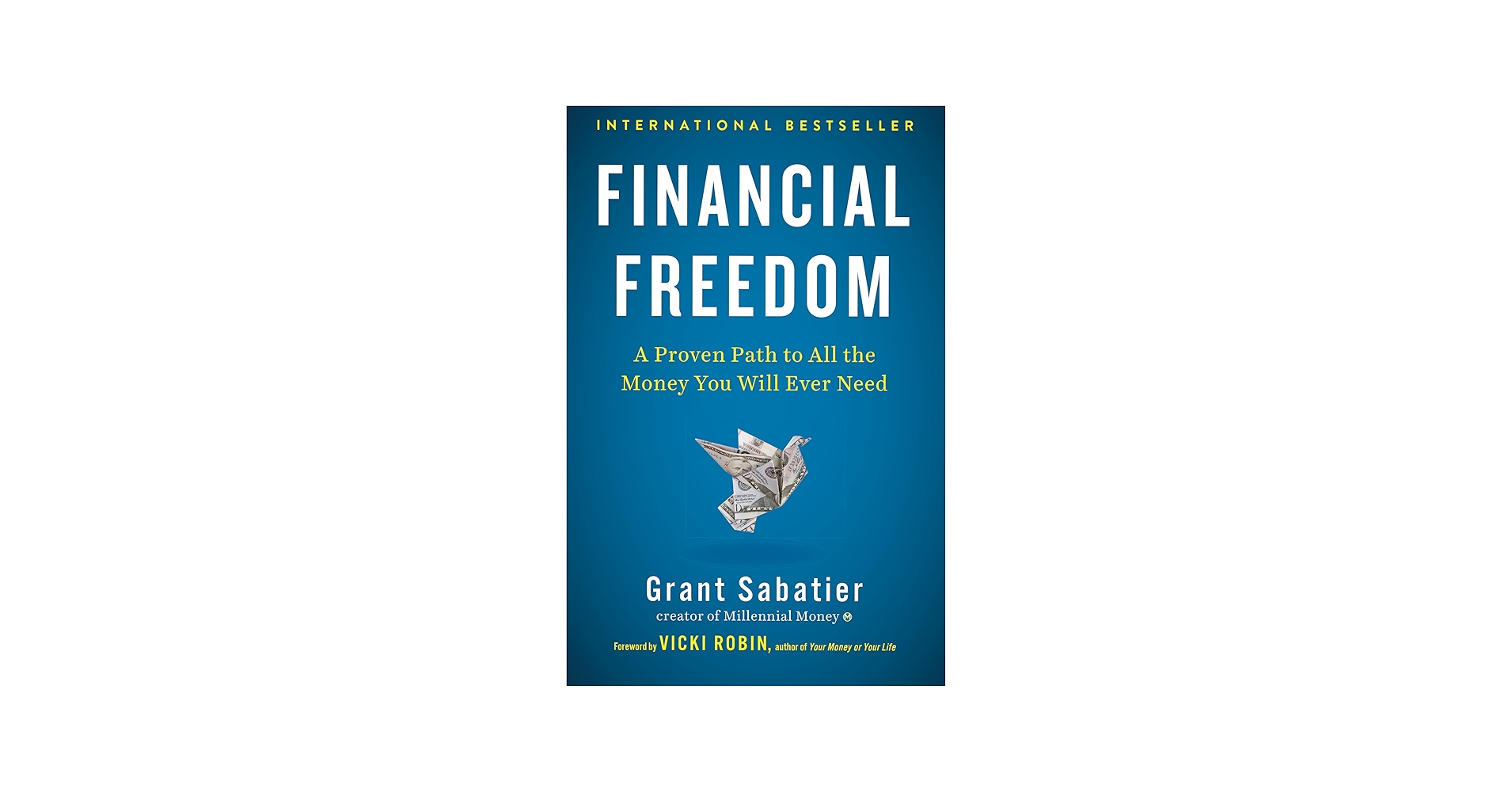
In the modern economic landscape, the traditional path to retirement is not merely slow; it is a blueprint for mediocrity. The outdated mantra of “save 10% and work for 40 years” fails to account for stagnant wages, inflation, and the sheer velocity of the digital age. Grant Sabatier’s work stands as a disruptive manifesto, urging readers to abandon the “scarcity mindset” of coupon-clipping in favor of aggressive income expansion and capital efficiency. This Financial Freedom Summary explores a tactical framework designed for those who view time as their most precious, non-renewable asset. By shifting focus from extreme deprivation to the “Enterprise Mindset” of unlimited earning, Sabatier proves that financial independence is not a distant dream for the elderly, but a mathematical certainty for the motivated.
- Star Rating: 4.7/5 (Modern FIRE Playbook)
- One-Sentence Verdict: A tactical blueprint proving that increasing income beats extreme frugality for rapid wealth building.
- Best For: Millennials, side-hustlers, and early retirees seeking speed over conventional timelines.
- Difficulty: Medium to High (Requires aggressive execution and lifestyle shifts).
- Action: Financial Freedom
To understand how to compress a forty-year career into five, one must first understand the “rock bottom” moment that transformed a broke millennial into a wealth architect.
——————————————————————————–
2. INTRODUCTION: THE $2.26 EPIPHANY
The origin of the Financial Freedom Grant Sabatier summary is rooted in the harsh reality of the 2010 Great Recession. At 24 years old, Sabatier found himself unemployed, living in his childhood bedroom, and facing a bank balance of exactly $2.26. When a simple craving for a Chipotle burrito became an unaffordable luxury, the weight of his situation settled in. He realized he had spent over five thousand hours of his life working over the previous three years, yet he possessed zero economic sovereignty.
This “rock bottom” was the catalyst for a total psychological overhaul. Sabatier stopped viewing himself as a victim of a shaky economy and began analyzing money as a tool for autonomy. He set an audacious goal: to amass $1.25 million and retire as quickly as possible. His thesis was clear: Extreme Income Generation > Extreme Frugality. While the world preached cutting back on lattes, Sabatier focused on the “X-factor”—the reality that while you can only cut your expenses to zero, your income potential is theoretically infinite.
This shift from a passive employee to an architect of wealth required moving beyond mere math and into a deeper philosophical understanding of what money actually represents.
To achieve this, understanding the Financial Freedom Summary is crucial in helping individuals realize their potential for wealth.
Read also: How an Insignificant Ape Conquered the World
This Financial Freedom Summary serves as a guide for those willing to transform their financial future.
——————————————————————————–
3. TIME IS GREATER THAN MONEY: THE PHILOSOPHICAL SHIFT
Central to the Financial Freedom Grant Sabatier summary is the radical notion that money is a renewable resource, while time is finite. Most people trade their best years for a paycheck, failing to realize they are selling their “life-hours” at a discount.
Core Principle: Money as “Life-Hours” Sabatier commands readers to calculate their “Real Hourly Rate.” This is not your salary divided by 2,000 hours; it is your take-home pay minus the costs of commuting, work clothes, and decompression time, divided by the total hours work actually steals from your life. When you realize a $60,000 car isn’t just a monthly payment, but a “haircut” to your net worth that could have grown to $486,989 over thirty years (assuming 7% returns), the calculus of spending changes.
The “So What?” Layer As a millennial money creator, Sabatier argues that owning your time provides more than just leisure; it provides mental health, career autonomy, and the ability to live a life true to yourself rather than the one others expect of you. Every dollar saved and invested is a “freedom chip” used to buy back a piece of your future.
Understanding the Financial Freedom Summary allows individuals to harness their potential and redefine their relationship with money.
By adopting the principles in the Financial Freedom Summary, you can learn to prioritize time over money.
Once you stop viewing money as a status symbol and start seeing it as a tool to reclaim your life, you need a precise target to hit.
——————————————————————————–
4. CALCULATING YOUR FIRE NUMBER: THE 25X RULE
The destination of any wealth journey is the “FIRE Number”—the specific amount of invested capital required to sustain your lifestyle without ever needing to work again. This is the “North Star” of the Financial Freedom Grant Sabatier summary.
The Math: Sabatier utilizes the 4% Rule (or the 25x Rule) as the foundation for this calculation.
Annual Expenses × 25 = Target Portfolio (FIRE Number)
Numerical Examples:
- Scenario A (The Lean Path): If your annual expenses are 40,000**, your target is **1,000,000.
- Scenario B (The Moderate Path): If your annual expenses are 60,000**, your target is **1,500,000.
- Scenario C (The Abundant Path): If your annual expenses are 100,000**, your target is **2,500,000.
While these numbers may seem daunting, Sabatier notes that the number is dynamic. If you plan to pursue “passion work” or part-time consulting, your target may be lower. The goal is to reach the point where work becomes a choice, not a survival requirement.
Knowing your destination is only half the battle; you must now map your progress across the seven rungs of the wealth ladder.
Read also: Why One Index Fund Can Buy Your Freedom
——————————————————————————–
5. THE 7 LEVELS OF WEALTH: MAPPING YOUR PROGRESS
To climb the ladder of financial independence, you must identify your current rung and execute a tactical plan to reach the next. This Financial Freedom Grant Sabatier summary breaks down the progression and the “How to Climb” instructions for each.
- Clarity: Understanding your starting point (net worth, debt, and goals).
- Psychological Shift: From denial to awareness.
- How to Climb: Use budgeting apps like Mint or YNAB to track every dollar. Perform a full financial audit of fixed and variable expenses.
- Self-sufficiency: Earning enough to cover basic expenses without external help.
- Psychological Shift: From dependency to the pride of independence.
- How to Climb: Focus on “house hacking” or living within your means. Avoid lifestyle inflation—if your income grows, your expenses must stay flat.
- Breathing Room: Ending the paycheck-to-paycheck cycle and saving a small buffer.
- Psychological Shift: From constant stress to occasional indulgence.
- How to Climb: Build an initial emergency fund. Sabatier suggests three to six months of expenses as the “rebar” in your foundation.
- Stability: 6 months of expenses saved and no high-interest debt.
- Psychological Shift: From vulnerability to security.
- How to Climb: Attack high-interest debt using the “Snowball Method” to create psychological wins. Ensure you have proper health, life, and disability insurance.
- Flexibility: 2 years of living expenses saved/invested.
- Psychological Shift: Having the audacity to take risks, like a career pivot.
- How to Climb: Diversify income streams. Move beyond simple savings into brokerage accounts. Aim for “Coast FI,” where your retirement is set even if you never save another penny.
- Financial Independence: Investments cover all living costs.
- Psychological Shift: Work becomes optional.
- How to Climb: Maximize tax-advantaged accounts (401k/IRA). Move aggressively into low-cost index funds and passive real estate.
- Abundant Wealth: More money than you’ll ever need.
- Psychological Shift: From accumulation to legacy and philanthropy.
- How to Climb: Focus on wealth preservation and estate planning. At this level, money is no longer a concern or a necessity for survival.
As you move through these levels, you will need a powerful engine to accelerate your ascent, which Sabatier calls the “Triad.”
——————————————————————————–
6. THE TRIAD OF WEALTH BUILDING: ACCELERATING THE CLIMB
The Financial Freedom Summary emphasizes the importance of identifying your current financial situation.
The “Engine Room” of the Sabatier method relies on three simultaneous actions to learn how to reach FIRE fast.
Optimize Your 9-to-5
Your full-time job is your primary engine for capital. Sabatier commands readers to stop viewing their career as a bubble.
- Negotiate Based on Market Value: Do not settle for “merit increases.” Research what competitors would pay for your skills and command that rate. A $20,000 raise is worth hundreds of thousands over a decade of compounding.
- Maximize 401(k) Match: This is a 100% guaranteed ROI. Leaving a match on the table is essentially throwing away “future freedom.”
- Skill Acquisition: Use your employer’s time to learn in-demand skills like digital marketing or Google AdWords, which Sabatier used to launch his own career.
Build Profitable Side Hustle Income
This is where the Enterprise Mindset takes hold. Income Potential is Limitless. Sabatier’s own success came from high-leverage side hustles that he eventually scaled into businesses.
- Matt the Dog-Walker: Sabatier highlights Matt, a Chicago graphic designer who started a $5-per-walk side hustle. By hiring others to meet demand, Matt built a business generating a $200,000 annual run rate while keeping his day job.
- High-Leverage Flipping: Sabatier shares stories of flipping domain names, mopeds, and even VW campers. These aren’t just hobbies; they are exercises in spotting market inefficiencies.
- Digital Scalability: Virtual assistants, corporate proofreading, and running digital ad campaigns are “limitless” because they can be done from anywhere and scaled with technology.
Invest the Difference
The goal is to maximize the gap between earnings and spending, aiming for an Aggressive Savings Rate of 50–80%.
- Index Fund Dominance: Sabatier advocates for low-cost funds like VTSAX or FSKAX. He reveals that 80% of his net worth remains in these broad market funds.
- The Transparency of Failure: As a “Wealth Architect,” Sabatier is transparent about his scars. He details his “2U” stock failure, where he invested in a sector he knew well but got “crushed” by variables outside his control. This reinforces his warning: stock picking is often just gambling in disguise. Index funds are the only reliable way to capture the market’s growth without the stress of “timing the market.”
This triad is necessary because traditional budgeting has a mathematical floor that limits your speed.
Read also: Why Modern America Feels Lost Despite Having Everything
——————————————————————————–
7. THE LIMITS OF EXTREME FRUGALITY VS. INCOME EXPANSION
A defining characteristic of this Financial Freedom Grant Sabatier summary is the rejection of the “Scarcity Mindset.” Traditional finance gurus obsess over the $5 latte, but Sabatier argues this yields diminishing returns. If you spend three hours a week cutting coupons to save $20, you are valuing your life-hours at a measly $6.66.
An “Abundance Mindset” shifts that energy toward income expansion. Negotiating a $10,000 raise or building a side hustle that earns $500 a month provides an exponential return compared to skipping coffee. You can only cut your expenses so far before your quality of life suffers and you burn out. However, there is no ceiling on what you can earn in the global, digital economy. Focus on the “big three” (housing, transport, food) to keep the floor low, but spend 90% of your energy on raising the ceiling.
While the theory is sound, many skeptics wonder if such an aggressive timeline is truly achievable for the average person.
——————————————————————————–
8. IS THE 5-YEAR PATH REALISTIC? A TRUTH-CHECK
Sabatier’s journey from $2.26 to $1.25 million in five years is a “North Star,” but it is an extreme sprint. This Financial Freedom Grant Sabatier summary must provide a realism check: Sabatier worked 80-hour weeks, sacrificed social lunches for side hustles, and admitted to points of extreme burnout where he couldn’t get off the couch.
The Privilege and Parenting Factor: Sabatier’s methods assume a baseline of digital literacy and lack of dependents. For parents, “house hacking” or working 80 hours a week is often impossible. As critiques from the financial community note, women often absorb more childcare duties, making the “side hustle till you drop” model unsustainable. For these individuals, achieving “Coast FI” before parenthood is the more realistic tactical play.
The Social Security Oversight: A notable “transparent architect” detail is the oversight of Social Security. If you retire at 30, you may significantly reduce your government benefits at age 67, as benefits are based on your highest 35 years of earnings. Retiring with only 10 years of work means 25 “zeros” will be averaged into your check.
However, the framework remains valid: even if you take 15 years instead of 5, you are still “buying back” 25 years of your life from the traditional 40-year grind.
To help you decide if this path is right for your life, let’s look at the hard pros and cons.
——————————————————————————–
9. THE MODERN FIRE REVIEW: PROS & CONS
| PROS | CONS |
| Tactical and Modern: Focuses on the gig economy, digital skills, and SEO-driven income. | Burnout Risk: 80-hour weeks are not sustainable for long-term mental or physical health. |
| Abundance Focus: Rejects “latte-shaming” in favor of aggressive income growth. | Privilege Baseline: Assumes a high level of health, digital literacy, and no dependents. |
| Philosophical Depth: Correctly identifies time, not money, as the ultimate currency. | Social Security Impact: Early retirement can drastically lower future government safety nets. |
| Enterprise Mindset: Teaches readers to view themselves as a business, not an employee. | Extreme Sacrifices: Requires a level of obsession that may alienate friends and family. |
The journey to independence is less about the bank balance and more about the reclamation of your finite time.
——————————————————————————–
10. CONCLUSION: RECLAIMING THE FINITE
The ultimate lesson of this Financial Freedom Grant Sabatier summary is that financial independence isn’t about sitting on a beach; it’s about Time Ownership. Sabatier’s 15 money lessons remind us that “money has diminishing returns”—the more you have, the less it matters.
He highlights Lesson #8: “Good is good enough.” Don’t obsess over every penny or a bad investment like 2U; as long as you are moving in the right direction, compounding will handle the rest. He also stresses Lesson #11: “Give yourself permission to do nothing.” The goal of wealth is to gain the right to simply exist in the world without being “productive” for someone else’s profit.
These strategies from the Financial Freedom Summary are essential for anyone looking to escape the traditional nine-to-five grind.
Looking forward, Sabatier’s evolution continues with his upcoming book, Inner Entrepreneur (launching March 2025). While Financial Freedom was about hitting the number, Inner Entrepreneur focuses on scaling businesses to create “profit and peace,” moving from financial independence to business mastery. Money is simply the fuel; you are the pilot. Reclaim your life-hours, invest in your skills, and stop settling for a life designed by someone else.
——————————————————————————–
11. CALL TO ACTION: START BUILDING YOUR INCOME
The era of the “safe” 9-to-5 is over. You cannot save your way to freedom on a stagnant salary. This Financial Freedom Grant Sabatier summary is your call to go on the offensive.
Stop cutting coupons. Start building your income. Command your market value at work, launch that side hustle you’ve been “testing,” and dump the difference into total market index funds. The second best time to plant the tree of your financial independence is today.
The Financial Freedom Summary provides valuable insights on leveraging your existing resources.
In conclusion, the lessons shared in the Financial Freedom Summary highlight the transformative power of financial independence.
Your journey starts with understanding the Financial Freedom Summary and applying its lessons.

