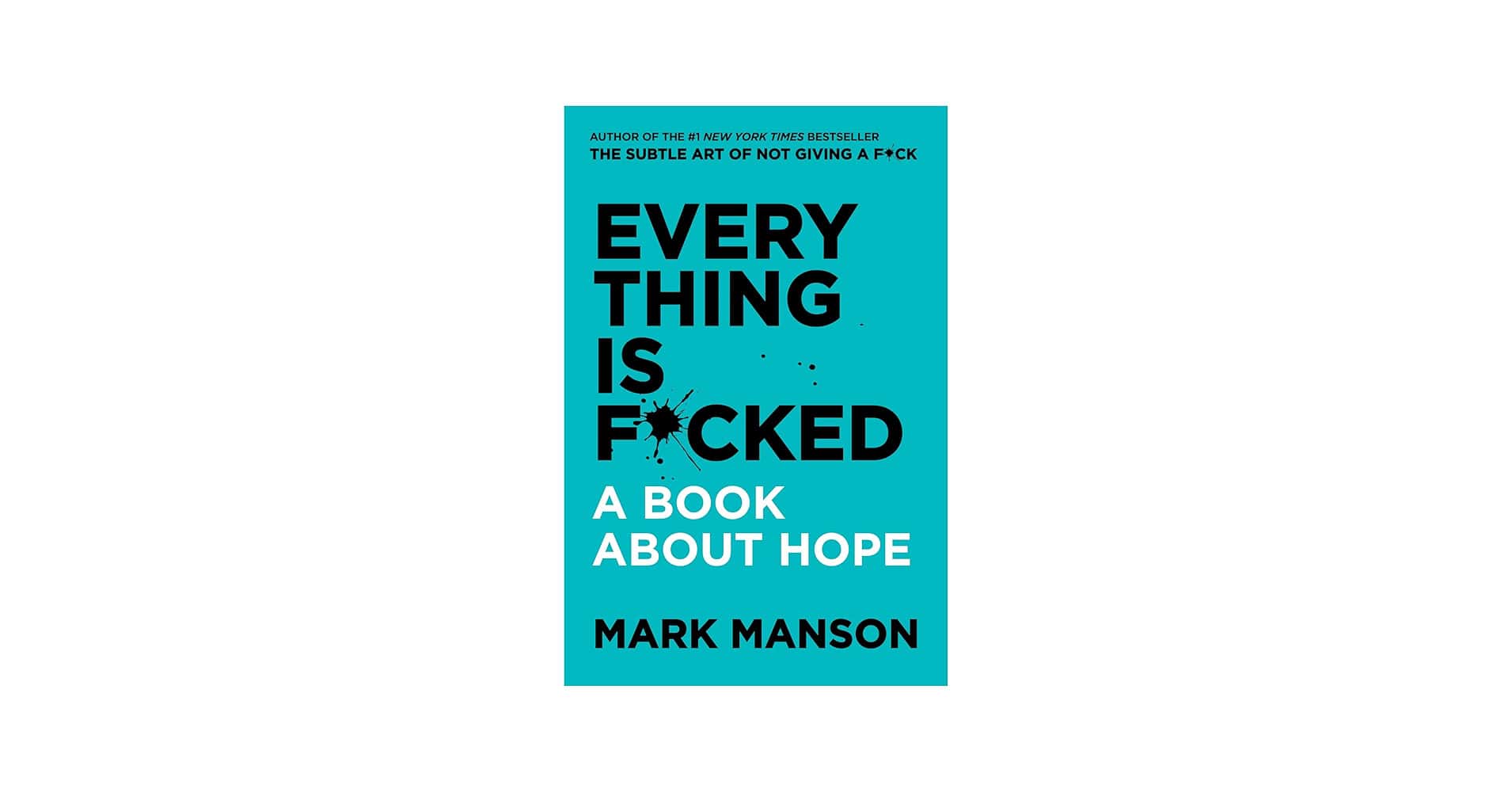
1. THE SNAPSHOT
- Star Rating: 4.5/5
- Verdict: A brutal, razor-sharp autopsy of the modern soul that explains why the more comfortable our lives become, the more we want to swan-dive off a bridge.
- Best For: Burned-out high-achievers, existential crisis survivors, and anyone tired of the “positive vibes only” industrial complex.
- Difficulty: Medium
- Reading Time: 6–8 hours
The Verdict: Modern anxiety is a “Hope Crisis.” We have mastered the material world—the Wi-Fi is fast and the coffee is artisanal—but we’ve lost the “Why” that makes living worth the effort. The solution isn’t more hope; it’s the courage to look the “Uncomfortable Truth” in the face and act anyway.
——————————————————————————–
2. INTRODUCTION: THE PARADOX OF PROGRESS
In 1940, a Polish officer named Witold Pilecki did the unthinkable: he let himself be arrested by the SS to sneak into Auschwitz. He spent two years building a resistance network in the literal mouth of hell, transmitting intelligence via home-made radios and smuggled laundry. He survived because he had a “Why”—a staggering, unshakable hope for a free Poland.
Compare that to us. We live in a historical anomaly of oversize Snuggie blankets and instant gratification. We’ve cured diseases, halved extreme poverty, and made violence a statistical outlier. Yet, we are witnessing a mental health dumpster fire. This is the Paradox of Progress: as life gets easier, we become more anxious and depressed.
We have shifted from “Resource Crises”—struggling to find bread and shelter—to a “Hope Crisis.” Because hope requires a sense of “better,” it inherently requires something to be broken. In a world where everything is “fixed,” we have nothing to hope for, so we invent drama, outrage porn, and tweetstorms to feel something. Grounding this is the Uncomfortable Truth: on a cosmic scale, the universe is indifferent to your spreadsheet, your car, or your existence. We are inconsequential cosmic dust. To survive this realization, we must construct “Hope Narratives” to keep the nihilism at bay.
But to understand why our narratives are failing, we have to look at the internal mechanics of the mind that builds them.
Read also: Howard Marks & The Art of Second-Level Thinking
——————————————————————————–
3. THE CLOWN CAR: THINKING BRAIN VS. FEELING BRAIN
Most self-help assumes you are a rational being who just needs better “data.” This is the Classic Assumption—the idea that the Thinking Brain is the driver and the Feeling Brain is a bratty passenger we need to ignore.
The case of “Elliot” proves this is a lie. After a brain tumor was removed from his frontal lobe, Elliot’s IQ remained high, but his ability to feel was severed. The result? He couldn’t make a single decision. He’d spend hours choosing between a blue or black pen while his career and marriage burned to the ground. Without the Feeling Brain to assign value, the Thinking Brain just spins its wheels in a vacuum of logic.
| Feature | Thinking Brain | Feeling Brain |
| Primary Function | Logic, calculation, reason | Emotions, impulses, intuition |
| Speed | Slow, methodical, energy-heavy | Fast, effortless, energy-efficient |
| Source | Synaptic arrangements in the skull | The wisdom/stupidity of the entire body |
| Role in the Car | The Navigator | The Driver |
“The Thinking Brain is the supporting character who imagines herself to be the hero.”
When the Feeling Brain drives, the Thinking Brain doesn’t fight for control; it negotiates. It becomes a map-maker that justifies wherever the Feeling Brain has already decided to go. If the Feeling Brain wants to sleep with the boss’s wife, the Thinking Brain draws a map explaining why “I deserve this.” This is the Clown Car: a life where the Thinking Brain has succumbed to Stockholm Syndrome, merely legitimizing the Feeling Brain’s narcissism and immediate impulses.
If the Feeling Brain is the driver, we have to understand the “laws” that govern how it steers.
——————————————————————————–
4. NEWTON’S LAWS OF EMOTION
Manson’s “Laws” explain why we stay stuck in cycles of burnout and achievement addiction despite knowing better.
Law 1: For Every Action, There Is an Equal and Opposite Emotional Reaction
Pain creates Moral Gaps. If someone punches you for no reason, a gap opens: you are “righteous,” they are a “piece of shit.” Your Feeling Brain demands “equalization”—punishing them or receiving an apology—to restore moral balance.
Law 2: Our Self-Worth Equals the Sum of Our Emotions Over Time
When moral gaps persist without equalization, they normalize. If you were bullied as a kid and couldn’t fight back, your Feeling Brain concluded you deserved it. This is low self-worth. Conversely, “Assholes” (delusional superiority) are created through positive moral gaps—receiving rewards they didn’t earn (participation trophies, etc.). Both are forms of narcissism that separate you from reality. Hustle Culture is often just an adolescent attempt to “equalize” a deep sense of unworthiness through external achievement.
Law 3: Your Identity Will Stay Your Identity Until a New Experience Acts Against It
Our values are stories. Once you decide “I am a loser” or “All men are trash,” you protect that story like a physical limb. Changing your identity requires “grieving” the old self, which is inherently painful. We stay stuck because the pain of staying the same feels safer than the “death” required to change.
These individual emotional forces eventually coalesce into collective systems of meaning—what Manson calls “Religions.”
Read also: The Blueprint for Permissionless Wealth and Perpetual Peace
——————————————————————————–
5. THE ANATOMY OF HOPE AND MODERN RELIGION
Hope requires three things: Control, Values, and Community. When we lose these, we join “Religions” to stabilize ourselves. Manson categorizes three types:
- Spiritual Religions: Draw hope from the supernatural (e.g., Christianity). They are resilient because they are evidence-proof.
- Ideological Religions: Draw hope from the natural world (e.g., Capitalism, Environmentalism, Politics). They are volatile because they rely on worldly success.
- Interpersonal Religions: Draw hope from other people (e.g., Romantic love, celebrities, children).
Modern secular movements function exactly like religions. They use a satirical 6-Step Program to hijack the Feeling Brain:
- Step 1: Sell Hope to the Hopeless. Find disaffected people (like the LaRouche Youth Movement) and tell them, “It’s not your fault; it’s the system’s fault.”
- Step 3: Invalidate Criticism. Create an “us vs. them” dichotomy. Anyone who questions the ideology is “evil” or “part of the problem.”
- Step 4: Ritual Sacrifice. Wear the right “robe” (or Nine Inch Nails T-shirt) to signal virtue to the tribe.
- Step 5: Promise Heaven, Deliver Hell. Keep followers dissatisfied so they keep following.
To escape the “Clown Car” of tribal identity and transactional hope, we must “grow up” into the maturity of Kantian principles.
——————————————————————————–
6. MATURITY AND KANT’S FORMULA OF HUMANITY
Maturity is the transition from “Child” (Pleasure/Pain) to “Adolescent” (Bargaining) to “Adult” (Principles). Most of the professional world is stuck in the Adolescent stage—an endless swap-meet of “I’ll be nice to you so you’ll give me a promotion.”
Manson utilizes Immanuel Kant’s Formula of Humanity: “Act that you use humanity… always at the same time as an end, never merely as a means.”
Corporate Burnout is the inevitable result of being treated as a “means” (a tool for profit) rather than an “end” (a human with inherent dignity).
Transactional vs. Unconditional Relationships:
- Transactional (Adolescent): “I will love you if you do X.” This is fragile and manipulative.
- Unconditional (Adult): “I will be honest because honesty is right, regardless of the outcome.” This is resilient and creates true trust.
The only way to achieve this adulthood is to stop chasing hope and start embracing the uncomfortable reality of our existence.
——————————————————————————–
7. THE SOLUTION: AMOR FATI AND ANTIFRAGILITY
The ultimate solution to an “everything is f*cked” world is not “more hope.” Hope is a rejection of the present; it requires the world to be “wrong” so it can be “right” later. Instead, Manson advocates for Amor Fati—the Love of Fate.
Amor Fati: “My formula for greatness in a human being… that one wants nothing to be different, not forward, not backward, not in all eternity. Not merely bear what is necessary… but love it.” — Nietzsche
True resilience comes from Antifragility—growing stronger through stress. Our pursuit of “Over-Comfort” has made us fragile “potatoes.” By embracing pain and acting without hope, we find a higher form of freedom. This means acting because it is right, not because we have a statistical guarantee of success.
Read also: The Secret Habits and Disciplined Wisdom of the World’s Best Traders
——————————————————————————–
8. CRITICAL ANALYSIS: NIHILISM VS. FREEDOM
Critics argue that the Uncomfortable Truth—that we don’t matter—is nihilistic. Manson argues the opposite: it is the ultimate liberation. If the universe provides no “carrot on a stick,” you are finally free to decide what matters.
When you accept that nothing matters, you stop being a slave to the “Why” and can finally focus on the “How.” You stop acting for future rewards and start acting for your own character in the present moment. This is the path of the hero: to strike a match to light up the void, not because the void will go away, but because you are the kind of person who strikes matches.
——————————————————————————–
9. CONCLUSION: CHARACTER OVER HOPE
The path forward is not to find a better “Why,” but to build a better “How.”
- Pain Is the Constant: You cannot escape suffering; you can only choose what you suffer for. Pursuing a “painless” life only makes you more fragile.
- Hope Is Unstable: Hope is transactional and tribal. It requires an enemy to function.
- Character Is Controllable: You cannot control the universe, but you can control your principles. Maturity is the move from wanting the world to serve you to serving the principles that make the world bearable.
——————————————————————————–
10. CALL TO ACTION (CTA)
Stop waiting for things to get better. Stop chasing the next “hope” narrative that promises happiness is just one promotion or one relationship away. Happiness is a treadmill. Resilience is the goal.
“Stop chasing hope. Start building resilience.”