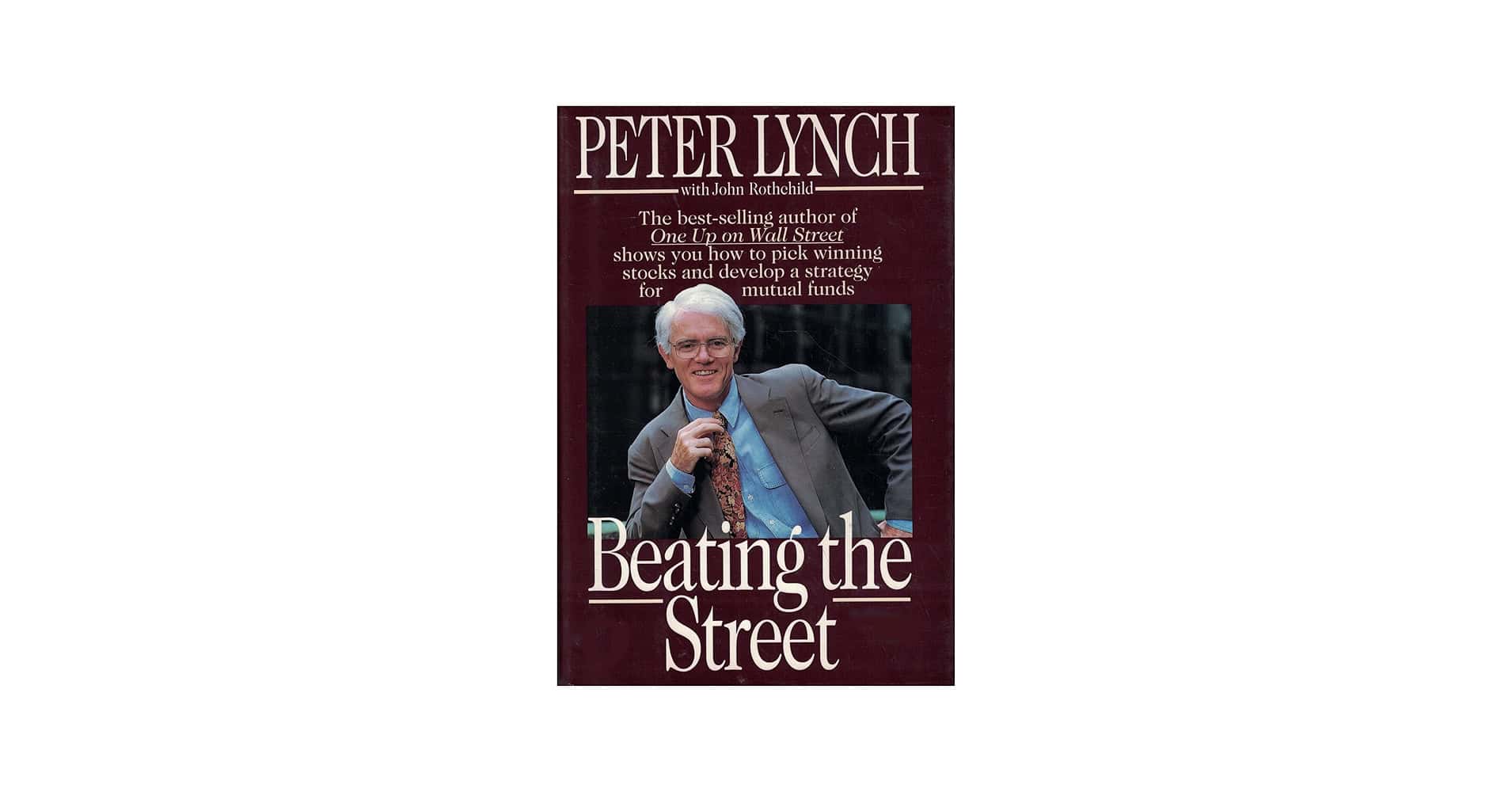
• Star Rating: 4.8/5
• One-Sentence Verdict: A definitive guide for the individual investor to leverage their personal observations into market-beating returns.
• Best For: DIY Investors, Financial Beginners, and those seeking to transition from bonds to equities.
• Difficulty: Medium.
• Get “Beating the Street” on Amazon here
This snapshot sets the stage for a deep-dive analysis into the mind of a man who managed the Fidelity Magellan Fund from $18 million to $14 billion with a 29.2% average annual return. While Wall Street attempts to shroud the market in complexity, Peter Lynch proves that your local shopping mall is a more effective research tool than a Bloomberg terminal.
——————————————————————————–
INTRODUCTION: Why Lynch’s Wisdom Still Dominates in 2026
As we navigate the market landscape of 2026, it is easy to be seduced by the siren song of high-frequency trading, AI-driven algorithms, and the 24-hour digital news cycle. However, Peter Lynch’s Beating the Street remains the essential antidote to this modern noise. While the vehicles of investment have evolved—from physical ticker tapes to mobile trading apps—the underlying psychology of the market remains fixed. The pendulum of human emotion still swings between blind optimism and paralyzing fear.
Lynch’s wisdom is timeless because it focuses on the “even bigger picture.” He famously compares market volatility to the weather in Sweden or Minnesota: when the temperature drops below zero in the winter, locals don’t panic and declare the start of a new Ice Age; they simply put on a parka and wait for summer. In the world of finance, Lynch argues that the individual investor’s greatest enemy is not the market’s fluctuation, but their own “weekend warrior” mentality—the tendency to read scary headlines on Saturday and sell everything in a panic on Monday.
This book is the “Holy Grail” for the amateur who refuses to be “scared out” by the media. Lynch’s desk wasn’t a sleek glass surface with eight monitors; it was a cluttered workspace featuring a yellow legal pad, a handful of #2 pencils, and a 15-year-old handheld calculator. This image serves as a reminder that the best analysis comes from legwork and logic, not computational power.
——————————————————————————–
THE BIG IDEA: “Invest in What You Know” vs. Wall Street Jargon
The core philosophy of Beating the Street can be distilled into a single, revolutionary command: Invest in what you know. While Lynch’s earlier masterpiece, One Up on Wall Street, introduced the theory of the “ten-bagger,” Beating the Street moves into the practical “how-to” of portfolio construction.
Lynch argues that the “Retail Advantage” is the amateur’s secret weapon. If you spend time at the Burlington Mall and notice that The Body Shop is perpetually crowded with people buying rasool mud shampoo, you have a research tip more valuable than any broker’s “hot buy” list. By the time a Wall Street “muck-amok” notices a successful retail chain, the stock has likely already doubled. The individual investor can catch these “grubs under rocks” early by simply being an observant consumer.
Lynch advocates for a “six-month checkup” on all holdings, treating investments not as disconnected numbers on a screen, but as “continuing sagas.” As long as the story—the fundamental reason you bought the stock—remains intact, you stay the course.
——————————————————————————–
5 KEY TAKEAWAYS FROM THE MASTER
1. The “Saint Agnes” Miracle and the Lynch Lexicon
Perhaps the most humbling story in financial history is the experiment involving the 7th-grade students at Saint Agnes School. Led by their teacher Joan Morrissey, these students produced a 70% gain over two years, outperforming 99% of all equity mutual funds and the S&P 500.
Their success was built on the “Crayon Rule”: Never invest in any idea you can’t illustrate with a crayon. If you can’t explain the company’s product to a 12-year-old in two minutes without boring them, you have no business owning it. The students focused on Pentech (the markers they used), Disney, Nike, and The Gap.
To maintain their discipline, the students memorized a “Lexicon of Maxims” that every 2026 investor should repeat in the shower:
• A good company usually increases its dividend every year.
• You can lose money in a very short time, but it takes a long time to make it.
• Never fall in love with a stock; always have an open mind.
• You should not buy a stock because it’s cheap, but because you know a lot about it.
• Just because a stock goes down doesn’t mean it can’t go lower.
2. The Even Bigger Picture: The Stomach Trumps the Head
Lynch provides empirical proof that the key to wealth is not your IQ, but your “stomach”—the ability to ride out corrections. Over a 60-year span, stocks outperformed bonds by a ratio of nearly 3.5:1. Specifically, stocks returned an average of 7.1% per year after inflation, compared to just 2.1% for bonds.
This leads to Peter’s Principle #1: “Gentlemen who prefer bonds are making a big mistake.” Lynch is equally critical of bond fund fees, stating in Principle #3: “There’s no point in paying Yo-Yo Ma to play a radio.” If you must buy government bonds, buy them directly from the Treasury; don’t pay a manager to do something so simple.
3. The Science, Art, and Legwork Formula
Successful investing is a three-pillared discipline:
• Science: Hard numbers—investigating balance sheets, checking for growing sales, and low debt.
• Art: Intuition and storytelling. You must be able to explain the “story” of the company.
• Legwork: The effort of “turning over rocks.”
Lynch’s Rule of 20 Rocks states that if you turn over 10 rocks, you’ll find one grub; if you turn over 20, you’ll find two. During his time at Magellan, Lynch visited hundreds of companies a year. His secret weapon? Asking CEOs: “Who else in your industry are you impressed with?” When a competitor speaks fondly of a rival, you’ve likely found a winner.
4. The Earnings Line: Quantitative Value at a Glance
Lynch’s quantitative “Rule of Thumb” is that a stock’s price will eventually follow its earnings line.
• The Buy Zone: Use the Google example. If Google is growing earnings at 25% per year, a P/E ratio of 20 is a bargain. However, if the P/E climbs to 40, you are in the “danger zone.”
• The Incredible Deal: Lynch’s ultimate calculation is when a company can earn back its stock price in one year (a P/E of 1).
He illustrates this with Fannie Mae—the “block of granite.” While Wall Street worried about interest rate swings, Lynch saw the company transitioning into a mortgage-packaging powerhouse with a 0.2% overhead compared to a bank’s 2%. He stayed the course through “Texas keys-in-the-door” panics because the earnings line remained robust.
5. Lousy Industries & Monastic Cultures
Lynch prefers “lousy industries” (rock quarries, soda cans, retread tires) because they don’t attract the profit-killing competition found in “hot” industries. In a stagnant industry, the survivor achieves total domination.
• Principle #9: “All else being equal, invest in the company with the fewest color photographs in its annual report.” He loved companies like Crown Cork and Seal, which had zero photos and a monastic corporate culture.
• Principle #10/18: “When even the analysts are bored, it’s time to start buying.”
• Principle #7: “When insiders are buying, it’s a good sign—unless they happen to be New England bankers.” (A jab at the localized failures of the early 90s).
——————————————————————————–
THE ART OF THE TURNAROUND: “Born Again” Grubs
One of the most tactical sections of Beating the Street covers the “Born Again” Savings & Loans (S&Ls) and retail turnarounds. Lynch provides a masterclass in the “Home Buyer’s Technique” for valuing companies.
When evaluating Sunbelt Nursery vs. Callaway’s, Lynch used his 15-year-old calculator to compare the market value per store. He realized that if Callaway’s was worth $3 million per store, and Sunbelt (with 98 stores) was being valued at only $32 million total, the market was missing a massive “kicker.”
Similarly, he hunted for “Born Again” S&Ls—the “Jimmy Stewart” thrifts that avoided risky commercial loans and stuck to residential mortgages. He looked for a high Equity-to-Assets ratio (7.5% or better). These companies were often selling below book value, meaning you were getting $9 of assets for $7 of stock. This is the rigor of a Wall Street analyst applied with the common sense of a homeowner.
——————————————————————————–
MY PERSONAL TAKE: Is Lynch Still Relevant in 2026?
As a Senior Strategist, I am often asked if Lynch’s focus on physical products—malls and tires—is dated in an era of SaaS and AI. My professional evaluation: Lynch’s logic is the ultimate filter for the 2026 digital economy.
The “Crayon Rule” is the perfect test for modern tech. If you cannot explain a SaaS company’s Unit Economics (Customer Acquisition Cost vs. Lifetime Value) in simple terms, you are gambling on a “black box.” In 2026, the “Lynchian” move isn’t chasing the next overhyped AI startup; it’s finding the “lousy” industry—perhaps waste management or specialized logistics—that is using AI to achieve total domination while analysts are still “bored” with the sector.
While the “rocks” we turn over today might be App Store reviews or GitHub repository activity instead of mall foot traffic, the “legwork” remains identical. We are still looking for “skin in the game” and “monastic” management that prefers building cash flow to building fancy headquarters.
——————————————————————————–
THE PROS AND CONS OF THE LYNCH METHOD
| PROS | CONS | 2026 APPLICABILITY |
|---|---|---|
| Humorous Style: Complex ratios made simple. | Dated Examples: S&Ls and 90s retailers are gone. | High: The psychology of fear is permanent. |
| “Peter’s Principles”: 21 actionable anchors. | High Time Requirement: “Legwork” is a full-time job. | Medium: Digital tools speed up the “Science.” |
| Focus on Conviction: Trust your eyes over experts. | Survivor Bias: Lynch highlights his wins. | High: Essential for ignoring AI hype cycles. |
| The “Stomach” Factor: Emotional discipline. | Retail Bias: May ignore B2B/Infrastructure plays. | High: Vital for 24/7 crypto/tech volatility. |
——————————————————————————–
WHO SHOULD READ THIS?
• The Skeptical Beginner: If you think the market is a rigged game, Lynch’s 3.5:1 data will provide the statistical spine you need to start.
• The Overwhelmed Professional: For those drowning in Bloomberg data, the “Crayon Rule” and “Earnings Line” provide a much-needed filter for simplicity.
• The 401k Optimizer: If you are debating between bonds and stocks, Lynch’s breakdown of “gentlemen who prefer bonds” is your tactical manual.
——————————————————————————–
CONCLUSION & FINAL VERDICT
Beating the Street is not just a book about stocks; it is a philosophy of financial self-reliance. By chronicling his journey from the early days of managing the $18 million Magellan Fund to the $14 billion behemoth it became, Lynch proves that success is a result of perspiration, not just inspiration.
The final verdict is clear: The individual investor possesses a natural advantage that institutions cannot replicate—the ability to think small, act quickly, and ignore the quarterly performance pressures of Wall Street. By adopting the “Saint Agnes” mindset and maintaining a “six-month checkup,” anyone can build a portfolio that stands the test of time.
——————————————————————————–
Build Your Mind (and Your Portfolio)
Ready to stop being a “Weekend Warrior” and start being a master stock picker?
• [Get the physical copy of “Beating the Street” on Amazon here] – Essential for your library to highlight the “21 Principles.”
• [Listen to the Audiobook on Audible] – There is no better way to absorb Lynch’s “Penurious Maverick” philosophy than hearing his conversational, common-sense tone while you’re on the go.
Start turning over your 20 rocks today. Your first “ten-bagger” is waiting under one of them.