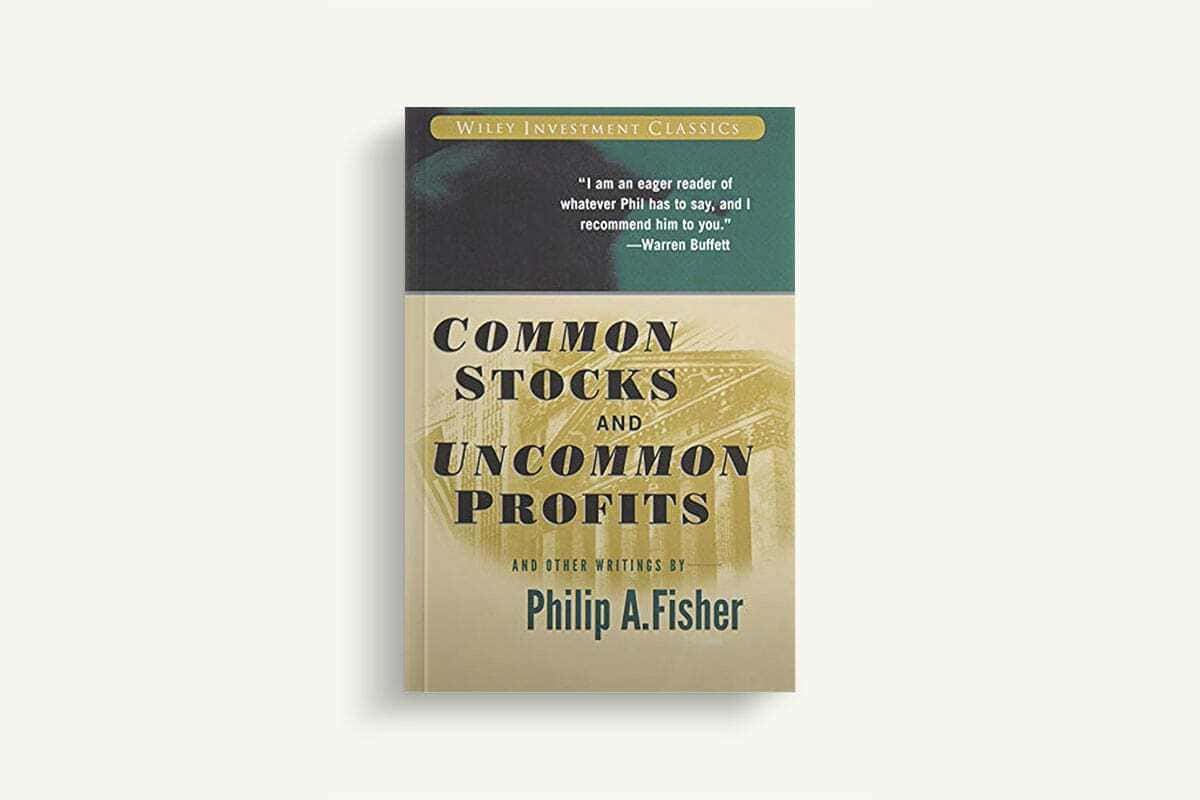
In the summer of 1958, an eight-year-old Ken Fisher sat with a copy of his father’s newly published book, Common Stocks and Uncommon Profits. To a child, the text was an incomprehensible thicket of “big words” that felt like a calculated theft of his vacation. He could not have known then that he was holding the very first investment book to ever grace the New York Times bestseller list—a volume that would eventually be regarded as the “investing bible.”
Decades later, after becoming a titan of the industry himself, Ken realized that the struggle he faced as a child is the same one facing modern investors: the difficulty of filtering signal from noise. In an era dominated by “Wall Street malarkey mills” and short-term quarterly gossip, Philip Fisher’s philosophy stands as a testament to the power of “Main Street verification.” To Fisher, the transition from a novice to a master was the journey from “Craft”—the repetitive application of a checklist—to “Art”—the ability to synthesize information with a facile mind.
Here are the five most counter-intuitive and transformative lessons from the Fisher philosophy.
1. The Power of “Scuttlebutt”: Why Your Best Sources Aren’t on Wall Street
The cornerstone of the Fisher method is “Scuttlebutt.” While the average analyst is buried in spreadsheets, the Fisher-style investor is on the business grapevine. This involves a rigorous cross-examination of a company’s competitors, customers, and suppliers to uncover fundamental features that simply cannot be faked.
This is the “Craft” of investing. Philip Fisher famously prepared for these inquiries with yellow legal pads, leaving ample space between typed questions for notes. However, the “Art” was found in the spontaneous follow-up questions that popped out “unprepared” based on the answers received.
This method reveals the “respect and fear” a company commands. In the early 2000s, the “slinky firms” of the era—Enron and WorldCom—would have easily failed the scuttlebutt test. While Wall Street was enamored with their hype, their competitors were notably unimpressed and certainly didn’t hold them in “awe.” As Fisher posited:
“Scuttlebutt means avoiding malarkey mills and seeking information from competitors, customers and suppliers all of whom have a vested interest in the target company and few of whom have any reason to see the firm unrealistically.”
2. The Ultimate Competitive Litmus Test: The “Killer Question”
Philip Fisher and the legendary Forbes editor James Michaels shared a deceptively simple metric for identifying “non-linear genius” in a management team. They would ask: “What are you doing that your competitors aren’t doing yet?”
The brilliance lies in the word “yet.” This question identifies firms that provide the “intellectual grist” necessary to drive markets rather than merely react to them. It separates the “plotting mechanical flywheels” from the industry leaders. A “Great Company” as defined by this inquiry:
• Forces others to follow: They set the pace of innovation (think of Texas Instruments and the integrated circuit).
• Dominates for the benefit of all: Their growth serves customers, employees, and shareholders as a unified compounding engine.
• Refuses to become complacent: They are never caught behind because they are perpetually hunting for the next evolution of their product line.
3. The 7-11 Year Rule: The Long Game of R&D
In a market obsessed with the next thirty days, Fisher looked at the next thirty years. He observed that it typically takes seven to 11 years for a research project to move from conception to a “golden harvest” of significant corporate profit.
This leads to the “R&D Paradox”: high research spending is a fiscal drain in the short term, but it is the prerequisite for long-term dominance. Fisher cautioned against “crash programs”—sudden, frantic shifts in research focus to meet immediate goals. He viewed these as expensive disruptions and a red flag for weak management.
He cited an oil company that abandoned five-year projects at the three-year mark, wasting both human and financial capital because they lacked the “linear” discipline to see the cycle through. Conversely, companies like Motorola succeeded because they allowed their R&D to mature, even when it appeared costly on a quarterly balance sheet.
4. Why “Overpriced” is Often a Myth for Great Growth Stocks
The most common mistake of the sophisticated investor is the fear of a high Price-to-Earnings (P/E) ratio. Fisher argued that a stock isn’t “discounting the future” if its management continues to innovate at a pace that justifies a premium. To him, the premium paid for excellence wasn’t a cost, but an entry fee to a compounding engine.
To illustrate this, he used the “Classmate Analogy”: Imagine you could buy a contract for 25% of a classmate’s future earnings. If you identified the most talented person in your class, you wouldn’t sell that contract ten years later just because they became successful and someone offered you a “profit.” You would hold it because their potential is still expanding.
Fisher lived this principle with Motorola. He purchased the stock and held it for 25 years as it appreciated 30-fold. By ignoring the “overpriced” noise and focusing on the business’s intrinsic quality, he achieved a result that “bargain hunters” could only dream of.
If the job of buying was done correctly, the time to sell is almost never.
5. The Non-Negotiable Pillar: Management Integrity
You can only afford to hold a stock “almost forever” if you can trust the people steering the ship. This is “Point 15” of Fisher’s famous checklist: Management Integrity. Because management is always closer to the assets than the shareholders, the potential for abuse is infinite.
Fisher pointed to the “95 club”—the tech stocks of the 1999 era that lost 95% of their value because they were built on hype with no real sales force, no profit plan, and no “fiscal trusteeship.” Red flags include:
• Nepotism: Promoting family members over more able men.
• Option Abuse: Unfairly enriching insiders at the expense of shareholders.
• The “Clam Up”: Talking freely when things go well, but hiding or “clamming up” when troubles and disappointments occur.
“Regardless of how high the rating may be in all other matters… if there is a serious question of the lack of a strong management sense of trusteeship for stockholders, the investor should never seriously consider participating in such an enterprise.”
Conclusion: From Craft to Art
Mastering the Fisher philosophy is the transition from the piano player (the Craft) to the composer (the Art). It applies to growth, value, big-cap, and small-cap stocks alike—exemplified by how both Philip and Ken Fisher used the same 15 points to identify Nucor as a generational winner in the 1970s.
Ultimately, these principles are a “prescription for what to buy” based on the fundamental strengths of a business that no spreadsheet can fully capture.
If you looked at your current portfolio through the lens of “Main Street verification” rather than “Wall Street opinion,” which of your “winners” would still stand the test?