1. Introduction: The High Cost of the Startup Myth
The “garage startup” narrative is a romanticized trap. For years, the professional world has been intoxicated by the idea of starting from zero, suffering through a cash-draining “runway,” and praying for the lightning strike of product-market fit. As a Strategic Architect of business models, I view this as a statistically irresponsible bet.
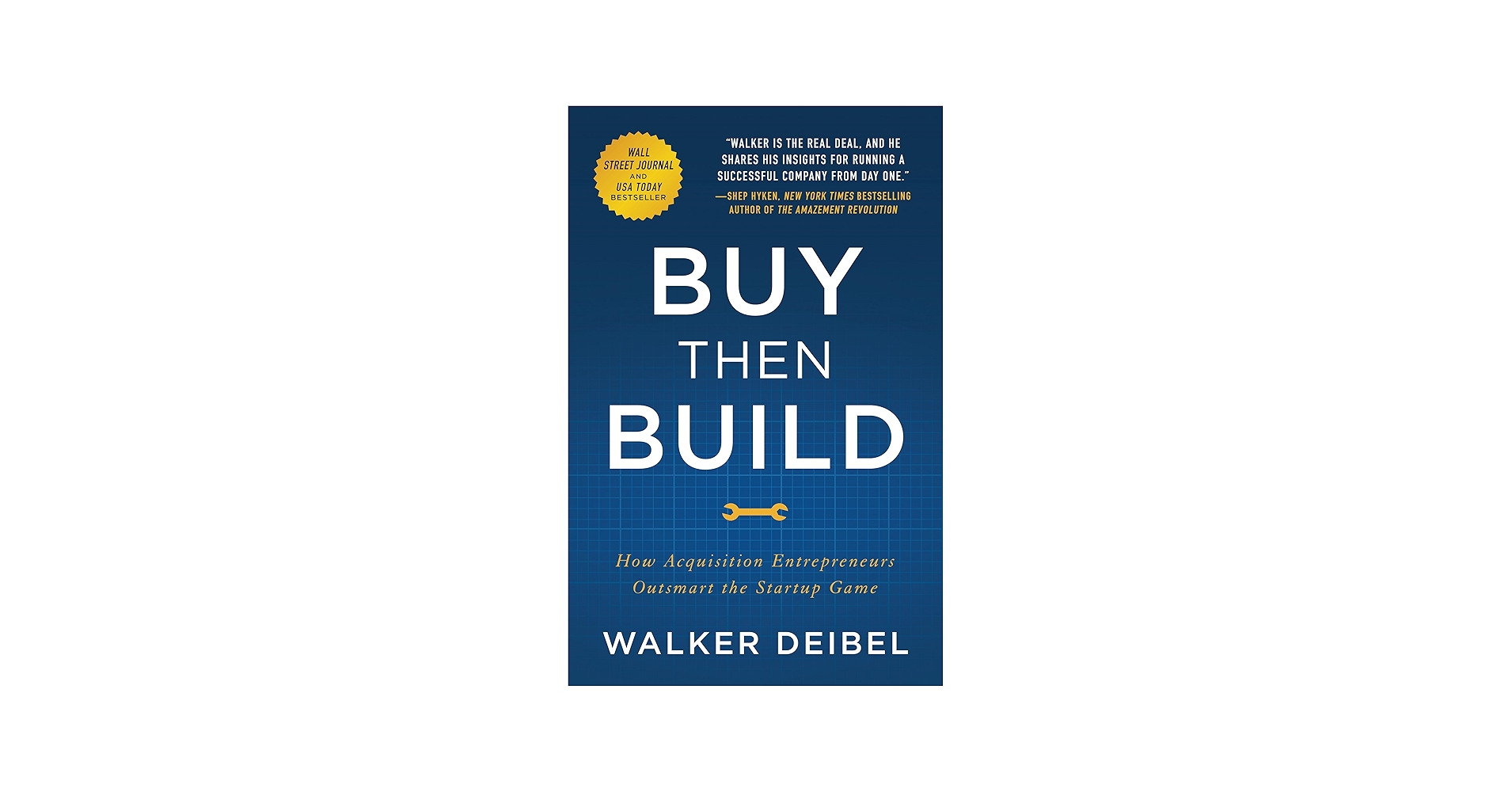
I’ve seen the wreckage firsthand. I was involved with a startup called ViewPoint. We had it all: an oversubscribed equity raise, a former Fortune 500 CEO as an investor, and a team of elite developers. Yet, we failed because the startup phase is a notorious company killer. Contrast that with Corley Printing, a business I acquired. By skipping the “hoping” phase and moving straight to “operating,” I transformed a legacy infrastructure into a regional leader. This wasn’t luck; it was engineering success. Bypassing the startup runway transforms your risk profile from day one. You aren’t building a plane while falling; you are buying the plane that is already in the air. This “entrepreneurship hack” is known as Acquisition Entrepreneurship.
2. The Core Concept: What is Acquisition Entrepreneurship?
Acquisition Entrepreneurship (AE) is the strategic philosophy of buying an existing, profitable company rather than starting one from scratch. It is the ultimate hybrid of the investor and creator mindsets. In the AE model, you leverage a pre-existing platform to act as a “Value Creator” from the first hour of ownership.
Existing businesses offer four inherent advantages that startups simply cannot match:
- Established Infrastructure: Functioning systems, software, and physical assets are already in place.
- Customer Base: Proven demand with recurring revenue—no need to “find” a market.
- Operational History: Years of data that allow you to analyze reality rather than project fantasies.
- Immediate Profitability: Cash flow that funds your salary and your innovation from day one.
The numbers don’t lie. While venture-backed startups suffer a 75% failure rate, Small Business Acquisition—particularly those backed by SBA Loans—boasts a success rate of roughly 98%. This disparity exists because valuations in the AE world are based on intrinsic historical earnings, whereas startup valuations are often irresponsible reflections of “potential.” Furthermore, true economic growth is driven by “Gazelles”—the 2–3% of companies that create 70% of all new jobs. These aren’t usually high-tech startups; they are often 25-year-old established firms growing at 20% annually. AE is your ticket into that elite 2%.
Read also: A Structural Analysis of Compounding in Life Systems
3. The CEO Mindset: Aligning the “3 As”
Successful acquisition is not about finding a “cool” industry; it’s about an internal audit of the “Law of Three As.”
Attitude
You must cultivate a Growth Mindset. According to Carol Dweck, those with a fixed mindset view talent as innate and fear failure as a personal indictment. In the ambiguous world of AE, you must believe situations are malleable. If you cannot “talk back” to your fixed-mindset voice during a setback, you will fail before you close.
Aptitude
High IQ is a predictor of success, but Ambiguity Management is the CEO’s primary currency. Most professionals suffer from perfectionism, which is a toxic liability in entrepreneurship. Perfectionism hinders action. A CEO must be decisive with limited information.
Action
Are you a Visionary or an Integrator? You must understand the “E-Myth” distinction: “Subject Matter Expertise” (baking the pies) is irrelevant. “Business Management” (running the pie shop) is everything. Once you realize that your aptitude for management is transferable, your target market expands exponentially. You don’t need to be a plumber to own a $5M plumbing empire; you need to be a CEO.
4. The Four Acquisition Opportunity Profiles
To refine your search, categorize targets by their growth and value potential.
| Profile | Strategy | Best Fit For… |
| Eternally Profitable | The “Cash Cow.” High stability, low disruption risk (e.g., landscaping). | Investors seeking reliable, long-term yield with low drama. |
| Turnaround | The “Fixer-Upper.” Buying underperforming assets at a discount. | Operational experts who thrive on fixing broken systems and managing cash flow. |
| High Growth | The “Scale Play.” Buying a company with 20%+ annual growth. | Those with capital for reinvestment and high tolerance for tight cash cycles. |
| Platform | The “Skill-Match Play.” Using a biz as a base for your specific expertise. | Marketing or sales specialists who can unlock value in a stable firm (e.g., adding eCommerce to a legacy factory). |
5. Engineering Wealth: The Financial Logic of the Deal
The “magic” of the Buy Then Build model is leverage. In small business, we use SDE (Seller’s Discretionary Earnings). This is the absolute truth of value: Net Income + Depreciation + Interest + Owner Salary + Discretionary Perks.
Amateurs assume you need millions to buy a million-dollar business. Let’s look at the “Nancy” Calculation for a realistic capital allocation:
- Total Capital: Nancy has $200,000.
- The Reserve: She sets aside 60,000** for personal/business reserves and **40,000 for closing costs/working capital.
- The Investment: This leaves $100,000 for a 10% down payment.
- The Purchase: With a 90% SBA Loan, Nancy buys a business for $1,000,000.
- The Return: At a 3.2x multiple, that business generates $312,500 in SDE.
- The Result: After 146k in debt service, she is left with over **165,000 in pre-tax cash flow** on a $200k total commitment.
This is a “Wealth-Building Accelerator.” A 10% growth in a business portfolio is vastly superior to 10% in a stock portfolio because you are capturing the spread between the cost of debt and the cash flow of the asset.
Read also: The Research-Backed Blueprint for Building Truly Great Companies
6. The Search: Getting Upstream of the Market
Why do people go to brokers? As “Slick Willie” Sutton famously said about why he robbed banks: “Because that’s where the money is.” To find a deal, you must go to the source of deal flow.
The Target Statement Formula: “I am looking for a [Type] company with [Growth Opportunity] generating [SDE Range] in [Location].”
Broker Vetting Checklist:
- Does the broker hold CBI (Certified Business Intermediary) or CMAA (Certified M&A Advisor) certifications?
- Do they have personal business ownership experience?
- Do they screen their listings for financial accuracy before posting?
To get the “pocket listings” before they hit BizBuySell, you must prove you are a “capable buyer.” Present your personal balance sheet and your Target Statement immediately. If you can’t prove you have the capital and the commitment, you are just a tire-kicker.
7. Analysis: Pay for the Past, Buy for the Future
Analysis is a diagnostic. Your goal is to find the “Truth” of the earnings through Recasting.
Recasting the Income Statement
You must identify “Add-backs”—expenses the seller ran through the business that you won’t have to (e.g., the owner’s personal Mercedes, their spouse’s health insurance, or a one-time legal fee). These are added back to the net income to find the true SDE.
The Hard Filters
- Debt-to-Earnings Ratio: The business must have a minimum ratio of 1.25. If the business cannot easily afford to pay for its own acquisition while leaving you a margin for error, walk away.
- Margin of Safety: We pay for past performance to protect the downside. We buy for the future innovation we will provide. If the historical data doesn’t support the debt, your management aptitude is irrelevant.
8. My Perspective: Why This Changes Everything
In the world of wealth and freedom, AE is the ultimate mental model. It offers autonomy through cash flow.
Let’s be blunt: The personal guarantee is the price of admission for 90% leverage. If you cannot quantify the risk of a proven asset against your own management aptitude, you haven’t done the math. This is about the “merging of work and life,” where your problem-solving directly increases your net worth. You aren’t just earning a salary; you are building the “crown jewel” of your entrepreneurial career.
Read also: Why Career Leverage Dominates Labor Intensity
9. Conclusion: The Path to CEO Starts Now
Success is not a gamble; it is an engineering problem. We are currently facing a “$10 Trillion Tsunami”—a once-in-a-generation wave of Baby Boomers retiring and selling off successful firms at record rates.
The cockpit is open. You have a choice: Are you going to spend the next five years trying to build a runway, or are you going to buy the plane that’s already in the air?
The path to CEO starts with a signature, not a startup.