

1. THE SNAPSHOT: THE MODERN REAL ESTATE PLAYBOOK
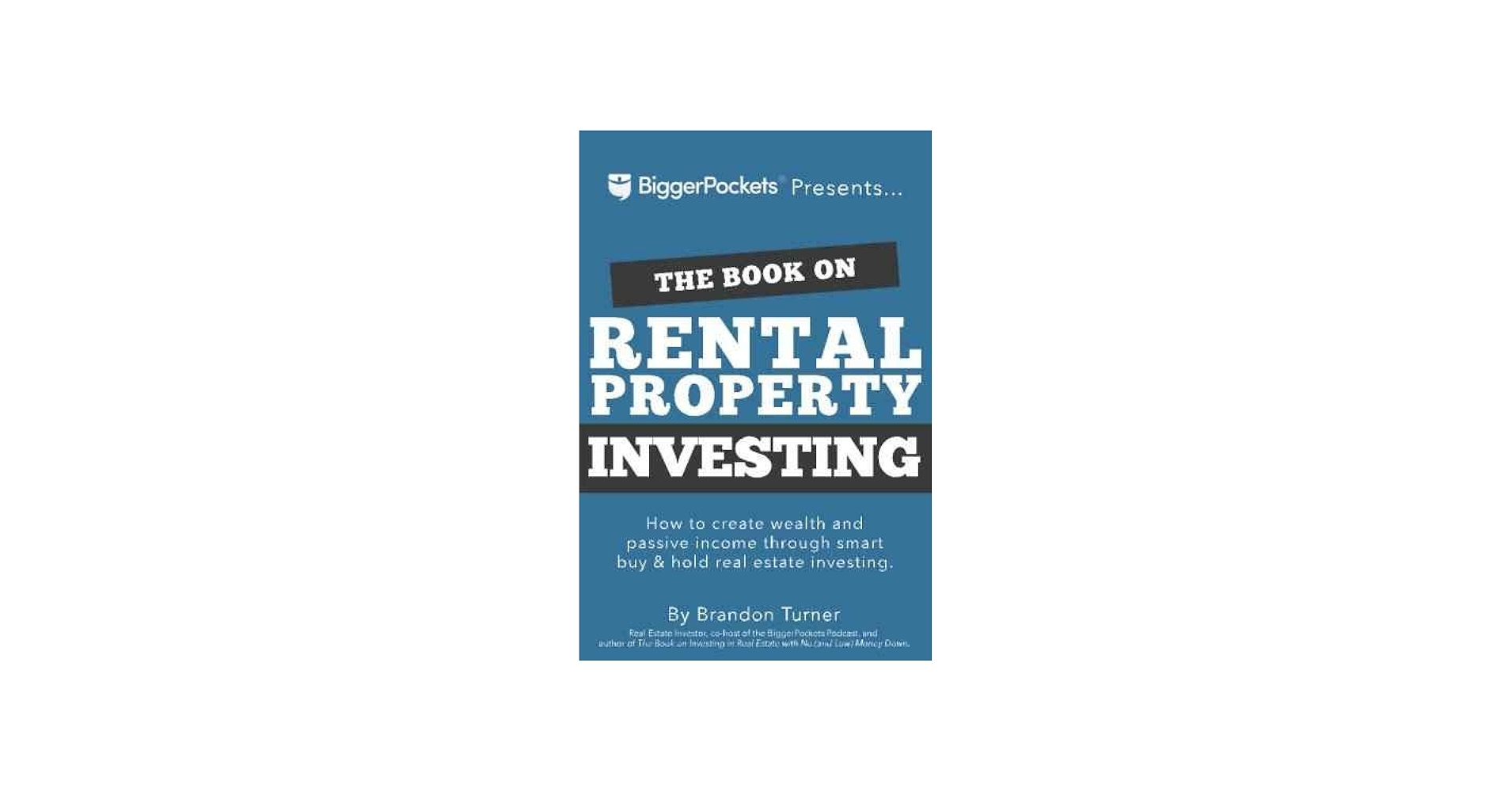
This Rental Property Investing Brandon Turner summary provides the tactical framework needed to transition from an amateur dreamer into a disciplined, high-volume deal underwriter who understands the intricacies of the buy-and-hold strategy.
SUMMARY BOX
- Star Rating: 4.9/5 (The Modern Real Estate Playbook).
- One-Sentence Verdict: A detailed, step-by-step roadmap for building wealth through intelligent buy-and-hold rental properties.
- Best For: Aspiring landlords, house hackers, and income-focused investors looking for repeatable systems.
- Difficulty: Medium (Requires understanding financial terminology and rigorous deal math).
——————————————————————————–
2. INTRODUCTION: BEYOND THE DREAM – REAL ESTATE AS A REPEATABLE SYSTEM
Many individuals are captivated by the “passive income dream”—the alluring image of sitting on a beach while rent deposits magically appear in a bank account on the first of the month. However, as Brandon Turner emphasizes, the transition from a dreamer to a successful investor requires moving away from “get-rich-quick” fantasies and toward a structured reality. Success in this field is not the result of luck or a single “hot” tip; rather, it is the product of a disciplined investment system designed to withstand market fluctuations and operational challenges. In real estate, a hobby costs you money, while a business pays you.
The philosophy championed by Turner and the BiggerPockets community represents the vital intersection of Education + Community + Conservative Math. Education provides the “how-to” and prevents rookie mistakes that can lead to foreclosure or financial ruin. Community provides the network—the contractors, agents, and lenders—needed to execute. Conservative math acts as the ultimate filter, ensuring that every acquisition is an asset, not a liability. This framework rejects the hype common in many real estate seminars, focusing instead on building a foundation of knowledge and leveraging a network of like-minded professionals. To achieve true financial independence, one must treat real estate as a legitimate business, implementing repeatable processes for everything from property acquisition to tenant management.
The core thesis of this blueprint is clear: Cash flow is the foundation; appreciation is the bonus. While many speculators lost everything by banking on rising home prices during the mid-2000s, the intelligent investor prioritizes properties that generate immediate, positive cash flow after all expenses. This provides the stability required to hold assets long-term, eventually reaping the rewards of appreciation and equity growth. This summary will evaluate why treating real estate as a business rather than a hobby is the only strategic path to achieving true financial independence. Understanding these wealth-building pillars is the first step in constructing a durable portfolio.
Read also: The Psychology of Holding vs Selling Assets
——————————————————————————–
3. THE FOUR PILLARS OF WEALTH ACCELERATION
Building a portfolio of passive income rental properties requires an understanding of how these assets function as multi-dimensional wealth generators, moving far beyond simple rent collection into a sophisticated financial engine. Unlike stocks, which primarily offer growth or dividends, real estate builds wealth through four distinct, simultaneous channels. Turner identifies these as the primary drivers that fast-track an investor toward financial freedom, creating a “wealth snowball” that gains momentum over time.
- Cash Flow: This is the lifeblood of the investment and the investor’s primary protection against market cycles. It is the net income remaining after all operating expenses, capital expenditure (CapEx) reserves, and mortgage payments have been deducted from the gross rent. Positive cash flow provides the financial stability to cover unexpected repairs and creates the income stream that eventually replaces a traditional salary.
- Appreciation: While cash flow covers the bills, appreciation provides the “wealth jump.” This is the increase in a property’s value over time. Turner distinguishes between “market appreciation,” which is out of the investor’s control, and “forced appreciation,” where the investor increases the property’s value through strategic renovations (rehab). Relying on market appreciation alone is speculation; forcing it through value-add strategies is investing.
- Tax Benefits: Real estate offers massive structural advantages for keeping more of what you earn. Through depreciation—a non-cash deduction that accounts for the theoretical wear and tear of the building—investors can often offset their rental income on paper, significantly reducing or even eliminating their tax liability. Additionally, strategies like the 1031 exchange allow investors to sell a property and defer capital gains taxes by reinvesting proceeds into “like-kind” properties, allowing wealth to compound tax-free for decades.
- Loan Paydown: Perhaps the most powerful “passive” pillar, loan paydown involves building equity through tenant-funded debt reduction. Each month, the tenant’s rent payment covers the mortgage interest and a portion of the principal. Over a 15- or 30-year period, the tenant effectively buys the house for the investor, resulting in a free-and-clear asset.
When evaluating real estate, it is essential to contrast real estate cash flow vs appreciation. Relying exclusively on appreciation is gambling; it leaves the investor vulnerable if the market dips or interest rates spike. Conversely, a focus on cash flow creates a “margin of safety,” allowing the investor to survive downturns because the property remains self-sustaining. However, these four pillars only stand if the initial numbers are solid, which brings us to the core of deal underwriting.
Read also: Why Simplicity Wins in Personal Finance
——————————————————————————–
4. THE CORE OF DEAL ANALYSIS: MATH OVER EMOTION
In the world of real estate, mathematical objectivity is the investor’s only true protection against failure. Emotion often leads beginners to overpay for a property because they “like the aesthetic” or see “potential” where the numbers suggest a deficit. Turner argues that if a deal does not work on paper, it will almost certainly fail in reality. To maintain this objectivity, investors must utilize specific metrics to screen and analyze opportunities with the rigor of a professional underwriter.
The following formulas are the primary tools in the investor’s toolkit:
- The 1% Rule: This is a high-level screening tool used to quickly filter through hundreds of potential listings. It is calculated as Monthly Rent / Purchase Price. For a property to pass this initial screen, the monthly rent should ideally be at least 1% of the total purchase price (e.g., a $200,000 home should rent for $2,000). While not a final decision tool, it helps eliminate deals that are unlikely to cash flow before you waste time on a deep dive.
- Net Operating Income (NOI): This is the total income minus all operating expenses, but before debt service (mortgage). NOI = (Gross Income – Vacancy) – Operating Expenses.
- Cash-on-Cash Return: This metric measures the annual yield on the actual capital deployed. The formula is Annual Pre-Tax Cash Flow / Total Cash Invested. This is critical for comparing real estate returns to other investment vehicles, such as index funds or bonds.
- Capitalization Rate (Cap Rate): This measures the property’s natural rate of return without considering financing. It is calculated as NOI / Current Market Value.
To illustrate the “tactical rigor” of this math, let’s analyze a $200,000 single-family property that rents for $2,000 (passing the 1% Rule). A novice might see the $1,100 mortgage and think they are making $900 in profit. A disciplined underwriter knows better. They account for:
- Economic Vacancy (5%): $100
- Property Management (10%): $200
- Repairs/Maintenance (5%): $100
- CapEx Reserves (5%): $100 (for long-term items like roofs, HVAC, and water heaters)
- Property Taxes & Insurance: $300
- Operating Expenses Total: $800
The NOI is 1,100 (2,000 rent – $100 vacancy – $800 expenses). After the $1,100 mortgage, the actual cash flow is $0. Despite passing the 1% Rule, this property is a “break-even” deal and lacks a margin of safety. If you invested $50,000 (down payment and closing costs), your Cash-on-Cash Return is 0%. This objective analysis proves that “if the numbers don’t work on paper, they won’t work in reality.” Mastering this math allows an investor to link deal analysis to scaling strategies like the BRRRR method.
Read also: How Loss Aversion Impacts Portfolio Decisions
——————————————————————————–
5. THE BIGGERPOCKETS BRRRR METHOD DECONSTRUCTED
Scaling a real estate business effectively often involves the BiggerPockets BRRRR method explained by Brandon Turner, which focuses on capital recycling for rapid growth and exponential scaling. For most investors, the ultimate ceiling is running out of cash for down payments. The BRRRR method (Buy, Rehab, Rent, Refinance, Repeat) solves this by allowing the investor to “pull” their initial capital back out of a deal to use for the next acquisition, effectively creating an infinite return on investment.
The process follows five specific stages:
- Buy: The investor purchases a distressed or undervalued property. The goal is to buy “right”—securing the property for significantly less than its potential “After Repair Value” (ARV).
- Rehab: The investor “forces” appreciation through strategic repairs. This is not about choosing the prettiest tiles; it is about strategic updates that increase the property’s value and rental potential, such as adding a bedroom or modernizing the kitchen.
- Rent: Before a bank will offer a long-term refinance, the property must be stabilized with a high-quality tenant. This establishes the income stream necessary for the new appraisal.
- Refinance: Once the property is rehabbed and stabilized, the investor goes to a bank for a cash-out refinance based on the new, higher value. If the numbers were analyzed correctly, a 75% loan-to-value (LTV) mortgage covers the original purchase price and the rehab costs.
- Repeat: With the initial capital now back in their bank account, the investor repeats the process.
The critical “pain point” in the BRRRR strategy is the Seasoning Period. Most conventional lenders require you to own the property for 6 to 12 months before they will allow a refinance based on the new appraised value rather than the original purchase price. During this time, your capital is “locked.” Successful investors plan for this by using short-term private money or hard money to bridge the gap. There is also the risk of overleveraging; if an investor pulls out too much equity, the higher mortgage payment could erode the cash flow, leaving no “margin of safety” for repairs. The BRRRR strategy requires finding the right “raw material”—which necessitates a strategic approach to deal sourcing.
Read also: The Cost of Overconfidence in Investing
——————————————————————————–
6. STRATEGIC DEAL SOURCING: HOW TO FIND REAL ESTATE DEALS
Finding a profitable investment is a proactive “hunt” rather than a passive wait. In competitive markets, the best deals are rarely the ones that are easily visible to the general public. Successful investors view deal sourcing as a marketing funnel: you must generate a high volume of leads to convert a small percentage into closed deals.
- MLS Strategies: The Multiple Listing Service (MLS) is where most properties are listed. While highly competitive, an investor can find success here by identifying “stale” listings—properties that have been on the market for 60+ days—or identifying “mismatched” listings where the listing agent took poor photos or failed to highlight the property’s multi-family potential.
- Off-Market Sourcing: This involves finding properties that are not for sale yet. This could include talking to wholesalers—individuals who find deals and sell the rights to the contract for a fee—or searching for “pocket listings” through a specialized real estate agent.
- Direct Mail & Driving for Dollars: These are high-effort, high-reward strategies. “Driving for dollars” involves personally exploring neighborhoods to identify distressed properties (overgrown lawns, boarded windows, mail piling up). Once identified, the investor uses public records to find the owner and initiates a Direct Mail sequence (a series of letters or postcards) expressing interest in a cash purchase.
- Networking: Leveraging local connections is vital. This includes building relationships with probate attorneys, divorce lawyers, and other investors. Sometimes the best deals come from a conversation at a local Real Estate Investors Association (REIA) meeting.
The MLS is a crowded landscape of retail buyers who often overbid based on emotion. In contrast, off-market sourcing allows for direct negotiation with motivated sellers, often resulting in better prices and more creative terms, such as seller financing. However, finding the deal is only the beginning of the business; long-term ROI is ultimately determined by the systems you use to manage the property and the tenants who occupy it.
——————————————————————————–
7. LANDLORDING AS A SYSTEM: TENANT SCREENING & MANAGEMENT
Effective property management is the cornerstone of the “Success without touching a toilet, paintbrush, or broom” promise. To achieve this, an investor must view landlording as a systematic business process rather than a series of chores or a “side hobby.” The goal is to create a business that functions efficiently regardless of the owner’s daily involvement. Whether you manage the property yourself or hire a professional firm, the systems must remain the same.
Turner emphasizes that tenant screening tips are the most critical part of the management system. A bad tenant can destroy years of profit through property damage and eviction costs, whereas a high-quality tenant ensures the longevity of the asset. Essential screening practices include:
- Background and Credit Checks: This is a non-negotiable step to verify the applicant’s history of financial responsibility. You are looking for a history of on-time payments, not necessarily a perfect score, but a history of evictions is an automatic rejection.
- Income Verification: A standard rule is that the tenant’s gross monthly income should be at least three times (3x) the monthly rent. This ensures they have enough “margin” in their own budget to handle their expenses without missing rent.
- Clear, Enforceable Lease Agreements: A comprehensive lease protects both the landlord and the tenant. It should clearly outline rules regarding late fees, pet policies, and maintenance responsibilities.
- Maintenance Reserves: A professional management system involves setting aside a portion of the rent each month specifically for repairs. By treating these as an expense rather than “lost profit,” you ensure the funds are available when the water heater inevitably fails, preventing a cash flow crisis.
Landlordism is a system. By implementing these rigorous standards, you eliminate the “drama” of property management. You aren’t “being a landlord”; you are “operating a rental business.” However, even the best management systems must be resilient against external market pressures like inflation and shifting interest rates.
Read also: Why Long-Term Thinking Is a Financial Advantage
——————————————————————————–
8. CRITICAL ANALYSIS: DISCIPLINE IN A CHANGING MARKET
The real estate market is cyclical, and the strategies that work in a low-interest-rate environment must be adjusted when economic headwinds arise. Discipline is the only way to navigate the dual threats of market volatility and Cash Flow Erosion. Speculators who assume the market will always go up are usually the first to be wiped out during a downturn, while disciplined investors who bought with a “margin of safety” survive and thrive.
There are three primary risks currently facing rental portfolios:
- Overleveraging: Taking on too much debt can be fatal. If property values drop or vacancies rise, an overleveraged investor may be unable to cover their mortgage payments. In a high-interest-rate environment, the “cost of money” can quickly outpace the property’s ability to generate income.
- Market Volatility: Changes in the local economy, such as a major employer closing its doors, can lead to decreased demand. Diversifying across different “neighborhood classes” (A, B, and C) can help mitigate this risk.
- Cash Flow Erosion: This is a major current headwind. Even with fixed-rate mortgages, “passive” expenses like property taxes and insurance premiums have seen massive inflationary spikes in recent years. If an investor analyzed a deal with a razor-thin margin, these rising escrow costs can turn a cash-flowing asset into a “cash-bleeding” liability.
Intelligent investors prioritize “buying with margin.” This means only purchasing properties where the numbers are so strong that the investment remains profitable even if rents drop 10% or insurance premiums double. Disciplined investors survive downturns by holding onto cash-flowing assets that the tenant is paying off, while speculators are forced to sell at a loss or face foreclosure.
——————————————————————————–
9. PROS AND CONS: AN OBJECTIVE EVALUATION
To provide a balanced view, knowledge workers should consider both the strengths and the inherent challenges of the approach outlined in The Book on Rental Property Investing. Brandon Turner’s work is widely considered the “bible” of the industry for a reason, but it is not without its limitations.
| Pros of the Turner Approach | Cons of the Turner Approach |
| Highly Actionable: Provides a step-by-step roadmap and “Due Diligence Checklists” that are accessible to beginners. | Potential Overwhelm: The volume of information—covering everything from 1031 exchanges to foundation repair—can cause “analysis paralysis.” |
| Math-Based Objectivity: Rejects “get-rich-quick” hype in favor of conservative calculations and NOI analysis. | Capital Requirements: Despite “no-money-down” talk, the BRRRR method and traditional investing require significant capital or high-quality credit. |
| BiggerPockets Ecosystem: Readers get access to “Free Bonus Content” including 8 video interviews and “The 10 Dangers Real Estate Investors Face.” | US-Centricity: Much of the legal, tax (1031), and lending advice is specific to the United States market and may not apply internationally. |
| Focus on Scalability: Teaches how to build a team (contractors, agents, managers) so the investor can work on the business, not in it. | Patience Required: This system is a “get-rich-slow” plan; it requires years of disciplined management to see the “wealth jump” of appreciation. |
Ultimately, the book serves as an exhaustive guide. While it cannot remove the inherent risks of the market, it provides the tools and the mathematical framework necessary to manage them.
Read also: Mastering The 5 AM Club for Elite Performance and Cognitive Sovereignty
——————————————————————————–
10. CONCLUSION: FROM DREAMER TO DISCIPLINED INVESTOR
Building long-term wealth through real estate is a journey of endurance, not a sprint. The core philosophy remains constant: Buy right, manage well, and think long-term. By focusing on passive income rental properties that produce positive cash flow from day one, an investor creates a foundation that can weather any economic storm, whether it be rising taxes or market volatility.
This Rental Property Investing Brandon Turner summary has outlined the essential pillars of wealth, the necessity of mathematical objectivity, and the strategic importance of building repeatable systems. Real estate is one of the most powerful vehicles for financial freedom, but it demands a professional mindset. It requires the courage to make offers and the discipline to walk away when the numbers don’t add up.
The roadmap has been provided. The systems are proven. The math is clear.

