1. THE SNAPSHOT
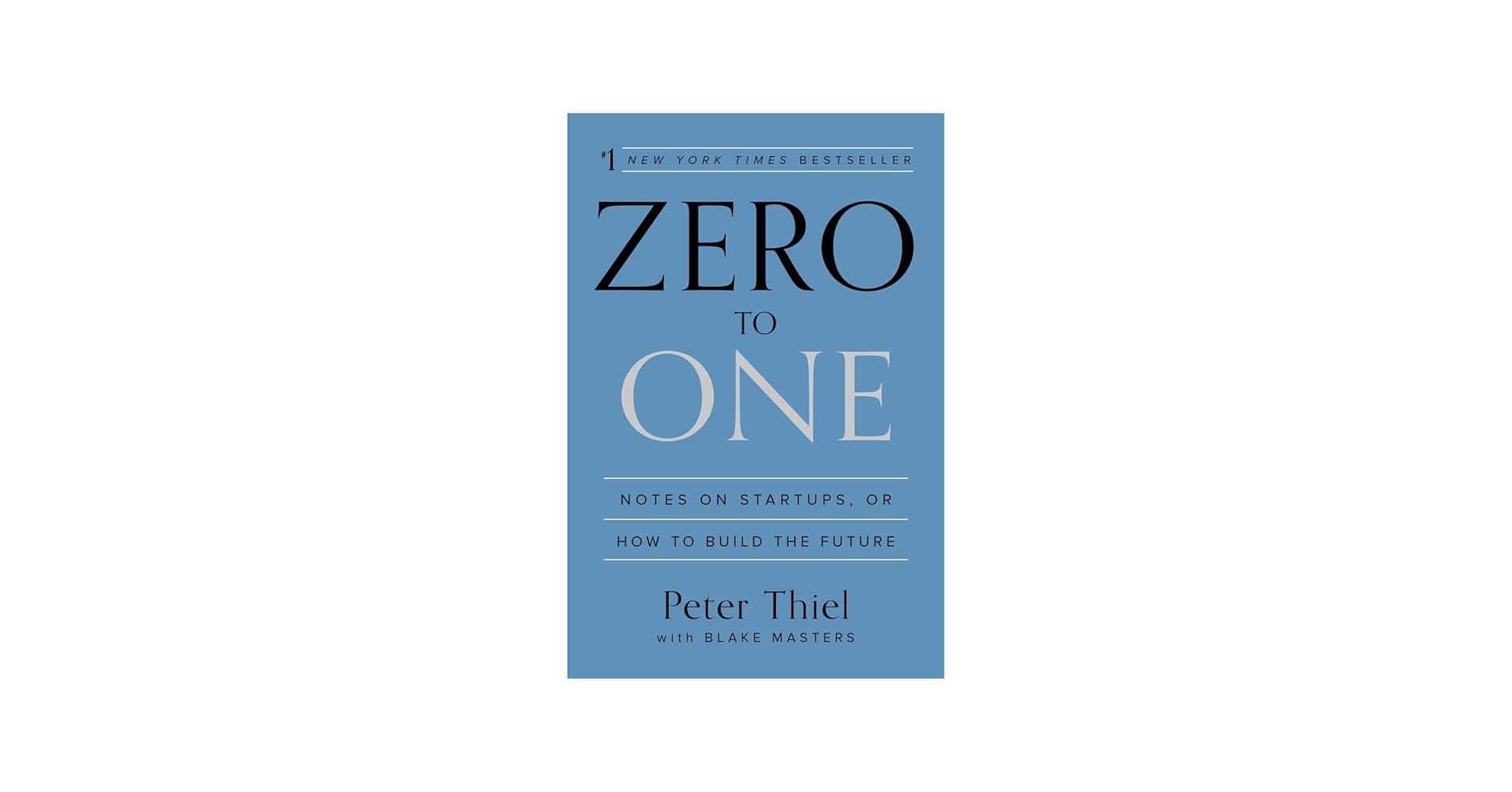
Zero to One is not a business manual; it is a cold-blooded philosophical manifesto for the 21st century. It rejects the incrementalism of modern corporate culture and demands that founders pursue the radical act of creation. Peter Thiel exposes the delusion that the future is an automatic progression; rather, it is something that must be designed and built by those with the courage to be contrarian.
Quick Summary Box
- Star Rating: 5/5 (Essential Reading)
- One-Sentence Verdict: A contrarian manifesto on how to build companies that create new things, rather than copying what works.
- Best For: Founders, VCs, and Visionaries who prioritize long-term value over short-term trends.
- Difficulty: Medium (Philosophical but practical).
- Zero to One
To understand the core of Thiel’s logic, one must first master the art of asking the right questions—specifically, those that challenge the very foundation of consensus.
——————————————————————————–
2. INTRODUCTION: The Power of the Contrarian Truth
At the heart of any transformative venture lies a single, difficult question that Peter Thiel uses to filter for high-level talent and innovative potential: “What important truth do very few people agree with you on?”
This is the ultimate filter for innovation. In a professional landscape dominated by institutionalized education, answering this question is intellectually grueling because the knowledge taught in schools is, by definition, agreed upon. It is also psychologically punishing because it requires the courage to voice an unpopular opinion. As Thiel notes, brilliant thinking is rare, but courage is in even shorter supply than genius.
Most people offer “bad” answers—platitudes like “the education system is broken” or “America is exceptional.” These are not truths; they are sides in a familiar debate. A truly contrarian truth takes the form: “Most people believe in X, but the truth is the opposite of X.” This question reveals the future because the future is only “the future” if it looks different from today. If nothing changes for 100 years, the future is a century away; if things change radically in a decade, the future is at hand.
——————————————————————————–
3. THE CORE CONCEPT: 0 to 1 (Technology) vs. 1 to n (Globalization)
Progress is not a monolithic concept. Thiel distinguishes between two fundamental modes of advancement: horizontal and vertical.
| Feature | Horizontal Progress (1 to n) | Vertical Progress (0 to 1) |
| Definition | Copying things that work (Extensive). | Doing new things (Intensive). |
| Keyword | Globalization | Technology |
| Analogy | Building 100 typewriters. | Building a word processor. |
| Example | China’s 20-year plan to be like the US. | Silicon Valley’s creation of new industries. |
| Sustainability | Unsustainable without new tech. | Essential for long-term survival. |
The world’s current obsession with globalization—taking things that work in one place and making them work everywhere—is a horizontal path. While this creates growth, it is inherently limited by resource scarcity. If every person in India lived like a modern American using today’s tools, the result would be an environmental catastrophe. Spreading old ways of creating wealth will result in devastation, not riches. Globalization without technology is unsustainable.
Technology, properly understood, is any new and better way of doing things. It is the only way to escape a zero-sum world where success means seizing things from others. We transitioned from static societies to a period of relentless technological progress between 1760 and 1970, but since then, progress has largely stalled outside of bits and bytes (computers and communications). To build the 21st century, we must return to “0 to 1” thinking.
——————————————————————————–
4. WHY “COMPETITION IS FOR LOSERS”: The Case for Creative Monopoly
In the world of economic theory, “Perfect Competition” is hailed as the ideal state. Thiel eviscerates this notion: Competition is a trap that destroys capital. In a perfectly competitive market, products are undifferentiated, and all profits are eventually competed away.
“Capitalism and competition are opposites. Capitalism is premised on the accumulation of capital, but under perfect competition, all profits get competed away.”
Thiel contrasts the airline industry with Google. In 2012, US airlines created 160 billion in value yet made only 37 cents per passenger trip. Google, meanwhile, created less total value (50 billion in revenue) but captured far more of it, maintaining a 21% profit margin—100 times that of the airlines.
Monopoly Lies vs. Competitive Lies
Investors and founders must look past the PR speak. Businesses lie about their market status to protect themselves:
- Monopolists lie to avoid scrutiny. They claim they are in a massive, competitive market. Google frames itself as a “tech company” or an “advertising player,” owning a tiny fraction of the “Global Advertising Market” to hide its 68% dominance in search. They describe their market as a Union of many large markets.
- Competitors lie to appear unique. They describe their market as a narrow Intersection. A founder might claim to own the market for “British food in Palo Alto.” This is a fatal mistake. If you have to define your market that narrowly to be a “monopoly,” you don’t have a market; you have a gimmick.
The Four Characteristics of Monopoly:
- Proprietary Technology: Your product must be at least 10x better than the nearest substitute.
- Impact: This creates transparent superiority, making it impossible for rivals to catch up (e.g., Google’s search algorithms).
- Network Effects: The product becomes more useful as more people use it.
- Impact: This creates a “winner-take-all” dynamic, provided it is valuable to the very first users (e.g., Facebook starting at Harvard).
- Economies of Scale: The business gets stronger as it gets bigger.
- Impact: Software startups excel here because the marginal cost of the next copy is near zero.
- Branding: A company has a monopoly on its own brand by definition.
- Impact: A strong brand (like Apple) reinforces other advantages, but cannot stand alone without substantive technology.
——————————————————————————–
5. THE IMPORTANCE OF SECRETS: Finding the Hidden Path
If you believe that everything worth doing has already been done, you will never look for “Secrets”—the undiscovered ideas that support a multi-billion dollar business.
The Unabomber’s Trichotomy
Thiel cites the “Unabomber’s Trichotomy” to explain the psychological barrier to innovation. Ted Kaczynski argued that humans need goals in three categories:
- Easy: Minimal effort.
- Hard: Serious effort.
- Impossible: Unattainable regardless of effort.
Modern depression stems from the belief that all “hard” problems are solved, leaving only “easy” tasks (meaningless consumption) or “impossible” ones (curing death). This loss of faith in the “hard but doable” is driven by incrementalism and risk aversion. Secrets are the “hard but doable” truths.
The HP Cautionary Tale
The decline of Hewlett-Packard (HP) illustrates what happens when a company stops believing in secrets. In the 90s, HP was an “invention” machine (Deskjet, Omnibook). By 2000, they shifted to a branding campaign. The board split into two factions: the “inventors” led by Tom Perkins (a 1960s-era optimist) and the “bean-counters” led by Patricia Dunn (a banker). Dunn argued that charting technology was beyond the board’s competence; she focused on a “night watchman” role—compliance and accounting. Because HP stopped searching for secrets, they obsessed over gossip and internal leaks. By 2012, HP was worth little more than its 1990 value, a victim of its own lack of vision.
Natural vs. Human Secrets
To find a secret, you must look where no one else is.
- Secrets of Nature: Study an undiscovered aspect of the physical world (physics, biology).
- Secrets about People: What are people not allowed to talk about? What is taboo? The best entrepreneurs know that a great company is a “conspiracy to change the world.” When you share a secret with an employee, they become a fellow conspirator.
——————————————————————————–
6. THE NERD’S DELUSION: Why Sales Matters as Much as Product
There is a pervasive myth in Silicon Valley that “Great products sell themselves.” Thiel calls this the “Nerd’s Delusion.” Engineers often mistrust sales because it seems superficial, but distribution is a bottleneck that kills more startups than bad technology.
The “Dead Zone” of Distribution
Distribution is governed by the relationship between Customer Lifetime Value (CLV) and Customer Acquisition Cost (CAC).
- Complex Sales: Deals worth millions (SpaceX, Palantir). Requires the CEO’s personal attention.
- Personal Sales: Deals between $10k and $100k. Requires a methodical sales team.
- The Dead Zone: This is the graveyard for products priced at roughly $1,000. They are too expensive for simple automated marketing or viral growth, but too cheap to justify the salary of a dedicated salesperson to go out and close the deal. Most small business software fails here because there is no efficient way to reach the customer.
- Marketing/Advertising: Low-priced products with mass appeal (Warby Parker).
- Viral Marketing: Products where use encourages more use (PayPal).
Thiel’s Law: If you get just one distribution channel to work, you have a great business. If you try for several but don’t nail one, you are finished.
——————————————————————————–
7. CRITICAL ANALYSIS: Is “Zero to One” Relevant in the AI Era (2026)?
In the landscape of 2026, Thiel’s “Man and Machine” framework provides a vital contrarian lens on AI. Most fear AI as a “substitution” for human labor, but the most valuable AI companies will be those that prioritize complementarity.
AI excels at data processing—but as Thiel notes, “Big Data is usually Dumb Data.” Computers can find patterns, but they don’t know what they mean. Humans excel at intentionality and complex judgment. The winner in the AI race will not be the company that replaces the recruiter, but the one that provides the “killer app” to empower the recruiter.
The current 2026 AI hype is a form of Indefinite Optimism—the belief that “AI will solve it all” without a specific plan for how. This is just another version of the “Nerd’s Delusion.” Real value lies in “Man-Machine Symbiosis,” as seen in PayPal’s “Igor” system, which combined software flagging with human analysis to defeat fraudsters that automation alone couldn’t catch.
——————————————————————————–
8. THE VERDICT: Pros, Cons, and the Power Law in Business
To succeed, one must respect the Power Law in Business. This is the law of the universe: a small handful of companies (and a small handful of moments) radically outperform all others.
| Pros | Cons |
| Radical Worldview Shift: Forces a complete rethink of competition and market entry. | Elitist Tone: Often feels like it is written only for the top 0.01% of Stanford graduates. |
| Density of Insight: Avoids fluff; every chapter introduces a new mental model. | Dated Examples: Some Cleantech examples (Solyndra) feel less immediate in 2026. |
| Power Law Application: Provides a harsh, realistic view of Venture Capital success. | Silicon Valley Bias: Heavily favors software and capital-light models over traditional industry. |
The Founder’s Paradox Founders are often “Insider-Outsiders”—extreme figures who are simultaneously rich and poor, famous and infamous. A unique founder can make authoritative decisions and plan for decades, whereas a bureaucracy can only plan for the next quarter. The danger is that the founder becomes “certain of his own myth” and loses touch with reality.
——————————————————————————–
9. CONCLUSION: Building a Definite Future
To build a “0 to 1” company, you must have a definite view of the future.
- Indefinite Pessimism: The future is bleak and unknowable (Europe).
- Definite Pessimism: The future is bleak, so you must copy what works and prepare for it (China).
- Indefinite Optimism: The future will be better, but we don’t know how (the current US state). This leads to a finance-heavy economy of “optionality” rather than creation.
- Definite Optimism: The future will be better if we plan and work to make it so (the US from 1950-1965).
Thiel argues that “Indefinite Optimism” is unsustainable. You cannot have progress without a plan. Darwinism may work in biology, but in business, “Intelligent Design” is the only path to a monopoly.
“The future is not a lottery ticket. You are not a lottery ticket.”
——————————————————————————–
10. CALL TO ACTION
Stop copying. Stop competing for the same “obvious” prizes as your peers. Start building a monopoly of one by finding a secret that the rest of the world is too cowardly to see.
Get the book to find your secret.