A long to-do list left my brain frozen. Picking a single anchor task each morning turned paralysis into progress.
For years, my mornings started the same way: I’d look at my enormous to-do list, feel my chest tighten, and — paradoxically — do nothing. The longer the list, the more frozen I got. If you have an ADHD brain, you might recognise this cruel loop: the sheer volume of what you should do becomes the exact reason you can’t start any of it. The thing that finally broke the loop wasn’t a better system for doing more. It was doing radically less: choosing just ONE thing each day. Here’s why that small shift did so much for my ADHD overwhelm.
Why long lists paralyse an ADHD brain
Here’s something it took me a long time to understand. A long to-do list isn’t motivating for a lot of ADHD brains — it’s paralysing. When you’re looking at fifteen tasks that all feel urgent and equally sized, your brain can’t figure out where to begin, so it protects itself by shutting down. The overwhelm isn’t a character flaw or laziness. It’s a genuine response to too many competing demands with no clear priority.
This is where traditional productivity advice fails us. “Just make a list and work through it” assumes a brain that can calmly rank options and start at the top. Many ADHD brains don’t work that way. The list itself becomes the obstacle. More structure of the wrong kind makes it worse, not better.
The fix: one anchor, not a mountain
The change that helped was almost embarrassingly simple. Each morning, before anything else, I pick one thing — the single task that matters most today. Not three, not five. One anchor.
The psychology behind this is powerful. A single task is not overwhelming. Your brain can look at one clear priority without freezing. And crucially, it makes success achievable. If I do that one thing, the day is a win — full stop. That reframe matters enormously for a brain that’s used to ending most days feeling like it failed to get through an impossible list. When the bar is “one meaningful thing,” you actually clear it, and clearing it builds momentum instead of shame.
One thing doesn’t mean only one thing
An important clarification, because people misunderstand this. Choosing one anchor task doesn’t mean you only accomplish one thing all day. It means you have one guaranteed priority — the thing that, if everything else falls apart, still got done. In practice, once I’ve started my one thing, momentum usually carries me into other tasks. Starting is the hard part for ADHD brains; the one-thing approach solves starting, and the rest often follows naturally.
But even on the hard days — the low-energy, everything-is-difficult days — I can still do my one thing. And on those days, that’s enough. That’s the point. The system bends to your capacity instead of demanding a fixed output you can’t always give.
Pairing it with a “top 3” that’s optional
What works for me is one clear anchor, plus a loose top three if I have capacity — emphasis on loose and optional. The one thing is the promise; the top three are a bonus, not a requirement. Keeping the extras optional protects the whole system from becoming just another overwhelming list in disguise. The moment “pick one thing” turns into “actually do six things,” you’re back where you started.
Why this is kinder, too
There’s an emotional dimension here that matters. Ending each day having done your one important thing feels like success. Ending each day having “failed” a fifteen-item list feels like failure, over and over, and that accumulated shame makes the next day harder. The one-thing approach isn’t just more effective for an ADHD brain — it’s kinder to it. It’s designed so you can win, which is exactly what a brain worn down by constant overwhelm needs.
If you want a system built around this
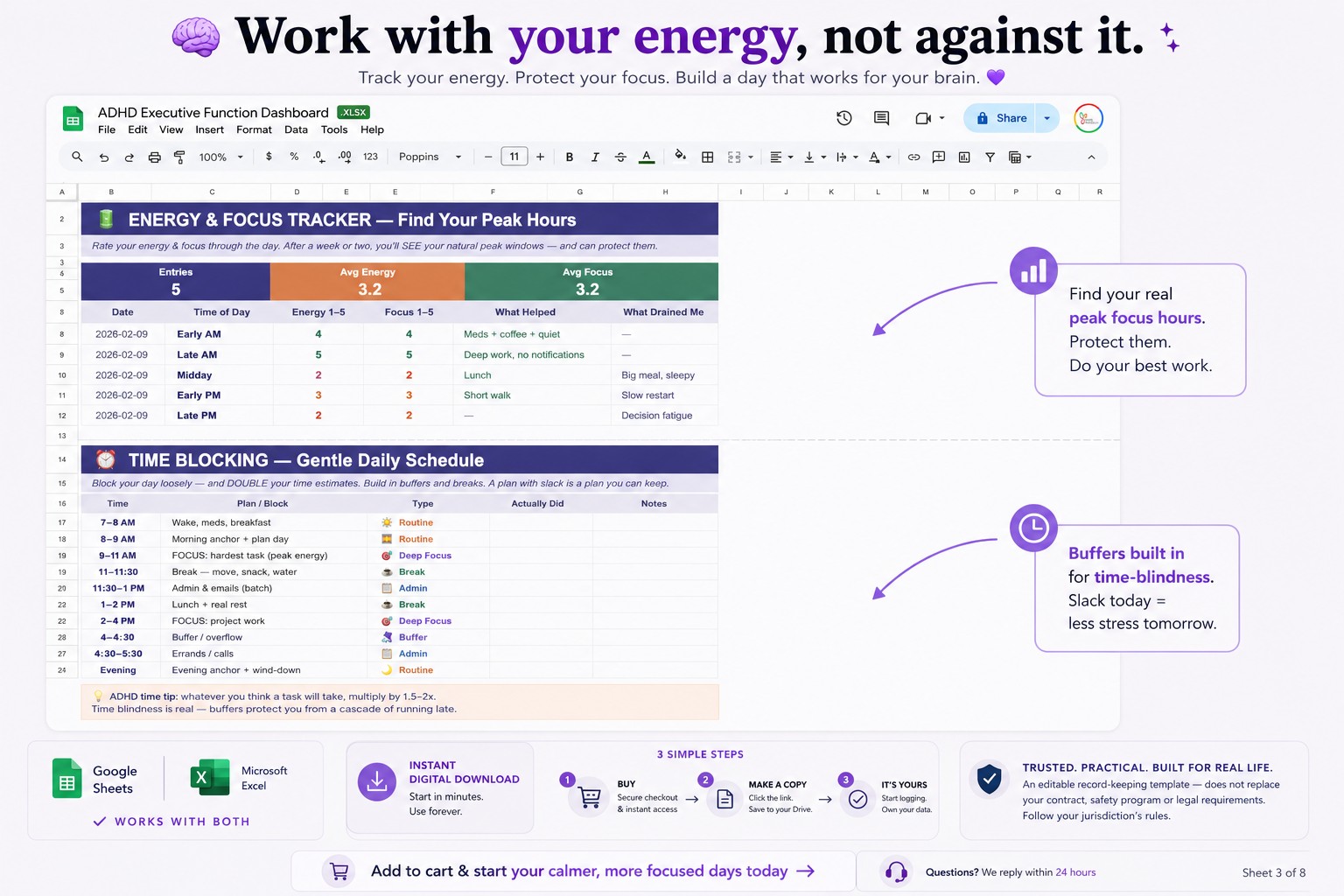
I built my daily ADHD executive-function dashboard around exactly this idea — a morning check-in where you choose THE one thing, a gentle optional top three, and a calm, low-clutter layout, alongside task triage, energy tracking, and shame-free habits:
👉 ADHD Executive Function Dashboard for Google Sheets & Excel
Whether you use a tool or a sticky note, try it tomorrow: before you look at everything, choose one thing. Let that be enough. For an overwhelmed ADHD brain, doing one thing well beats freezing in front of fifteen — every single time.
I’m sharing what helps me — this is a supportive planning approach and personal experience, not medical advice, diagnosis or treatment. If ADHD is affecting your life, please reach out to a qualified professional. What would your ONE thing be tomorrow? Naming it helps — drop it in the comments.