The Cheapest Quote Is Rarely the Cheapest Job
The spread between contractor bids is often 40% or more — but picking the lowest number is how renovations go wrong. Here’s how to compare contractor quotes properly.
When the contractor quotes come in for a renovation, the gap between them can be genuinely shocking — it’s common for the highest bid to be 40% or more above the lowest for the same job. Faced with that spread, the instinct is obvious: take the cheapest one and pocket the difference. Sometimes that’s right. Often it’s a trap that ends up costing far more than the “expensive” bid would have. Learning to compare contractor quotes properly — like for like, not just by the bottom-line number — is one of the highest-value skills in any renovation. Here’s how to do it.
Why the quotes differ so much
That 40%+ spread isn’t usually because one contractor is greedy and another is generous. The bids differ because they’re often not actually quoting the same thing, even when you asked them all for the same job. The differences hide in:
- Quality of materials. One bid assumes budget fixtures, another mid-range, another premium. Same “bathroom,” very different materials.
- Scope included. One quote includes demolition, disposal, and finishing; another quietly excludes them, assuming you’ll handle or pay for them separately.
- Labour and skill. A highly experienced, licensed, insured contractor costs more than someone cutting corners — and that difference often shows up later, in quality and in problems.
- What’s left vague. The cheapest bids are frequently the ones that leave the most unstated — the gaps become “extras” and change orders once work is underway.
So the low number might be low because it includes less, assumes cheaper materials, or leaves out things you’ll have to pay for anyway. Comparing the bottom lines alone compares things that aren’t comparable.
Comparing like for like
The fix is to break each quote down and line the components up side by side. When you put the bids in a structured comparison — what materials, what scope, what’s included, what’s excluded, what the labour figure is — the real picture emerges. Suddenly the “expensive” quote might reveal itself as the only one that included everything and used decent materials, while the “cheap” one left out half the job.
This structured comparison does two things. First, it lets you compare genuine like-for-like, so you’re choosing based on real value rather than a misleading headline. Second — and this is underrated — it shows you exactly what questions to ask each contractor. “Your quote is lower here; is demolition included?” “Yours assumes these fixtures; what if I want those?” That conversation is where you find out who was quoting honestly and who was quoting optimistically to win the job.
Why the cheapest job often costs the most
The reason “cheapest bid” and “cheapest job” are different things comes down to what happens after you sign. A suspiciously low quote frequently turns into the most expensive project through a familiar pattern: the low bid wins, work begins, and then the change orders start. Things “not included” appear as extras. The cheap materials fail or disappoint and get replaced. Corners cut by an inexperienced contractor cause problems that cost real money to fix. By the end, the “cheap” renovation has cost more than the honest, complete, higher bid would have — plus stress and delays.
None of this means expensive is automatically better, either. The point isn’t “pick the highest bid.” It’s that price alone tells you almost nothing. The goal is the best value: the contractor who’ll do the complete job to a good standard for a fair price. Sometimes that’s the middle bid, sometimes even the lowest — but you can only tell by comparing what’s actually in each one, not by comparing the totals.
Track the estimate against reality, too
Choosing well is the start; the quotes then become your budget baseline, and the real discipline is tracking your actual spending against them as the work proceeds. Renovations drift — extras get approved, prices shift, scope changes. If you’re logging actual costs against your estimates, you see that drift while it’s small and can make decisions about it. If you’re not, you discover it at the end, when the final bill lands and it’s far too late to react. The quote comparison gets you the right contractor and a realistic budget; tracking estimate-versus-actual is what keeps you on it.
An important note on safety
To be clear, because renovation carries real safety and legal stakes: this is general guidance and a planning tool — not construction, financial, legal, or professional advice, and it guarantees no result. Always use licensed professionals for structural, electrical, gas, and plumbing work, pull the permits required in your area, and get quotes in writing. Verify everything before you commit. And when comparing contractors, check licenses, insurance, and references — not just the price. A cheap quote from an unlicensed contractor for work that legally requires one is no bargain at all.
If you want a comparison built for you
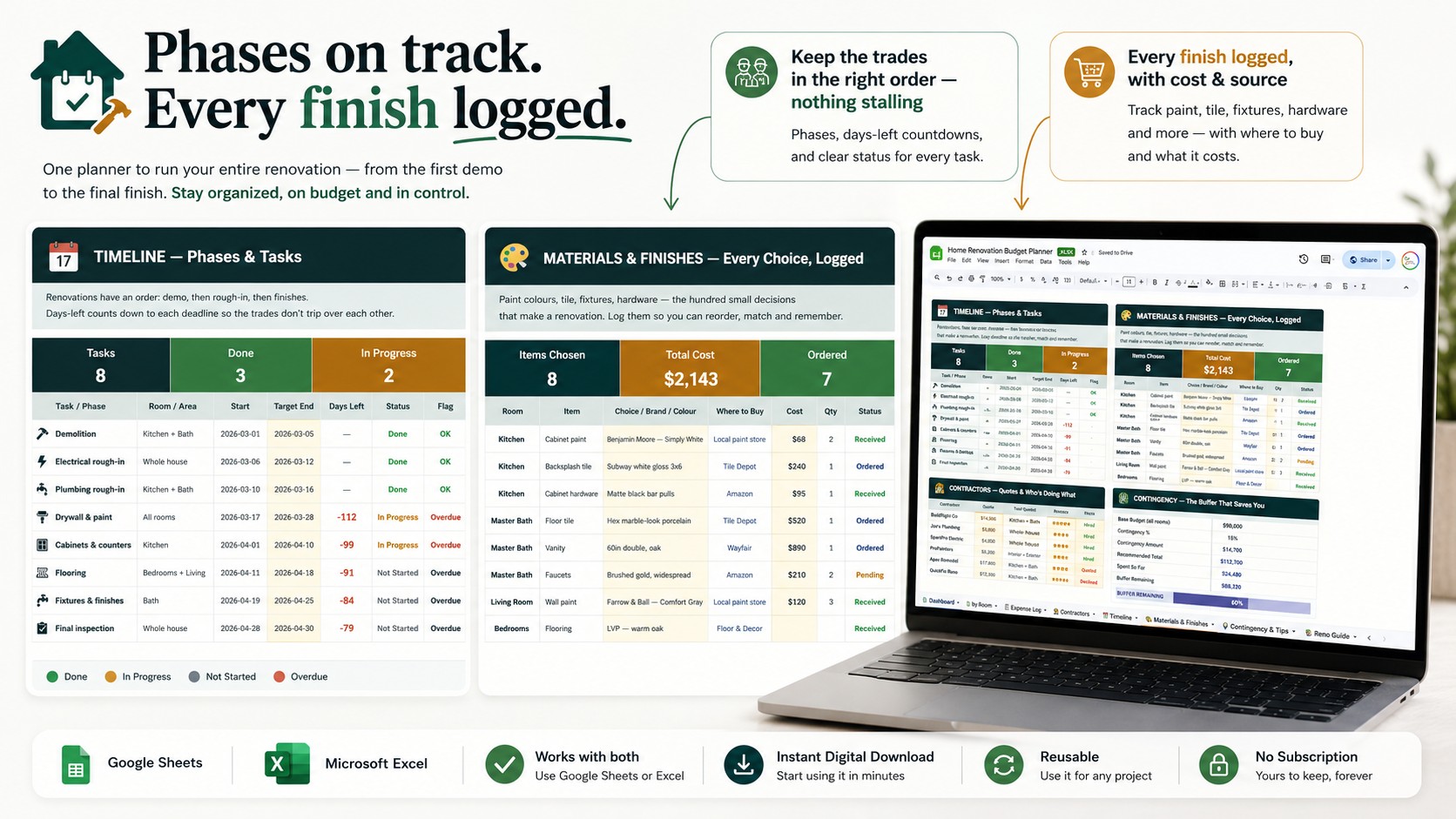
I built contractor quote comparison into my home renovation budget planner in Google Sheets — line up each bid side by side to see the real spread and compare like for like, then track your actual spend against your estimates room by room as the work proceeds:
👉 Home Renovation Budget Planner for Google Sheets & Excel
Whether you use mine or a piece of paper, never choose a contractor on the bottom-line number alone. Break the quotes down, compare what’s actually in each one, ask the questions the comparison reveals, and choose for value rather than price. The cheapest quote is rarely the cheapest job — and knowing the difference is what keeps a renovation from turning into a very expensive lesson.
This reflects my own perspective and is a planning tool — not construction, financial, legal or professional advice, and it guarantees no result. Always use licensed professionals, check credentials, and pull required permits. What’s the biggest spread you’ve seen between quotes for the same job? Tell me in the comments.