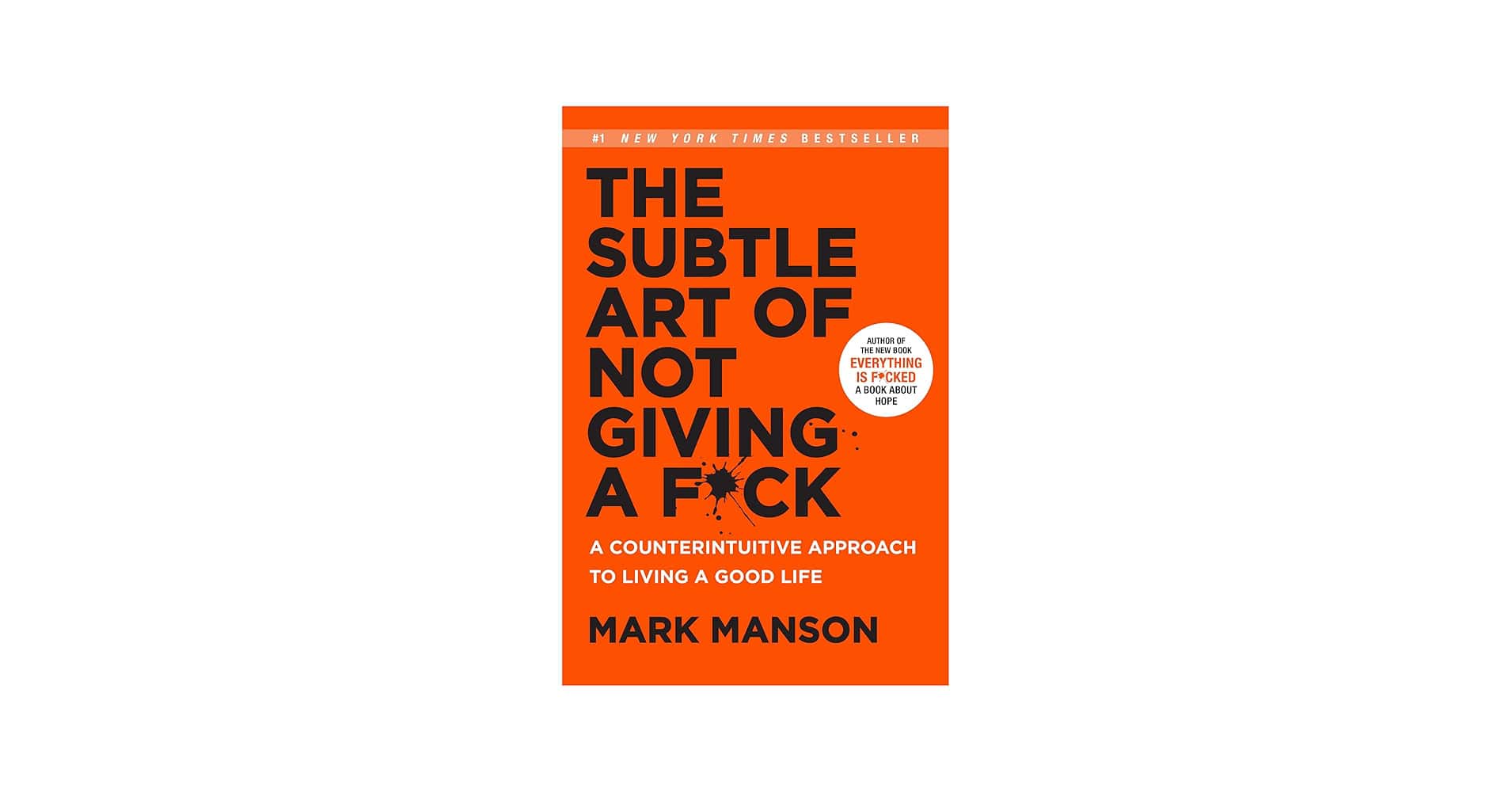
| Metric | Details |
| Star Rating | 3.86/5 (Goodreads — a polarizing, raw reality check) |
| One-Sentence Verdict | A brutal, profanity-laden manifesto that argues meaning is found not in the avoidance of suffering, but in the deliberate choice of which struggles are worth your limited time. |
| Best For | Professionals drowning in Slack notifications, anyone exhausted by LinkedIn “hustle culture,” and skeptics of traditional, fluffy self-help. |
| Difficulty | 2/10 (Conceptually simple; emotionally confrontational). |
——————————————————————————–
Introduction: The Cult of Forced Positivity
Look, Charles Bukowski was an alcoholic, a womanizer, and a total deadbeat. He spent decades failing at everything before finally making it as a writer at age 50. But here’s the kicker: even after he became famous, his tombstone read, “Don’t try.” Bukowski wasn’t a success because he “manifested” it or stood in front of a mirror reciting affirmations. He was a success because he was comfortable with being a loser. He stopped giving a f*ck about being a “winner” in the eyes of the world.
“Wanting a positive experience is a negative experience.” This is the opening hook that sets Mark Manson apart from the ocean of gurus peddling “good vibes only.” In a modern U.S. landscape dominated by a relentless “hustle culture,” we are constantly bombarded with messages to be faster, richer, and sexier. Social media has created a feedback loop from hell where we feel anxious about being anxious and guilty about feeling down. Manson’s premise is refreshingly cynical: this book isn’t a motivational guide designed to help you gain more, but a tactical manual on how to lose and let go.
Read also: Howard Marks & The Art of Second-Level Thinking
The Backward Law: Why Chasing Happiness Guarantees Failure
To understand Manson, you have to understand the “Backward Law,” a concept derived from philosopher Alan Watts. The more you pursue feeling better all the time, the less satisfied you become. Chasing a “high” only reinforces the fact that you lack the very thing you’re hunting.
This mindset acts as a circuit breaker for the “Feedback Loop from Hell.” When you feel like sht and you decide to simply ck that you feel like sh*t, you short-circuit the loop. You stop hating yourself for being human. For a knowledge worker struggling in high-pressure environments, this is a mental health game-changer. It shifts the goalpost from “eliminating negative emotions” (impossible) to “accepting negative experiences” (empowering). Manson argues that the avoidance of suffering is itself a form of suffering.
Choosing Your Struggles: The Calculus of Pain
Stop asking yourself “What do I want?” Everyone wants the rewards—the corner office, the six-pack, the passive income. The only question that matters is: “What pain am I willing to sustain?” Happiness isn’t a destination; it is a form of action derived from solving problems.
Problems never actually go away; they just get upgraded. If I could invent a superhero, it would be Disappointment Panda. His superpower? Telling you the harsh truths about yourself that you need to hear. He’d tell you that a problem-free life is a myth sold to you by people trying to sell you a Peloton.
The Cost of Ambition
- Career Ambition: If you aren’t willing to endure the soul-crushing boredom of middle-management meetings and 60-hour workweeks, stop telling yourself you want the VP title. You don’t want it; you want the fantasy of it.
- Fitness: You don’t just want the “beach body”; you have to want the boredom of the treadmill and the discipline of a strict diet.
- Relationships: You don’t just want the “perfect partner”; you have to want the friction of vulnerability and the hard conversations required to resolve conflict.
Manson introduces the “Do Something” Principle: Action isn’t just the effect of motivation; it’s the cause of it. If you lack the motivation to tackle a problem, just do something—anything—and use the reaction to that action to start the engine.
The Ego Death: You Are Not Special
Modern culture suffers from the “tyranny of exceptionalism.” Because technology has “open-sourced” insecurity, we are flooded with the 99.9th percentile of human experience. This conditions us to believe that “average” is the new standard for failure.
This belief creates a binary of entitlement: either you feel uniquely great (and deserve special treatment) or you feel uniquely victimized (and deserve special treatment). Both are just two sides of the same narcissistic coin. Manson argues that the path to liberation is accepting The Middle of the Pack. Most of your life will be boring and mundane, and that is perfectly okay. When you accept your own mediocrity, the pressure to be the “next big thing” evaporates, allowing you to focus on the simple things that actually matter: your friends, your craft, and your family.
The Responsibility/Fault Fallacy
There is a strategic, vital difference between “fault” and “responsibility.” Fault is past-oriented and focused on blame; responsibility is present-oriented and focused on agency.
Think of it like a poker game: you aren’t responsible for the cards you are dealt (your genetics, your upbringing, your tragedies), but you are 100% responsible for how you play the hand. We live in an era of “victimhood chic” where being outraged or offended is used as social currency. However, blaming others for your unhappiness—even if they are at fault—only robs you of your power. Reclaiming your “locus of control” means admitting that while you didn’t choose the problem, you are the only one responsible for your interpretation and response to it.
Good Values vs. Crappy Values: The Internal Compass
Self-improvement is essentially the process of “prioritizing better values.” To do this, you have to peel The Self-Awareness Onion:
- Level 1: Understanding your emotions (I’m pissed off).
- Level 2: Asking why you feel them (Because I feel ignored).
- Level 3: Identifying the underlying value (I value status and external validation).
| Crappy Values (Extrinsic/Uncontrollable) | Good Values (Intrinsic/Controllable) |
| Popularity: Dependent on others’ fickle opinions. | Honesty: You have complete control over your truth. |
| Material Success: Can be lost due to market shifts. | Curiosity: An internal state you can access anywhere. |
| Always Being Right: Forces you to ignore reality. | Vulnerability: Strengthens connections through truth. |
Consider Dave Mustaine vs. Pete Best. Mustaine was kicked out of Metallica and founded Megadeth. Despite selling 25 million albums, he felt like a failure because he measured himself against Metallica’s 180 million. Pete Best was kicked out of the Beatles right before they blew up. He eventually found happiness not through fame, but through valuing a stable marriage and a large family. Mustaine had “Rock Star Problems” because his metric was uncontrollable; Best had a better life because he upgraded his values.
Read also: How to Cure Excusitis and Unlock Your True Potential
Is This Just Edgy Stoicism? (EEA-T Depth)
Despite the profanity-laden delivery, Manson is modernizing ancient wisdom. His philosophy is a direct descendant of Stoicism and Zen Buddhism, rebranded for a secular, 21st-century audience.
- Stoic “Indifferents”: Manson’s “Selective Caring” is a modern translation of Marcus Aurelius and Seneca. The idea is that external events are neutral; only our judgment of them provides value.
- Secularized Buddhism: The book advocates for Radical Acceptance—the idea that life is suffering (Dukkha) and that the avoidance of that suffering is the root of our misery.
By stripping away the academic jargon, Manson provides an “Authoritative and Trustworthy” (E-E-A-T) bridge to these traditions for people who would never pick up a philosophy textbook but are desperately seeking a realistic way to navigate a chaotic world.
Memento Mori: The Death Chapter as Ultimate Clarity
Death is the “compass” by which all other values should be oriented. Manson tells the story of his friend Josh, who died young. That tragedy served as a reminder that the scarcity of life creates the necessity of choice. If you were immortal, nothing would matter because you could do everything. Because you will die, what you do today matters immensely.
“Death is the only thing we can know with any certainty. And as such, it must be the compass by which we orient all of our other values and decisions.”
Contemplating mortality removes the ego from the equation. It forces the shift from nihilism (“Nothing matters”) to a quasi-spiritual commitment: “I only have a few f*cks to give, so I will give them to what is true, immediate, and important.”
Read also: The Secret Habits and Disciplined Wisdom of the World’s Best Traders
——————————————————————————–
FAQ for Featured Snippets
What is the main lesson of The Subtle Art? The core lesson is that a good life is not about having more or feeling better; it’s about choosing what to care about. By limiting your concerns to things that are truly “f*ckworthy”—values you control and problems you enjoy solving—you bypass the anxiety of modern expectations and find meaning in necessary struggle.
Is The Subtle Art of Not Giving a F*ck worth reading? Yes, particularly if you are skeptical of traditional self-help. It offers a grounded, psychological approach to resilience that doesn’t rely on forced optimism. While polarizing due to its language, its core message of radical responsibility is highly valuable for those feeling burned out.
How is it different from traditional self-help? Traditional self-help often focuses on what you lack and encourages “thinking yourself into optimism.” Manson’s approach is the opposite: it emphasizes that suffering is inevitable, pain is useful, and accepting negative experiences is actually a positive experience.
——————————————————————————–
Conclusion: Selective Caring as a Superpower
“Not giving a fck” is NOT apathy. Apathy is the mark of a loser. True “not giving a fck” means being comfortable with being different and caring only about what is true and immediate. It is the ability to stare down life’s most terrifying challenges and take action anyway because you’ve found something more important than adversity. A good life is not a problem-free life, but a life characterized by “good problems.”
Call to Action (Reflection over Hype)
Don’t just close this summary and go back to doom-scrolling. Take these two steps:
- Audit: List 3 things you currently “give a f*ck” about (e.g., a stranger’s opinion on LinkedIn, being “right” in a text thread) that don’t actually move the needle.
- Commit: Identify one “struggle” you are actually willing to sustain. Do you want the stress of the promotion, or just the paycheck? Be brutally honest.
Journaling Exercise: Practice “peeling the self-awareness onion.” Pick a recurring negative emotion you felt this week. Ask yourself why you feel it. When you get that answer, ask why again. Keep digging until you hit the core value (e.g., “I value the approval of people I don’t even like”). Once you find the value, you can finally decide if it’s worth the f*ck you’re giving it.