THE SNAPSHOT
- Star Rating: 5/5 (The Ultimate Meta-Skill)
- One-Sentence Verdict: This book forced me to stop reading passively and start treating books as intellectual conversations—where I question, analyze, and extract real understanding.
- Best For: Lifelong learners, professionals, thinkers, creators
- Difficulty: Hard (mentally demanding, but life-changing)
INTRODUCTION: I THOUGHT I WAS READING—BUT I WAS JUST SCROLLING IN BOOK FORM
I used to be proud of how many books I read.
10 books a month. Sometimes more.
But there was one uncomfortable truth I couldn’t ignore:
I barely remembered anything.
I would finish a book, feel productive… and then a week later, it was gone. Just fragments. Quotes. Vague ideas.
That’s when I realized something that completely changed how I approach learning:
I wasn’t actually reading. I was consuming.
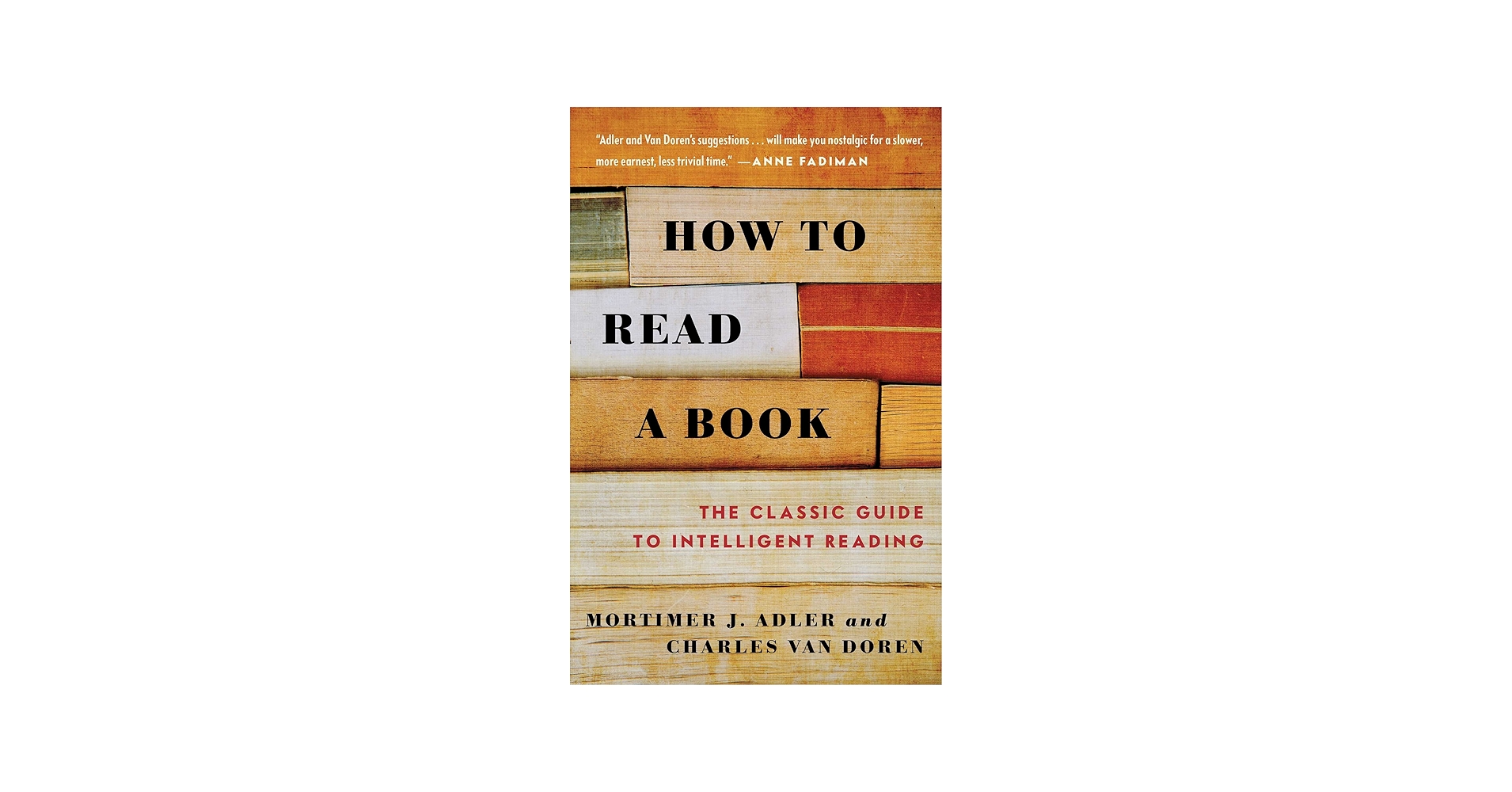
When I picked up How to Read a Book, everything clicked.
I learned that reading is not a passive activity.
It’s not entertainment.
It’s not about finishing pages.
It’s a skill.
And like any skill, most people never learn how to do it properly.
Read also: How I Learned to Solve Complex Problems in a Non-Linear World
THE CORE SHIFT: ACTIVE READING VS PASSIVE READING
The biggest mindset shift I had was this:
Reading is not about what the author says.
It’s about what I do with what the author says.
Before, I was a passive reader:
- I followed the text
- I highlighted everything
- I nodded along
Now, I read differently.
I treat reading like a conversation.
The author is presenting ideas.
And my job is to:
- Question them
- Break them down
- Reconstruct them
Adler describes this as Active Reading.
And once I understood this, everything changed.
THE 4 LEVELS OF READING (THE FRAMEWORK THAT CHANGED EVERYTHING)
One of the most powerful things I learned is that not all reading is the same.
There are 4 distinct levels of reading—and I had been stuck at Level 1 my entire life.
LEVEL 1: ELEMENTARY READING (WHAT THE WORDS SAY)
This is basic literacy.
It’s simply understanding:
- Words
- Sentences
- Grammar
This is what we learn in school.
And here’s the problem:
Most adults never move beyond this level.
We think we’re “reading”…
but we’re just decoding words.
LEVEL 2: INSPECTIONAL READING (READING WITH A STRATEGY)
This was my first big upgrade.
Instead of jumping straight into a book, I started asking:
“What is this book about—before I read it?”
Inspectional Reading is about getting the big picture quickly.
There are two key methods I now use:
1. Systematic Skimming
Before reading deeply, I scan:
- Title
- Table of contents
- Chapter headings
- Introduction
- Conclusion
This helps me understand the structure.
2. Superficial Reading
When a book is difficult, I don’t stop every time I get confused.
I keep going.
Because understanding comes from context, not from obsessing over every detail.
The Key Insight That Changed Everything
Not every book deserves deep reading.
This alone saved me hundreds of hours.
Read also: How Small Actions Trigger Massive Change
LEVEL 3: ANALYTICAL READING (WHERE REAL THINKING BEGINS)
This is where reading becomes serious.
Adler calls this Analytical Reading—and I call it:
X-raying a book
Instead of reading linearly, I start dissecting the book.
Here’s the exact process I now follow:
1. Classify the Book
I ask:
- Is this theoretical or practical?
- Is this philosophy, science, or strategy?
Because different books require different reading approaches.
2. Summarize the Entire Book in One Sentence
If I can’t do this…
I don’t understand the book.
3. Outline the Structure
I break the book into:
- Main arguments
- Supporting ideas
- Logical flow
Now I’m not lost—I see the architecture.
4. Identify the Author’s Core Problem
Every book is trying to answer a question.
If I don’t know the question…
I can’t understand the answer.
The Rule That Changed My Thinking Forever
“I must understand before I criticize.”
Before this, I would disagree too quickly.
Now, I force myself to:
- Define the author’s terms
- Understand their logic
- Follow their reasoning
Only then do I evaluate.
Read also: A Macro-Historical Deconstruction of Yuval Noah Harari’s Homo Deus
LEVEL 4: SYNTOPICAL READING (WHERE MASTERY BEGINS)
This is the highest level.
And it completely changed how I learn.
Instead of reading one book…
I read multiple books on the same topic.
Here’s how I approach it:
- I define a question I want answered
- I gather multiple books
- I compare their arguments
- I find agreements and contradictions
Now something powerful happens:
I am no longer learning from the author.
I am thinking with the authors.
I become the one in control.
This is where real mastery begins.
HOW I PRACTICE ACTIVE READING DAILY
After applying this system, my reading behavior completely changed.
I don’t just read anymore.
I engage.
These are the 4 questions I always ask:
- What is this book about as a whole?
- What is being said in detail?
- Is it true?
- What does it mean for me?
And here’s what I physically do:
- I write in the margins
- I underline selectively
- I summarize sections
- I pause to think
Because reading is not about speed.
It’s about processing.
Read also: The Exact Formula for Wealth Creation
THE BIGGEST MISTAKE I USED TO MAKE
I used to think:
“The more books I read, the smarter I become.”
Now I know that’s false.
Because:
- Reading fast without thinking = forgetting
- Reading deeply = transformation
CRITICAL ANALYSIS: IS THIS TOO SLOW FOR MODERN LIFE?
Let’s be honest.
This method is not easy.
It’s slower.
It’s more demanding.
It requires focus.
But here’s what I realized:
This method doesn’t slow me down—it eliminates wasted effort.
Because before:
- I read 10 books and forgot 9
Now:
- I read 3 books and use all of them
The Real Strategy I Use Now:
- 80% of books → Inspectional Reading
- 20% of books → Analytical Reading
And that 20% changes everything.
PROS AND CONS
Pros
- I retain what I read
- I think more clearly
- I waste less time on bad books
- I extract real value from great books
Cons
- Mentally exhausting
- Requires discipline
- Not suitable for casual reading
- Forces you to confront your own thinking limits
Read also: How Better Thinking Leads to Better Outcomes
THE REAL TRANSFORMATION
Before this book:
- I read passively
- I consumed ideas
- I forgot most of them
After this book:
- I read actively
- I challenge ideas
- I retain and apply them
The difference is not quantity.
It’s quality of thinking.
CONCLUSION: I STOPPED READING BOOKS—AND STARTED THINKING WITH THEM
This is the biggest shift I can summarize:
I stopped trying to read more books…
and started trying to understand them.
Because books are not content.
They are conversations.
And if I’m not engaging in that conversation…
Then I’m not really reading.
CALL TO ACTION
Stop reading passively.
Pick up a pen.
Slow down.
Ask better questions.
And most importantly:
Start thinking while you read.
Because the goal is not to finish books.
The goal is to upgrade how you think.