

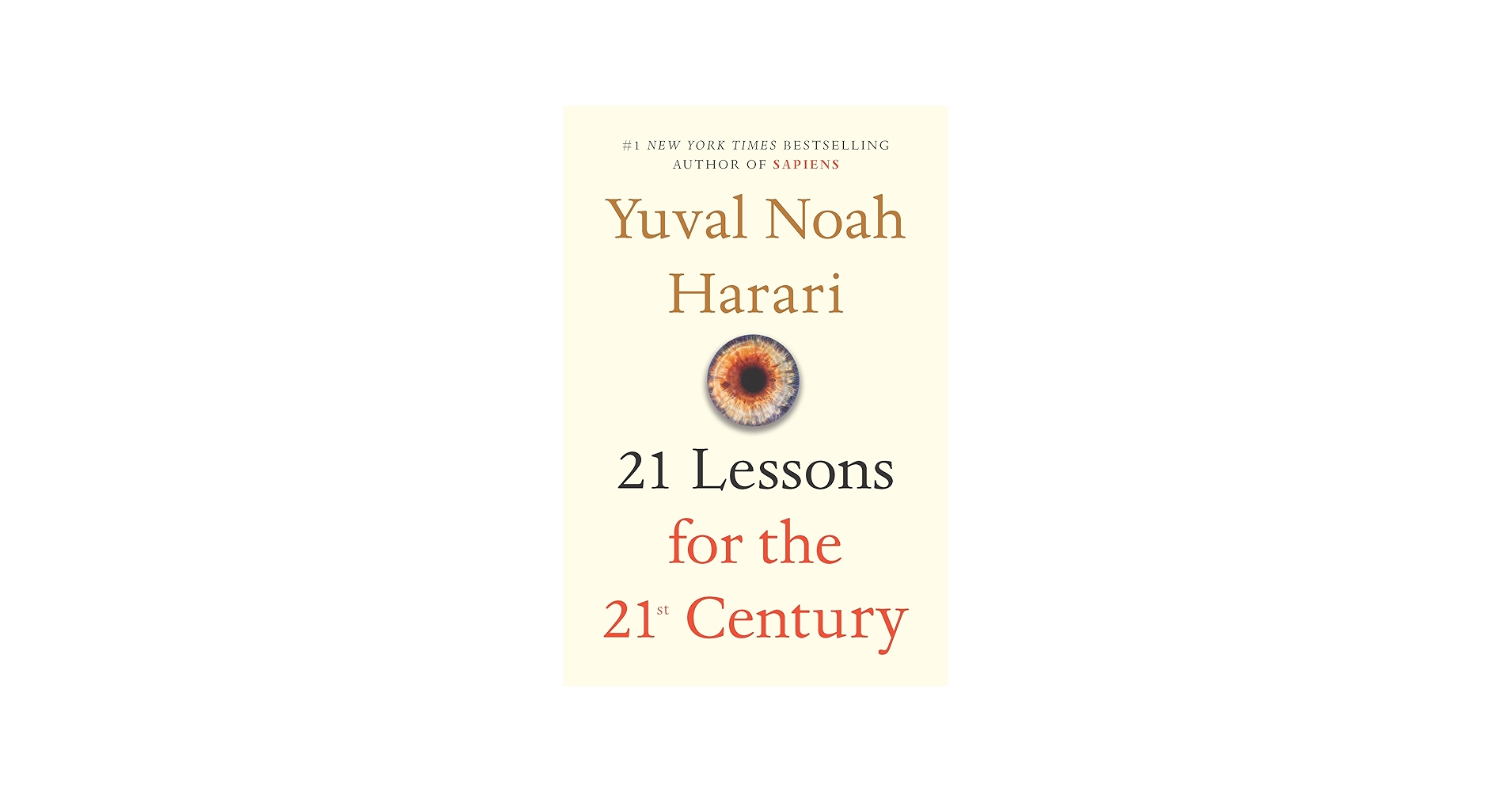
1. The Snapshot: Strategic Executive Summary
In a landscape defined by radical volatility, the capacity to distill actionable intelligence from a deluge of noise is the ultimate competitive advantage. For the time-constrained entrepreneur and executive, high-level strategic syntheses provide a necessary bypass, allowing for the rapid assimilation of macro-trends without the prohibitive cost of primary research. Understanding the present is no longer an academic exercise; it is a prerequisite for maintaining systemic relevance in an era of unprecedented disruption.
Star Rating: 4.9/5
One-Sentence Verdict: A definitive roadmap for maintaining human agency in an era where biological “free will” is being superseded by algorithmic sovereignty.
Best For:
- Entrepreneurs seeking to navigate seismic market reconfigurations.
- Lifelong learners aiming to preserve cognitive independence.
- Decision-makers concerned with the erosion of human economic agency.
Difficulty: Medium.
As the “End of History” is effectively postponed, this synthesis moves beyond Harari’s previous historical and long-term evolutionary narratives to address the immediate, sobering realities of our current global predicament.
Read also: The Exact Formula for Wealth Creation
2. Introduction: The Quest for Clarity in a World of Noise
In the 21st century, clarity is power. As we are inundated with irrelevant data, the strategic advantage shifts to those who can maintain a clear vision of the horizon. Harari argues that billions of humans currently lack the “luxury of investigation,” consumed by the immediate pressures of survival while the future of the species is decided in their absence. This is the central unfairness of history: those too busy to participate in the debate are not exempt from the consequences.
The defining driver of our era is the “twin revolutions” of Infotech and Biotech. This is not merely a period of rapid technological growth; it is a fundamental merger of biological knowledge and computing power. This confluence has birthed the capacity for Hacking Humans. By combining breakthroughs in neuroscience with Big Data, external systems can now decode the biochemical mechanisms that underpin our desires and choices. This transition from external tools to internal manipulation represents a seismic structural reconfiguration of the human experience.
3. The Technological Challenge: The Automation of Cognition and the “Useless Class”
To remain competitive, one must recognize that the labor market is undergoing a total reconstruction. Harari distinguishes between physical and cognitive abilities, noting that while the Industrial Revolution replaced human muscle, the AI revolution is encroaching upon the human bastion of cognition—specifically the “understanding” of emotions and pattern recognition.
The current revolution is a categorical game-changer due to two uniquely non-human abilities:
- Connectivity: Unlike individual humans, AI systems can be integrated into a single, flexible network.
- Updateability: While retraining a human workforce takes years, a network of billions of AI “doctors” or “drivers” can be updated with new regulations or medical findings in a split second.
The result is the potential emergence of a Useless Class—a massive demographic defined not by the 20th-century struggle against exploitation, but by the 21st-century reality of economic irrelevance. We see this shift in the example of AlphaZero, which went from utter ignorance of chess to creative mastery in just four hours by playing against itself. As the pace of disruption becomes a “cascade,” the “job for life” model is now antediluvian. Survival requires constant reinvention and the mental stamina to withstand a life of endless upheavals.
Read also: How Better Thinking Leads to Better Outcomes
4. The Political Challenge: Data Ownership and Digital Dictatorships
Data has supplanted land and machinery as the primary asset of the century. We are witnessing a historical shift of authority from human “free will” to Big Data algorithms. Liberalism’s reliance on the “heart” is its Achilles’ heel; once external systems can hack the heart, democratic politics becomes an emotional puppet show.
Harari illustrates the atrophy of human decision-making through several strategic examples:
- The Japanese Tourist Syndrome: Using the example of tourists driving into the Pacific because their GPS instructed them to, Harari highlights how we are losing the “muscle” of independent choice.
- The Good Samaritan Disjunction: A 1970 study of seminarians showed that emotional stress (the need to hurry) trumped moral education. Harari argues that a “Schumacher-Kant” team—an AI combining the skills of a champion driver with the ethics of a philosopher—would be more reliable than a stressed or distracted human.
The risk of Digital Dictatorships is acute. Centralized data processing gives an edge to authoritarian regimes, allowing them to monitor not just actions, but internal biochemical reactions. A regime could use biometric sensors to detect a citizen’s amygdala reacting to a leader’s image, turning private feelings into tools for absolute state control.
5. Truth in the Age of Noise: Navigating the Post-Truth Era
Maintaining mental clarity is a strategic necessity in an era of information warfare. Harari notes that humans naturally prefer simple stories over complex facts. In the “Post-Truth” era, some fake news lasts forever because it confirms existing narratives.
To protect cognitive independence, the source suggests:
- Identifying Institutional Biases: Actively uncovering “racial and gender privileges” and “unwitting complicity in institutional oppression” that cloud our vision of reality.
- Distinguishing Truth from Clarity: Recognizing that truth is often complex and painful, while clarity is the hard-won ability to see through the noise.
- Humble Investigation: Replacing the hubris of “Panic” with the humility of “Bewilderment.”
Read also: A Deep Anthropological Review of Simon Sinek’s Leaders Eat Last
6. Education and Survival Skills: The 4Cs of the 21st Century
Future-proofing the next generation requires a radical pedagogical shift. Harari argues that because we cannot predict the job market of 2050, teaching specific technical skills is less vital than teaching the 4Cs: Critical thinking, Communication, Collaboration, and Creativity.
The ultimate survival tools are mental flexibility and emotional balance. In a world where “change is the only constant,” the capacity to unlearn and relearn every decade is the only way to avoid becoming a “fossil.” The greatest threat to the future workforce is not just a lack of jobs, but a lack of the mental stamina required to cope with the “endless upheavals” of a volatile career path.
7. Critical Analysis: Empowerment Through Sobriety
Critics often label Harari’s outlook as “pessimistic,” yet a strategic analysis reveals his “sounding of the alarm” as a tool for empowerment. By identifying the specific threats of the “useless class” and digital dictatorships, society can begin to regulate technology and explore new social models like Universal Basic Income (UBI) or Universal Basic Services.
Harari distinguishes between two states:
- Panic: A form of hubris that assumes we know for certain the world is heading toward Armageddon.
- Bewilderment: A state of humility that admits we don’t understand the world’s current trajectory, which is a far more clear-sighted starting point for strategic planning.
Read also: The Hidden Distribution of Breakthrough Ideas
8. Pros and Cons: A Calculated Appraisal
Evaluating the strategic utility of this text requires weighing its profound insights against the inherent discomfort of its conclusions.
| Pros | Cons |
| Strategic Prism: Provides a high-level framework to interpret 21st-century reality. | Unsettling Content: Directly challenges deeply held beliefs regarding “free will” and agency. |
| Future Clarity: Identifies the merger of Biotech and Infotech as the primary driver of all future change. | Lack of Simple Answers: Designed to stimulate difficult thinking rather than provide a “how-to” manual. |
| Calculated Appraisal: Distinguishes between what is technically possible and what is socially desirable. | Nihilistic Potential: The breakdown of old “stories” can leave a reader in a state of profound disorientation. |
9. Conclusion: Resilience as the Ultimate Competitive Advantage
The strategic landscape of the next 30 years will be defined by the shift of authority from humans to biochemical algorithms. As the “drama of decision-making” moves from the human heart to the computer cloud, the only way to retain human agency is to understand the “biochemical algorithms” within us.
The final lesson focuses on self-awareness. In an age of bewilderment, meditation and mindfulness are not spiritual luxuries; they are essential defenses against being “hacked.” If we do not know ourselves—our fears, our biases, and our cravings—we become easy targets for manipulation by those who own the data. Personal responsibility for one’s own mental stamina is the ultimate competitive advantage in the age of irrelevance.
10. Call to Action (CTA)
The old stories that guided the 20th century have collapsed, and the “End of History” has been postponed. The time to begin your personal and professional reinvention is not a decade from now—it is today. Clarity is your only protection against the invisible hand of the market and the algorithms that seek to define your future.