

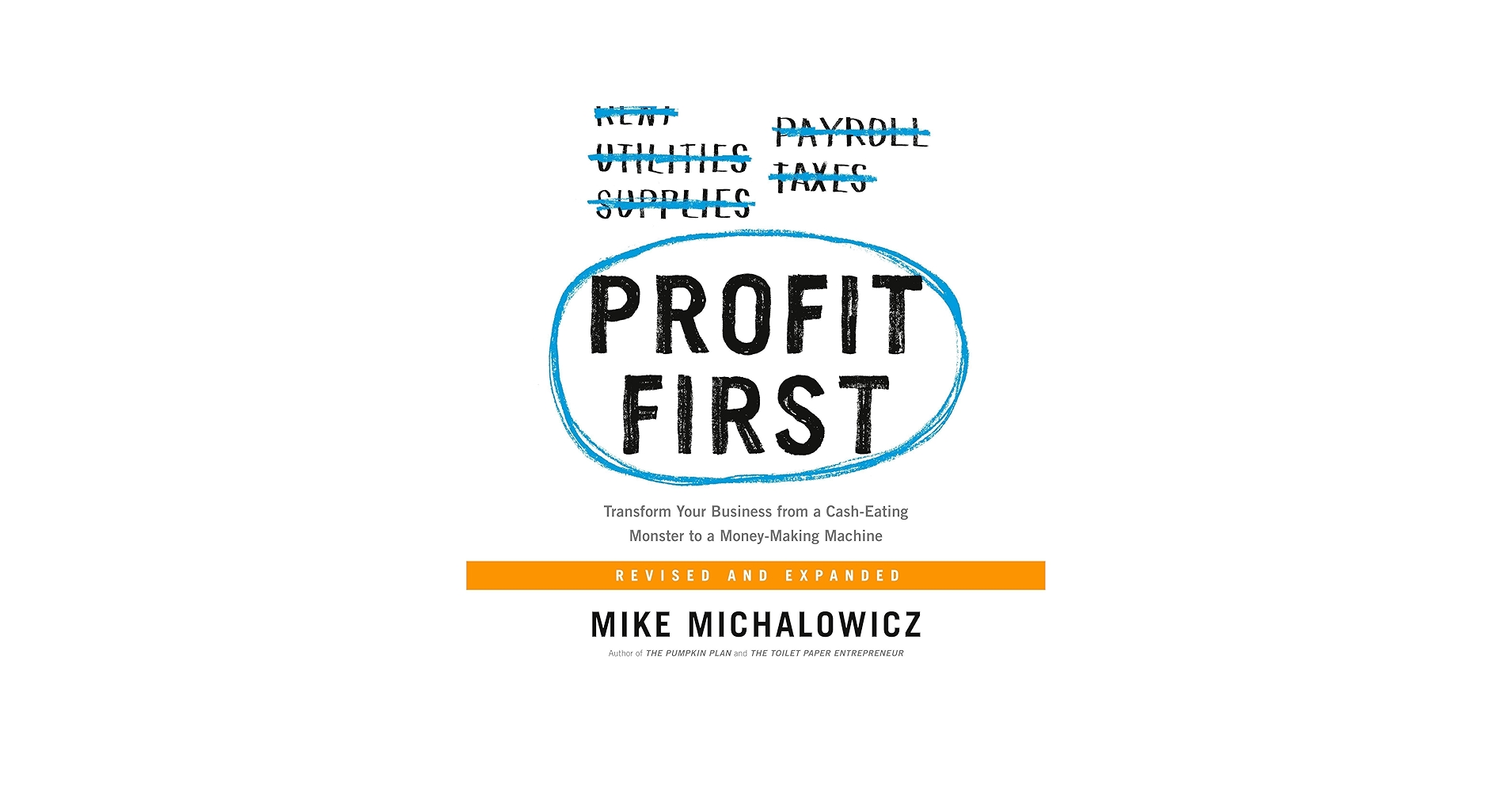
- Verdict: A survival-focused behavioral accounting system that hacks human nature to guarantee profitability from day one.
- Star Rating: ⭐⭐⭐⭐⭐ (5/5)
- Best For: Freelancers, Agency Owners, E-commerce Founders, and any entrepreneur who is “revenue rich” but “cash poor.”
- Difficulty Rating: Very Easy (No CPA degree required).
As a founder, you are likely drowning in a sea of spreadsheets and “professional” advice that doesn’t actually put money in your pocket. This at-a-glance perspective is vital because you need an immediate lifeline, not a three-year financial projection. If you’re tired of the “panic-to-panic” cycle, you need to stop managing by data and start managing by behavior. The reason your bank account is empty isn’t necessarily a lack of sales; it’s that you’ve accidentally built a monster that eats every dollar you feed it.
——————————————————————————–
Introduction: The Frankenstein Monster and the Bank Balance Truth
Most entrepreneurs start their journey with a dream of freedom, but as Mike Michalowicz points out, business creation often starts as a miracle and ends as a “Frankenstein Monster.” This monster is complex, stressful, and perpetually hungry—it’s currently eating your time, your sleep, and probably your children’s college fund. Instead of providing the stability you craved, the business becomes a cash-eating burden that feels entirely out of control. You aren’t running a business; you’re babysitting a beast.
Traditional financial advice fails because it ignores the average human brain. High-brow accountants want you to study P&L statements and balance sheets, but let’s be honest: you practice “bank balance accounting.” You check your phone app, see a few thousand bucks, and decide you can afford that new software or a fancy desk. This is a reactive, crisis-based way to live. Profit First is a system designed to work with this human tendency. By using the natural behavior of checking your balance to your advantage, you can move from a state of constant anxiety to strategic clarity.
This “monster” isn’t a fluke of the market; it’s the logical result of a mathematical lie—a slow-acting poison known as “The Man’s math.”
Read also: The Power of Small Financial Advantages Over Time
——————————————————————————–
The Flawed Formula vs. The Profit First Revolution
For decades, Generally Accepted Accounting Principles (GAAP) have pushed a formula that is fundamentally flawed for the entrepreneurial brain: Sales – Expenses = Profit. In this model, profit is a “leftover”—a scrap of meat thrown to the owner only after the vendors, employees, and landlords have had their fill. The strategic danger here is that by treating profit as the final remainder, it becomes an afterthought that simply never happens.
The Profit First revolution flips the script to: Sales – Profit = Expenses. By taking your profit first, you force your business to operate on what remains. This leverages Parkinson’s Law, which states that expenses will always expand to fill the available cash. If you leave all your money in one “big plate” account, you will spend it. By taking your profit out of sight immediately, you force your business to become efficient and innovative with the remaining funds.
To make this revolution stick, you have to move away from the “big buffet” of a single bank account and start using “small plates” to manage your portions.
——————————————————————————–
The “Small Plates” System: Implementing the 5 Core Accounts
Physical separation of funds is the only way to stop “mental accounting” from failing you. If you see money in your account, your brain assumes it’s “available” and finds a way to kill it. To break this habit, you must set up a specific banking structure. Here is the kicker: to truly Remove Temptation, your Profit and Tax accounts must be at a completely different bank from your primary accounts—one where you don’t even have the login saved on your phone.
You must Serve Sequentially using these five accounts:
- Income: This is the landing strip. Every dollar the business earns hits this account first.
- Profit (The 1% Habit): Moved first. This is your reward for the risk of ownership.
- Owner’s Pay: This is your salary. You are an employee of your business; start acting like one and pay yourself fairly.
- Tax: This account exists so you never have to panic or “borrow” from the business when the government comes knocking.
- OpEx (Operating Expenses): This is the “leftover” money used to run the shop. If it’s empty, you can’t afford it.
By distributing money in this specific order, you get an immediate “reality check” on your spending. Once the accounts are open, the next challenge is knowing the “Naked Truth” about your numbers.
Read also: The Math of Scaling Without Burning Out
——————————————————————————–
Mastering the Math: Target Allocation Percentages (TAPs)
Before you set your goals, you need to find your “Real Revenue.” This is the “Naked Truth” revealed in the Instant Assessment. Real Revenue isn’t your total sales; it’s your Sales minus the “pass-through” money—materials and sub-contractors. If you sell a $10,000 project but spend $6,000 on wood and contractors, your business is only a $4,000 business. Managing based on the $10,000 figure is how you go broke.
Target Allocation Percentages (TAPs) are the goalposts for your business health. However, the most strategic way to implement TAPs is incrementally. If you try to jump from 0% profit to 20% overnight, you’ll starve the beast too fast and the system will crash. Start with what you have. If you can only afford to move 1% to profit today, do it. The goal is to build the behavioral habit first, then gradually improve these percentages over time.
With your percentages set and your “Real Revenue” identified, you need a repeatable rhythm to keep the system alive.
——————————————————————————–
The 10/25 Cash Flow Rhythm: Ending the “Panic-to-Panic” Cycle
Reactive, daily spending is the death of clarity. To regain control and eliminate decision fatigue, you must establish a “10/25 rhythm.” On the 10th and 25th of every month, you perform a specific cash flow ritual:
- Review the Income account: See how much cash landed in the last two weeks.
- Allocate Sequentially: Move funds into Profit, Owner’s Pay, Tax, and finally OpEx.
- Pay the Bills: Bills are paid only from what is sitting in the OpEx account.
But here is the secret sauce that makes the behavior stick: the Quarterly Distribution. Every 90 days, you take 50% of the money in your Profit account and spend it on yourself—a dinner, a vacation, a new watch. The other 50% stays in the account as a rainy-day reserve. This “reward” is the dopamine hit your brain needs to keep following the rules.
If this system sounds too simple to be “professional,” that’s exactly why your accountant might hate it.
Read also: The Psychological Mechanics of Self-Mastery
——————————————————————————–
The Resistance: Why Traditional Accounting (GAAP) Clashes with Human Behavior
Traditional GAAP accounting is designed for the IRS, banks, and big corporations. It’s focused on reporting history, not ensuring the survival of a small business owner. While GAAP is a necessary evil for your year-end taxes, it is a terrible tool for daily decision-making because it ignores human psychology. It’s “The Man’s math,” and it’s designed to tell you how much you owe, not how much you can keep.
The Profit First system is a maverick approach built for the user, not the reporter. Accountants often resist this because multiple accounts and separate banks seem “inefficient.” But an “efficient” system that leaves you broke is a failure. You must prioritize tools that match your psychology over tools that satisfy a reporting requirement.
To decide if this maverick approach is right for you, let’s look at the strategic trade-offs.
——————————————————————————–
Honest Evaluation: The Pros and Cons of Going Maverick
Moving from “growth-at-all-costs” to “profit-at-all-costs” requires a shift in priorities. Here is the reality of the transition:
| Pros | Cons |
| Immediate Cash Bleeding Stops: The “Instant Assessment” reveals exactly where the leaks are. | Initial Inconvenience: Setting up and managing 5+ bank accounts at two different banks takes effort. |
| Guaranteed Profit: You get paid first, ensuring the business finally serves you. | Requires Discipline: You have to stop “borrowing” from the Tax and Profit accounts. |
| Operational Efficiency: Forces you to cut the fat and innovate within your OpEx “small plate.” | Accountant Friction: You’ll have to push back against “the way it’s always been done.” |
| The Quarterly Reward: A guaranteed dividend every 90 days to celebrate your hard work. | The Rude Awakening: Facing the “Naked Truth” of your actual financial health can be painful. |
——————————————————————————–
Conclusion: Profit is a Habit, Not an Event
Profitability isn’t some mythical destination you reach when you hit $1M or $10M in revenue. It’s a habit you bake into the daily operation of your business right now. By adopting the Profit First stance, you are drawing a line in the sand against the “entrepreneurial monster” and choosing psychological freedom over the illusion of growth.
You have the power to tame the beast. Financial discipline isn’t about complex math; it’s about changing the context of your spending. When you treat profit as a non-negotiable requirement rather than a lucky leftover, you transform your business into a sustainable, money-making machine.
Read also: A Structural Analysis of Systemic Fragility
——————————————————————————–
The “Start Today” Call to Action (CTA)
“Later” is the graveyard where small businesses go to die. Every day you wait is another day the monster eats your future. Draw your line in the sand right now:
- Go to your bank today. Don’t ask for permission.
- Open your accounts. Setup Income, Owner’s Pay, and OpEx at your primary bank.
- Go to a SECOND bank. Open your Profit and Tax accounts there to “Remove Temptation.”
- The 1% Command. Move 1% of your current balance into that new Profit Account immediately.
- Commit to the rhythm. From every deposit going forward, 1% goes to you first. No exceptions.
The first 1% is the most important step you will ever take. It is the moment you stop being a slave to your monster and start being the master of your finances.

