

Passive Income Isn’t Passive at First — But Tracking It Kept Me Building
The dream is income that flows while you sleep. The reality is a lot of upfront work. Here’s how tracking my passive income streams kept me going long enough to reach the good part.
The phrase “passive income” sells a beautiful dream: money that flows in while you sleep, freedom from trading hours for dollars, financial independence. And that dream is real — but there’s a part the dream skips over. In the beginning, passive income is not remotely passive. It takes real, sustained, often unrewarded work to build income streams to the point where they actually flow on their own. That gap — between the hard upfront effort and the eventual passive reward — is where most people quit. Tracking my income streams from the very start is what carried me across that gap. Here’s why it matters so much.
The “passive” myth (and why people quit)
Let’s be honest about how passive income actually works. Whether it’s dividends from invested capital, a rental property, royalties from something you created, or income from a digital product, almost every passive income stream requires significant upfront investment — of money, time, effort, or all three — before it produces meaningful returns. You build first, and the income comes later, sometimes much later.
This is precisely why so many people give up. They start a passive income project expecting quick, effortless returns, hit the long stretch of upfront work with little payoff, get discouraged, and quit — often right before it would have started to work. The problem usually isn’t the strategy; it’s the motivation to persist through the unglamorous building phase. And motivation is exactly what good tracking supports.
Tracking makes invisible progress visible
Here’s the key insight. In the early building phase, your progress is often invisible. Your income is small, growing slowly, easy to dismiss as “not worth it.” Without tracking, all you feel is effort with little reward, which is demoralizing. With tracking, you can see the small numbers — and, crucially, you can see them growing.
That visibility changes the psychology entirely. A dividend income of a few dollars a month feels pointless in isolation. But tracked over time, watching it tick from a few dollars to a bit more to a bit more, you see a trajectory. You’re not staring at a small number; you’re watching a small number grow. Progress you can see is motivating; progress you can’t see feels like failure. Tracking turns the discouraging early phase into a visible, encouraging climb. That’s often the difference between quitting and continuing long enough to reach the point where it actually pays.
Watching streams compound is genuinely motivating
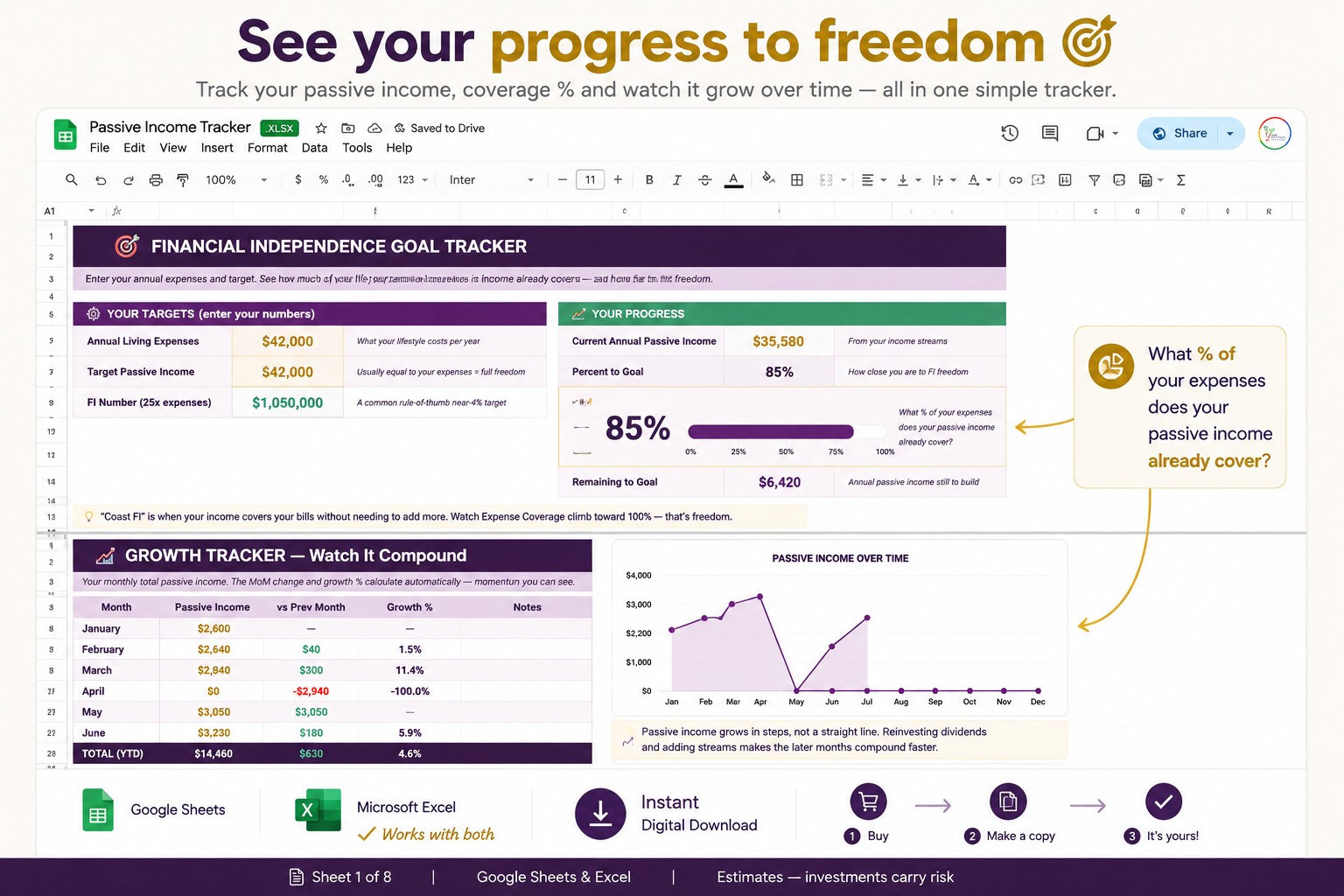
There’s a particular satisfaction that tracking unlocks: watching your total passive income grow as you add and build streams. Each new stream, each dividend increase, each uptick in royalties adds to a total you can see. Over months and years, that total climbing is one of the most motivating things in personal finance, because it’s tangible evidence that the building is working.
I found that seeing my total monthly passive income grow — even slowly — kept me building when I otherwise might have lost interest. It gamified the process in a healthy way: I wanted to see the number go up, so I kept doing the work that made it go up. The tracking didn’t just measure my progress; it fueled it.
One stream at a time
Tracking also helps you think about passive income the right way: as a collection of streams built one at a time, not a single overnight win. When you can see each stream contributing to your total, you naturally start thinking “what stream could I add next?” rather than expecting one magic source. Building financial independence is really about stacking multiple modest income streams until, together, they add up to something meaningful. Tracking makes that stacking visible and strategic, and keeps you focused on the next brick rather than fantasizing about a finished wall.
A necessary, honest caveat
I need to be clear, because this involves money and investing: building passive income involves real risk and real effort, and there are no guarantees. Investments can lose value. A rental can sit empty. A product can flop. Passive income is not free money, and anyone promising effortless riches is selling something. Track your income to stay motivated and informed, but do your own research, understand the risks, and consult a qualified financial professional for investment and financial decisions. This is a tool for tracking and motivation — not financial or investment advice.
If you want a way to track your streams
I built a passive income tracker in Google Sheets to make exactly this motivating — log every income stream, see your monthly and annual totals, and watch your income grow over time toward covering your expenses:
👉 Passive Income Tracker for Google Sheets & Excel
Whether you use mine or build your own, start tracking your passive income from day one — even when the numbers are tiny. The building phase is where most people quit, and seeing your progress grow is what gets you through it. Passive income isn’t passive at first. But if you can stay motivated long enough to build it, the part where it flows while you sleep is absolutely real.
This reflects my own experience and is a tracking tool — not financial or investment advice. Investments carry risk and can lose value; do your own research and consult a qualified professional. What passive income stream are you building right now? Tell me in the comments — sharing it helps you keep going.

