

An appliance failed, I paid to replace it — then found it was still under warranty. Here’s how appliance warranty tracking stops you giving away money.
Here’s a mistake that still stings. An appliance in one of my properties failed. I did what you do: called someone, paid for the replacement, moved on. Weeks later, sorting through paperwork, I realised the appliance had still been under manufacturer warranty when it failed. The repair — or replacement — should have cost me little or nothing. Instead I’d paid full price out of pocket, purely because nobody was tracking the warranty date. That’s when I got serious about appliance warranty tracking, and it’s saved me real money since. Here’s why it matters and how to do it.
Unused warranties are money you give away
A warranty is something you’ve effectively already paid for — it’s baked into the price of the appliance or system. When something fails within the warranty period, the manufacturer covers the repair or replacement. That’s a benefit you’re entitled to. But here’s the problem: warranties are only useful if you know the item is still covered when it fails. Miss that, and you pay out of pocket for something that should have been free — handing back a benefit you already bought.
This happens constantly, especially to landlords and property managers juggling many appliances across multiple properties. When a tenant reports something broken, the instinct is to fix it fast. Nobody stops to check whether that specific unit, bought two years ago, is still under its warranty — because that information lives in a drawer somewhere, if it was kept at all. So the warranty lapses unused, and you pay for repairs you didn’t have to.
Why warranties are so easy to miss
The core issue is that warranty information is scattered and invisible at the moment you need it. The purchase date, the warranty length, the model — these are recorded on a receipt or a manual, filed away and forgotten. When the appliance fails months or years later, in the rush to fix it, nobody connects the failure to a warranty they can’t even find.
Multiply this across a portfolio — dozens of appliances and systems, each bought at a different time with a different warranty length — and it’s effectively impossible to keep track in your head. Without a system, warranty coverage is a benefit you own but can’t actually use, because you never know what’s covered when it counts.
The fix: track every asset’s warranty status
The solution is to log every major appliance and system with its purchase date and warranty length, and let a system tell you its current status — active, expiring soon, or expired. Now, the moment something fails, you check one place and instantly know whether it’s covered. If it’s under warranty, you claim what you’re entitled to instead of paying out of pocket.
The “expiring soon” flag turns out to be just as valuable. When you can see that an appliance’s warranty is about to lapse, you can be proactive — get any nagging issue looked at while it’s still covered, rather than discovering the problem the week after coverage ends. Seeing warranty status at a glance turns a benefit you were wasting into money you actually keep.
It pays for itself the first time
The thing about warranty tracking is that it pays for itself the very first time it saves you a claim. A single appliance repair or replacement covered under warranty — instead of paid out of pocket — can be worth hundreds. Do that once, and the small effort of logging your assets has more than paid off. Every covered claim after that is pure savings.
For anyone managing multiple properties, this compounds. More appliances means more warranties means more opportunities to either save money or waste it, depending entirely on whether you’re tracking. The owners who track claim what they’re owed; the ones who don’t quietly subsidise manufacturers for repairs that should have been free.
If you want warranty tracking built in
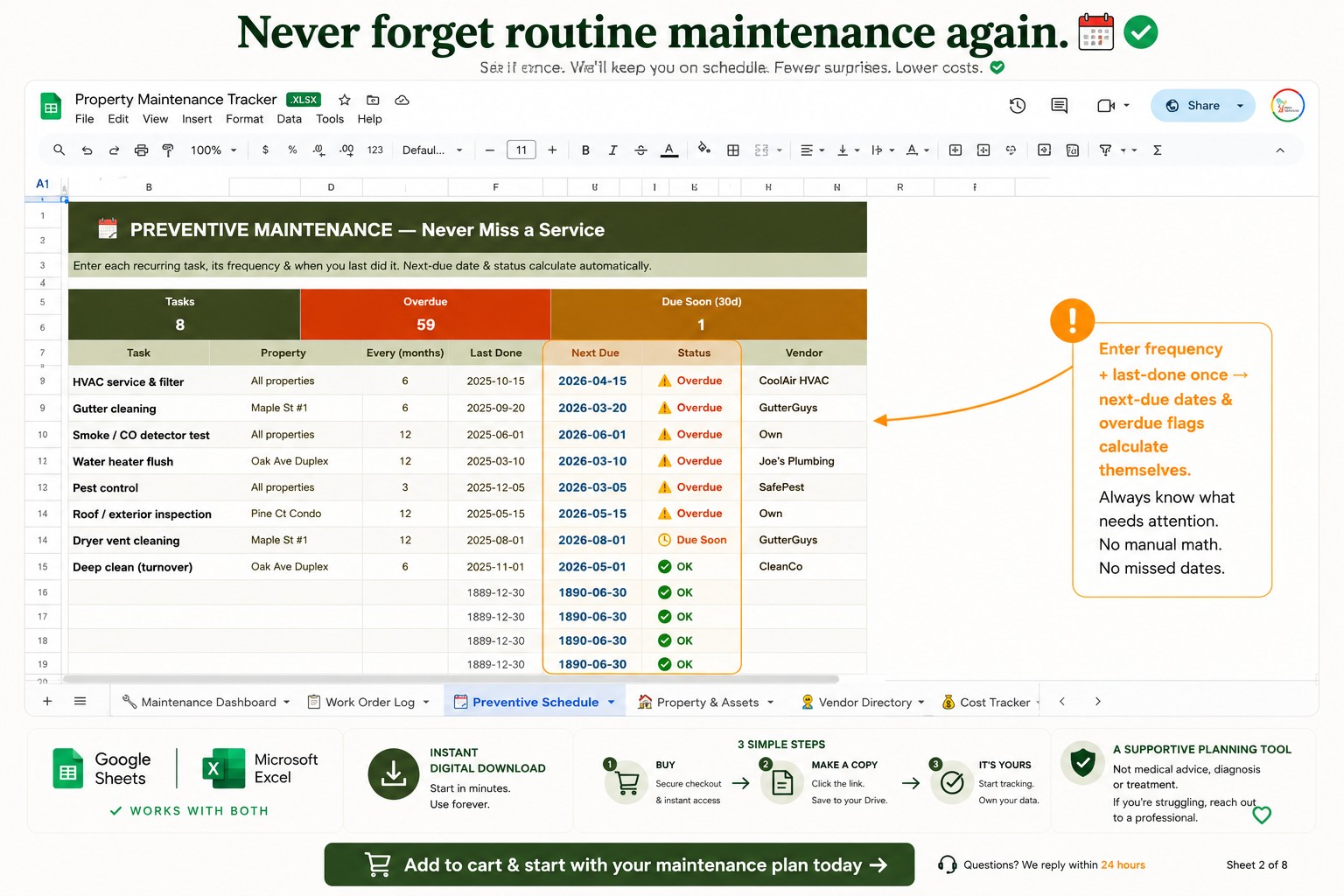
I built automatic warranty tracking into my property maintenance tracker in Google Sheets — log each appliance and system with its purchase date and warranty length, and its status updates itself to Active, Expiring or Expired, alongside a preventive maintenance schedule, work order log, vendor directory and cost tracking:
👉 Property Maintenance Tracker for Google Sheets & Excel
Whether you use mine or build your own, start tracking your warranties. It’s one of the easiest ways to stop giving away money you’re entitled to — and the first time a covered claim saves you a repair bill, you’ll wish you’d started sooner. I certainly did.
This is my own experience and an editable record-keeping template — not professional or legal advice. Always check the specific terms of each manufacturer’s warranty. Have you ever paid for something that turned out to be under warranty? Tell me in the comments — misery loves company.

