The accumulation of wealth over long durations is fundamentally a pursuit of discipline rather than raw intelligence. While modern financial systems are built on quantitative models and sophisticated algorithms, the primary actor within these systems remains the human mind—a biological entity shaped by evolutionary pressures that are often diametrically opposed to the requirements of the modern market.
The core challenge of wealth preservation is the persistent interference of emotional response in rational decision-making. Emotional investing is not merely “getting excited” or “becoming fearful”; it is the systemic failure of the prefrontal cortex to override the primitive limbic system during periods of perceived threat or opportunity. The long-term consequences of this failure are severe. Over a 30-year horizon, the delta between a disciplined approach and an emotionally reactive one can result in the loss of millions of dollars in potential compounding, often dictating the difference between financial sovereignty and perpetual labor.
1. The Core Problem: The Conflict of Evolutionary Heuristics
To understand why emotional investing occurs, one must first recognize that the human brain was not evolved to navigate a global stock exchange or evaluate compound interest. It was evolved to survive in an environment where immediate feedback was life-saving.
The Survival Instinct in a Modern Context
In the ancestral environment, a sudden movement in the periphery was a signal of immediate danger. The “fight or flight” response was an efficient heuristic: those who stopped to perform a statistical analysis of the threat were less likely to survive. In the context of 21st-century finance, however, this same biological mechanism interprets a 10% market correction as a physical threat.
The limbic system—specifically the amygdala—cannot distinguish between a predatory animal and a declining portfolio balance. When a market drops, the brain triggers a cortisol spike, heightening anxiety and narrowing the cognitive focus to the immediate present. This creates a powerful biological urge to “do something” to stop the perceived pain, which usually manifests as selling assets at the exact moment their future expected returns are highest.
The Dopamine Loop of Speculation
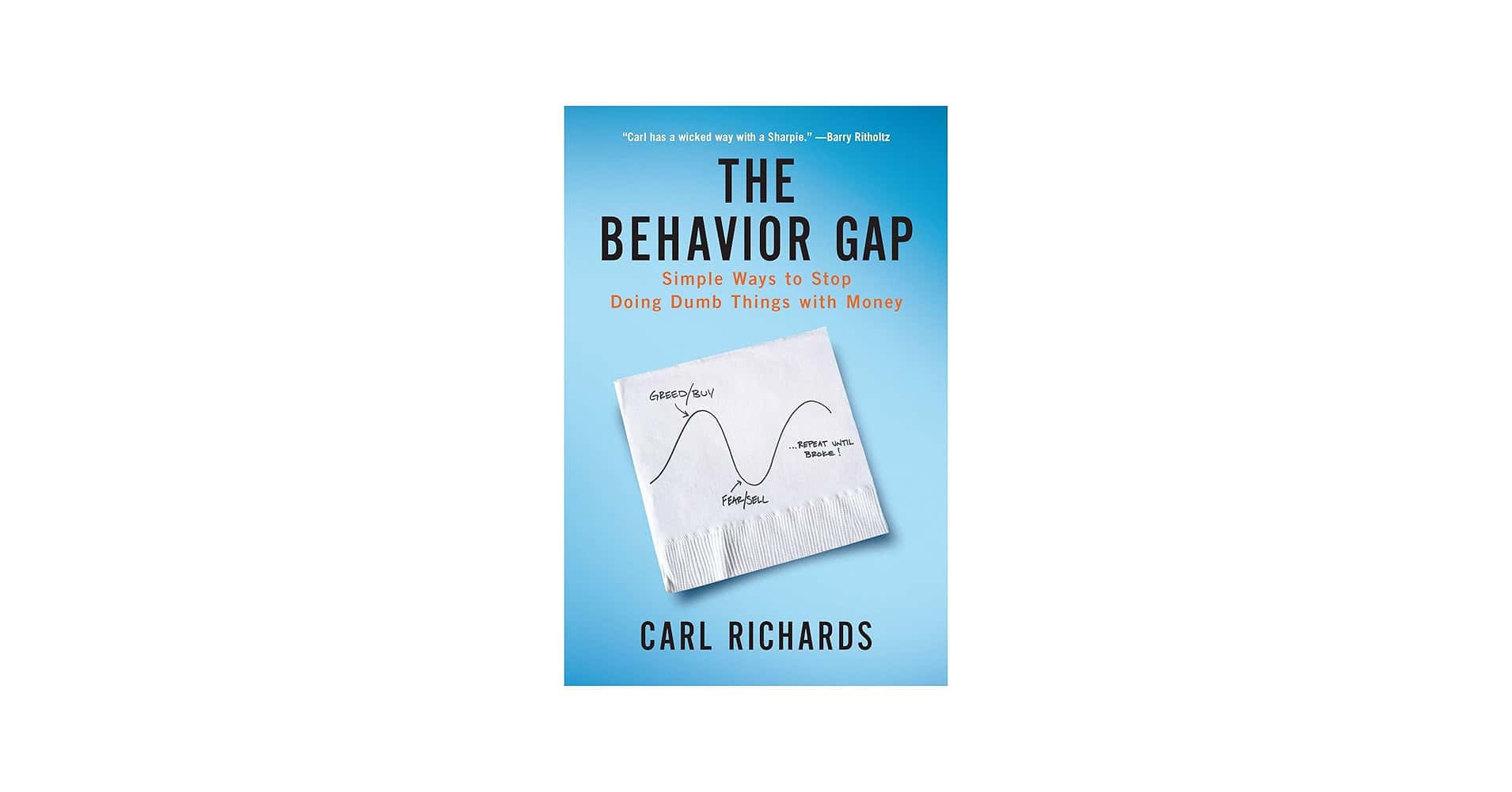
Conversely, during a market surge, the brain’s reward centers are flooded with dopamine. Pattern recognition, a key survival trait, suggests that if an asset has gone up for three days, it will continue to do so. This leads to “herding behavior,” where the fear of missing out (FOMO) overrides any rational valuation metrics. The emotional investor is thus trapped in a cycle of biological responses that encourage buying at the peak of euphoria and selling at the trough of despair.
Read also: Why smart people make poor money decisions: A COgnitive analysis
2. Why the Problem Persists Despite Experience
It is often assumed that after one or two market cycles, an individual would learn to remain calm. However, several structural factors ensure that emotional investing remains a persistent problem even for experienced professionals.
The Noise-to-Signal Ratio
Modern information technology has exacerbated the biological mismatch. In the past, feedback loops were slow. An investor might check their holdings once a month via a paper statement. Today, real-time price tracking and 24-hour news cycles provide a constant stream of high-intensity “noise.” Every price tick is a micro-feedback loop that triggers a tiny emotional response. Over time, this constant stimulation wears down cognitive reserves, making it harder to maintain a long-term perspective.
The Asymmetry of Loss Aversion
Research in behavioral economics, notably by Daniel Kahneman and Amos Tversky, demonstrates that the pain of a loss is psychologically twice as powerful as the pleasure of an equivalent gain. This asymmetry means that the negative emotional impact of a market downturn is not easily erased by subsequent gains. This “scarring” effect causes investors to become overly conservative at the wrong times, attempting to avoid the pain of loss even at the cost of failing to meet their long-term objectives.
3. Real-World Outcomes: The Cost of Reactivity
The impact of emotional reactivity extends far beyond personal brokerage accounts; it reshapes careers, business trajectories, and the ability to exercise autonomy.
- The Behavioral Gap: Statistical data from firms like Dalbar consistently show that the average individual investor significantly underperforms the broader market. This “gap” is not usually due to high fees or poor asset selection, but rather the timing of entries and exits. Emotional investors buy when they feel “safe” (when prices are high) and sell when they feel “scared” (when prices are low).
- Career Fragility: In a professional context, emotional decision-making often leads to “job hopping” or abandoning a business venture during a difficult quarter. Just as an investor might sell a stock at the bottom, a professional might leave a promising career path because of temporary friction, failing to realize the long-term benefits of “career compounding.”
- Reduced Time Horizons: Emotions act as a “time-constrictor.” Under stress, the human mind loses the ability to think in decades and begins thinking in days or hours. This shift prevents the execution of strategies that require years of gestation, such as building a brand, developing a complex skill, or benefiting from a long-term economic cycle.
4. The Core Mental Model: Second-Order Thinking
The primary tool for neutralizing emotional reactivity is Second-Order Thinking. ### Explaining the Model
First-order thinking is simplistic and superficial; it focuses on immediate results and obvious consequences. “I am afraid the market will go lower, so I will sell” is first-order thinking. It solves the immediate problem (fear) but ignores the subsequent consequences.
Second-order thinking is the practice of asking, “And then what?” It involves considering the long-term ramifications of a decision and the reactions of other actors in the system.
- First-Order: “The news is bad; I should sell my stocks.”
- Second-Order: “If the news is already public, it is likely priced in. If I sell now, I must decide when to get back in. What if the market recovers before I feel ‘safe’ again? I will have realized a loss and missed the recovery.”
Applying the Model to Emotions
Second-order thinking forces the individual to step outside the immediate emotional response. By focusing on the consequences of the emotional reaction, the brain is forced to engage the prefrontal cortex, effectively “cooling down” the limbic system. It shifts the focus from the feeling to the process.
5. Better Thinking in Practice: Principles of Structural Governance
To mitigate the influence of emotion, one must move away from “willpower” and toward “systems.” Willpower is a finite resource that fails under stress. Systems, or structural governance, are designed to function regardless of the actor’s emotional state.
1. The Separation of Decision and Execution
The most effective way to avoid emotional investing is to make decisions when emotions are neutral and execute them through automation.
- Systematic Rebalancing: Instead of deciding to sell when a portfolio feels “too risky,” an investor sets a predetermined rule: “Every six months, I will return the portfolio to its original weightings.” This forces the investor to sell what has gone up (selling high) and buy what has gone down (buying low) without requiring a “gut feel.”
2. Pre-Mortem Analysis
Before making a long-term commitment—whether in an investment, a business, or a career move—one should perform a “pre-mortem.” Imagine that five years have passed and the decision has failed. Why did it fail? By visualizing the failure in advance, the individual can identify the emotional triggers that might lead to a panic exit in the future. This builds “psychological calluses” against future volatility.
3. Focus on Incentives and Constraints
Rationality is often a matter of managing one’s constraints. If checking a portfolio every day causes emotional distress, the rational move is to remove the app from the phone. By managing the inputs (information flow), one manages the outputs (decisions).
6. Common Misunderstandings and Oversimplifications
A common error is the belief that the goal is to become “emotionless.” This is neither possible nor desirable. Emotions provide valuable signals about risk and alignment. The goal is not the absence of emotion, but the decoupling of emotion from action.
The Myth of the “Rational Actor”
Traditional economics often assumes humans are “Econs”—perfectly rational utility-maximizers. This is a dangerous oversimplification because it leads people to believe that if they are smart, they will naturally be rational. In reality, some of the most intelligent individuals are the most susceptible to emotional traps because they use their intelligence to rationalize their emotional impulses (e.g., creating a complex narrative to justify a panic sell).
Volatility vs. Risk
Emotional investors often confuse volatility (temporary price movement) with risk (permanent loss of capital). This confusion leads to the “volatility trap,” where an investor exits a position because the price is fluctuating, even if the underlying value of the asset remains unchanged. Understanding that volatility is the “price of admission” for long-term returns is a fundamental shift in perspective.
Read also: The Millionaire Next Door Summary: Are You a PAW or UAW? (The Wealth Formula)
7. Connection to Related Thinking Frameworks
The problem of emotional investing is deeply linked to other frameworks in decision science:
- Circle of Competence: Emotions often flare up when we operate outside our circle of competence. When we don’t understand why an asset is valuable, we have no anchor during a storm.
- Inversion: Instead of asking how to make money, ask “What would someone do to ensure they lose money over 20 years?” They would likely react to every headline and pay high fees for frequent trading. By inverting the problem, the path to wealth becomes a path of avoiding “stupid” emotional reactions.
- The Lindy Effect: This idea suggests that the longer a non-perishable thing (like an idea or a business) has survived, the longer it is likely to survive. Emotional investors often chase “new” and “disruptive” ideas (high dopamine), while ignoring “Lindy” assets that have proven their resilience over decades.
8. Conclusion: The Long-Term Perspective
The destruction of wealth through emotional investing is a tragedy of the “short-term self” sabotaging the “long-term self.” In the hierarchy of financial success, behavior sits at the base, supporting every other strategy. A person with a mediocre strategy and superior emotional control will almost always outperform a person with a brilliant strategy and poor emotional control.
The market, the economy, and the professional world are not interested in our emotional comfort. They are complex systems that reward those who can provide liquidity and stability when others are providing panic. To succeed over a 30-year horizon, one must view their own emotions as data points to be observed, rather than commands to be followed.
Ultimately, long-term reasoning is the act of maintaining a constant focus on the horizon, regardless of the weather in the immediate vicinity. By understanding the biological roots of our impulses and implementing structural systems to counteract them, we move from being victims of the “now” to being architects of our own long-term outcomes.
Would you like me to expand on the “Pre-Mortem” framework for professional decision-making, or perhaps explore how “Second-Order Thinking” applies specifically to career transitions and business scaling?