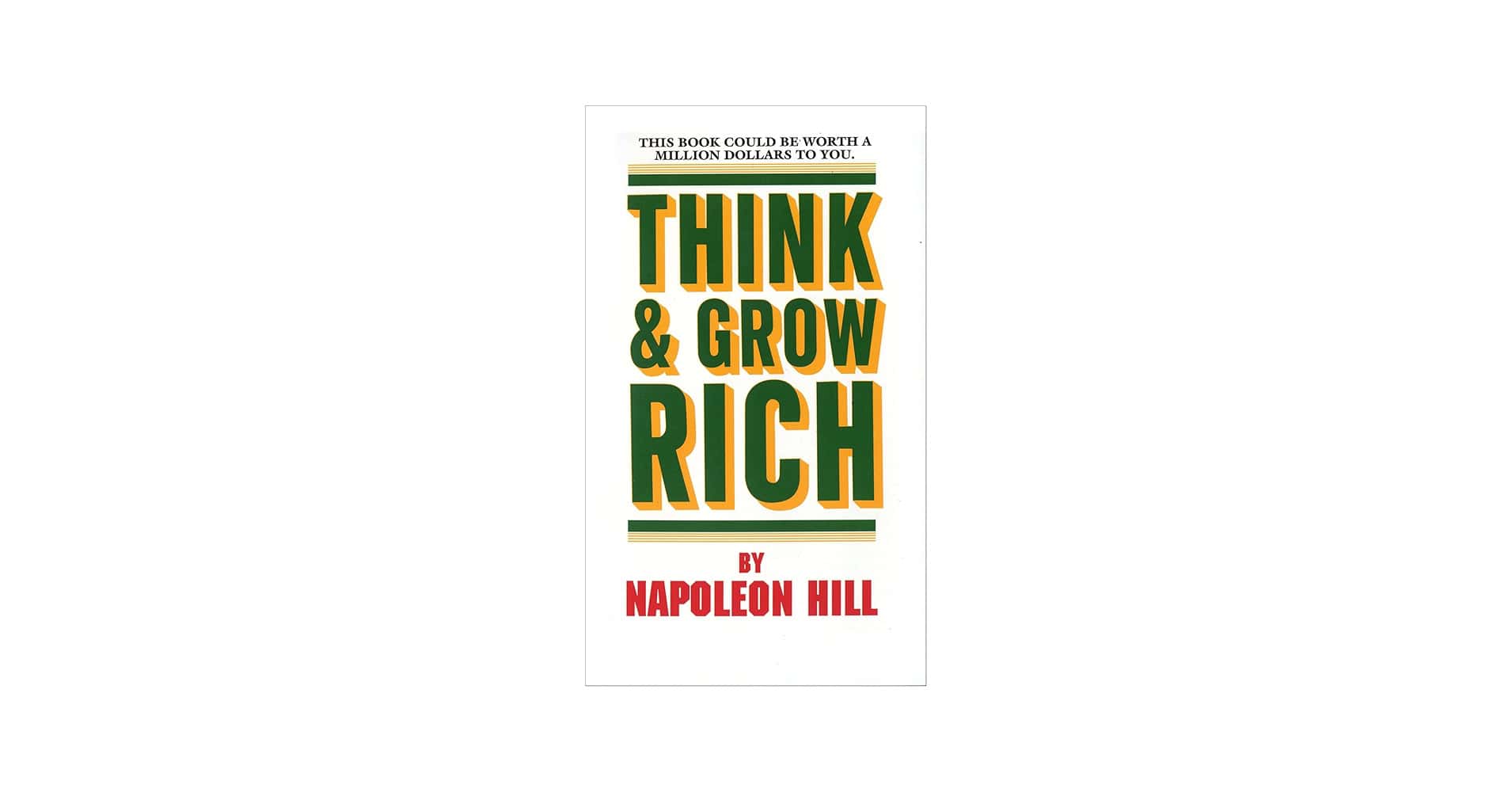
| THE SNAPSHOT | Strategic Executive Summary |
| Star Rating | 5/5 (The Foundational Architecture of Achievement) |
| One-Sentence Verdict | Financial and personal success is the measurable result of transmuting a definite thought into its physical equivalent through a rigorous psychological protocol of desire, faith, and persistence. |
| Best For | Entrepreneurs, high-performance athletes, knowledge workers, and those seeking to master their internal “broadcasting station.” |
| Difficulty | Medium (Requires decoding 1937 metaphysical language into 21st-century neuro-science). |
| Action Plan | Think and Grow Rich Book |
The following analysis bridges the historical lineage of Napoleon Hill’s 1937 masterpiece with the technological and psychological realities of 2026, providing a high-fidelity guide for the modern achiever.
——————————————————————————–
1. INTRODUCTION: THE CARNEGIE COMMISSION (The Hook)
To understand the pedigree of modern success literature, one must examine the 20-year research project that serves as the “source code” for the entire personal development industry. The genesis of Think and Grow Rich was not a creative whim, but a formal commission handed to Napoleon Hill by Andrew Carnegie, the Scottish-American steel magnate and then-richest man on Earth. Carnegie’s premise was revolutionary: he believed that success was a repeatable formula—a “textbook on individual achievement”—that could be taught to any person, regardless of their starting point in the social hierarchy.
Hill’s mission was to interview and analyze over 500 of the world’s most successful individuals, including Thomas Edison, Henry Ford, and Charles M. Schwab. This project took a quarter of a century to complete, documenting the transition of a debt-ridden society toward industrial dominance. Today, this work remains the foundational architecture for modern gurus like Tony Robbins and Bob Proctor. It is not a novel meant for entertainment; it is a clinical distillation of how the most powerful minds of the 20th century navigated the “University of Hard Knocks” to manifest billions.
——————————————————————————–
2. THE CENTRAL THEME: THOUGHTS ARE THINGS
The core philosophy of this Think and Grow Rich summary is Hill’s assertion that the human mind functions as a “broadcasting and receiving station” for the vibrations of thought. Hill posits that “Thoughts are Things”—tangible forces that, when mixed with definiteness of purpose and a burning desire, attract their physical counterparts.
The Pedigree of Burning Desire: Edwin C. Barnes
To illustrate this, Hill details the narrative of Edwin C. Barnes. Barnes possessed a “Burning Desire” to work with Thomas Edison, not merely for him. When the impulse first struck, he lacked the money to travel to New Jersey. Instead of quitting, he traveled via “blind baggage”—hitching a ride on a freight train—and presented himself at Edison’s laboratory. Edison later remarked that Barnes looked like an “ordinary tramp,” but the expression on his face conveyed a man who would “stake his entire future on a single turn of the wheel.” Barnes worked for years in menial roles, keeping his obsession alive, until he recognized an opportunity hidden in a failed office device: the Ediphone. He proved that an intangible impulse of thought can be transmuted into a multi-million dollar partnership through sheer “Bulldog determination.”
Decoding “The Secret”
Throughout the text, Hill references an unnamed “Secret” shared by Carnegie. For the modern student of BuildingTheMind.com, we can explicitly define this secret as the master formula for reality-manifestation: Burning Desire + Faith + Action. It is the realization that the mind magnetizes the circumstances, people, and resources necessary to achieve a “Definite Major Purpose.”
——————————————————————————–
3. THE 13 STEPS TO RICHES: A LOGICAL PROGRESSION
The Napoleon Hill 13 principles are organized into a logical progression that moves from psychological reprogramming to tangible execution.
Phase 1: The Preparation (Desire, Faith, Auto-Suggestion)
This phase is the “software update” for the human operating system.
- Desire: The starting point of all achievement. Hill outlines six practical steps for transmuting desire into gold, beginning with fixing the exact amount of money in the mind and determining exactly what one will give in return. There is no “something for nothing.”
- Faith: Defined as the “head chemist of the mind.” Hill explains that when faith is blended with thought, the subconscious picks up the vibration and translates it into its spiritual (and eventual physical) equivalent.
- Auto-suggestion: This is the bridge to the subconscious. By using specific auto-suggestion techniques—such as reading a written statement of one’s goals aloud twice daily—the individual manually programs their internal filters to prioritize information relevant to their success.
Phase 2: The Action (Specialized Knowledge, Imagination, Organized Planning)
This phase represents the “hardware” and the blueprint for the mission.
- Specialized Knowledge: Hill distinguishes between “general knowledge” (useless for wealth) and “specialized knowledge.” He uses the Henry Ford “push button” anecdote to explain that an educated man is not one with a head full of facts, but one who knows how to summon the knowledge he needs. Ford famously won a libel suit by proving he could answer any question by simply “pushing a button” to call a specialist.
- Imagination: The “workshop of the mind.” Hill defines two types: Synthetic Imagination (rearranging old concepts) and Creative Imagination (receiving “hunches” from Infinite Intelligence).
- Organized Planning: Riches are not the result of luck, but of “faultless, persistent plans.” Hill insists that the individual must form an alliance with others to ensure the plan is sound.
Phase 3: The Engine (Decision, Persistence, Mastermind)
These are the elements that provide the raw power and durability for the long haul.
- Decision: The Mastery of Procrastination. Hill analyzed over 25,000 failures and found “lack of decision” near the top of the list. Successful people reach decisions promptly and change them slowly.
- Persistence: This is the “carbon that turns the iron of character into steel.” Hill highlights the danger of “quittability” through the story of R.U. Darby. Darby’s uncle caught “Gold Fever” and quit digging just three feet from gold. A savvy junkman bought the machinery, hired a mining engineer to find the “fault lines,” and cleared millions. To further emphasize persistence, Hill recounts the “50-cent lesson,” where a small child in an Old Mill defied an adult’s orders and refused to leave until she received 50 cents, proving that a “no” is often just a test of one’s resolve.
- The Mastermind: The coordination of knowledge and effort in a spirit of harmony.
Phase 4: The Mystery (Sex Transmutation, Subconscious, Brain, Sixth Sense)
The final phase deals with the higher-order cognitive and energetic functions.
- Transmutation of Sexual Energy: Hill provides a sophisticated reinterpretation of primal drives. He argues that the transmutation of sexual energy involves redirecting the most powerful human emotion from physical expression into professional excellence and creative “flow states.”
- The Subconscious Mind: The connecting link between the finite mind and “Infinite Intelligence.”
- The Brain: A physical mechanism through which the mind interacts with “The Ether” (vibrations of thought).
- The Sixth Sense: The apex of the philosophy, achieved only after mastering the previous 12 steps, allowing for “Inspirations” and protection from unforeseen dangers.
——————————————————————————–
4. DEEP DIVE: THE MASTERMIND PRINCIPLE
Hill provides a specific mastermind group definition: “The coordination of knowledge and effort, in a spirit of harmony, between two or more people, for the attainment of a definite purpose.”
The “Billion-Dollar Speech” and 1+1=3
The most dramatic historical evidence for the Mastermind is the story of Charles M. Schwab. On December 12, 1900, Schwab delivered a “billion-dollar speech” at the University Club in New York. He presented a vision for a consolidated steel industry to J.P. Morgan. This speech—rooted in the Mastermind principle of collaborative excellence—resulted in the formation of U.S. Steel, a transaction valued then at roughly 600 million (22 billion in 2026 dollars). Hill explains that when two minds join in harmony, a “Third Mind” is created—a collective intelligence greater than the sum of its parts.
Read also: The Automatic Millionaire Summary: How to Get Rich Without a Budget (The David Bach Method)
2026 Contextualization: The Digital Mastermind
In today’s landscape, the Mastermind is not limited to physical boardrooms. The “1+1=3” effect is now amplified by digital synergy.
- Algorithmic Synergy: Use platforms like Discord, Slack, or Zoom to facilitate weekly “Harmony Sessions.”
- The Procedure: Members must present a “Definite Major Purpose” and allow the group to apply “Synthetic Imagination” to their plans.
- The Prerequisite: Hill’s concept of “Perfect Harmony” is non-negotiable. If ego or friction enters the group, the “Third Mind” is instantly neutralized.
——————————————————————————–
5. CONQUERING THE SIX GHOSTS OF FEAR
Before the “broadcasting station” of the mind can transmit success, it must be cleared of interference. Hill identifies fear as the primary paralyzing force of the human psyche.
The 6 Basic Fears
Hill lists the “Six Ghosts of Fear” derived from his research:
- The Fear of Poverty: The most destructive, as it paralyzes the faculty of reason and destroys ambition.
- The Fear of Criticism: This fear robs men of their initiative and destroys their power of imagination.
- The Fear of Ill Health.
- The Fear of Loss of Love.
- The Fear of Old Age.
- The Fear of Death.
Conquering the six ghosts of fear begins with addressing the Fear of Poverty. Hill identifies this as the first barrier to conquer because it creates a “Scarcity Mindset.” In 2026 terms, this is the activation of the amygdala, which keeps the brain in a survival state, preventing the higher-order prefrontal cortex from seeking “Abundance.” To move from poverty to riches, one must clip the word “Impossible” out of their internal dictionary.
——————————————————————————–
6. CRITICAL ANALYSIS: DOES IT WORK IN 2026?
A frequent criticism of Hill’s work is its reliance on “magical thinking” or archaic terms like “The Ether.” However, a Master Document Architect understands that Hill was simply describing the Reticular Activating System (RAS) decades before neurobiology gave it a name.
The Neurobiology of “The Ether”
The “Ether” of 1937 is the “Field Theory” and “Neuroplasticity” of today. When an individual sets a “Definite Major Purpose” (Step 1) and utilizes auto-suggestion techniques (Step 3), they are effectively programming their RAS. The RAS is a bundle of nerves in the brainstem that acts as a filter. Once a goal is emotionalized, the RAS begins to filter for opportunities, people, and resources that were previously “invisible.” What Hill called “magnetism” is actually the biological optimization of cognitive bias toward opportunity.
——————————————————————————–
7. PROS AND CONS: THE HISTORIAN’S VERDICT
Strategic Evaluation of Think and Grow Rich
| PROS (The Architecture of Power) | CONS (The 1937 Zeitgeist) |
| Foundation of All Success Literature: It remains the definitive blueprint used by modern leaders. | Archaic Scientific References: References to “The Ether” lack modern neuro-scientific precision. |
| Psychological Depth: Deeper exploration of the subconscious than 90% of contemporary “hustle culture” books. | Dated Social Context: Includes 1930s-era language and examples that may feel socially disconnected in 2026. |
| Actionable Frameworks: The “Six Steps to Riches” and “Self-Analysis Questionnaire” are timelessly practical. | Lack of Digital Strategy: Provides no guidance on modern digital leverage or algorithmic business models. |
——————————————————————————–
8. CONCLUSION: BEYOND THE BANK BALANCE
While the title suggests a focus on currency, Hill’s philosophy is much broader. “Riches” in this context include peace of mind, introspective harmony, and spiritual values. He suggests that material wealth is merely a tool for “freedom of body and mind.” The ultimate objective is to become the “Master of one’s Fate” by controlling the thought impulses that enter the mind.
As Hill famously concluded:
“Whatever the mind can conceive and believe, it can achieve.”
This is not a statement of magic, but a psychological truth regarding the power of a focused mind. When a burning desire is backed by a mastermind and persistent action, the individual becomes an irresistible force.
——————————————————————————–
9. CALL TO ACTION: YOUR DEFINITE MAJOR PURPOSE
Reading this Think and Grow Rich summary is merely the stage of “Potential Power.” To convert it into “Actual Power,” you must move into the Action Phase.
- Draft Your Statement: Write down your Definite Major Purpose. Be specific about the date and the amount.
- Apply Auto-suggestion: Read this statement aloud twice daily with the emotion of already possessing the goal.
- Form Your Mastermind: Identify two individuals this week who can offer the specialized knowledge you lack.
The rules of the race have changed in our post-depression, digital world, but the fundamental law of achievement remains: Riches begin with a state of mind.