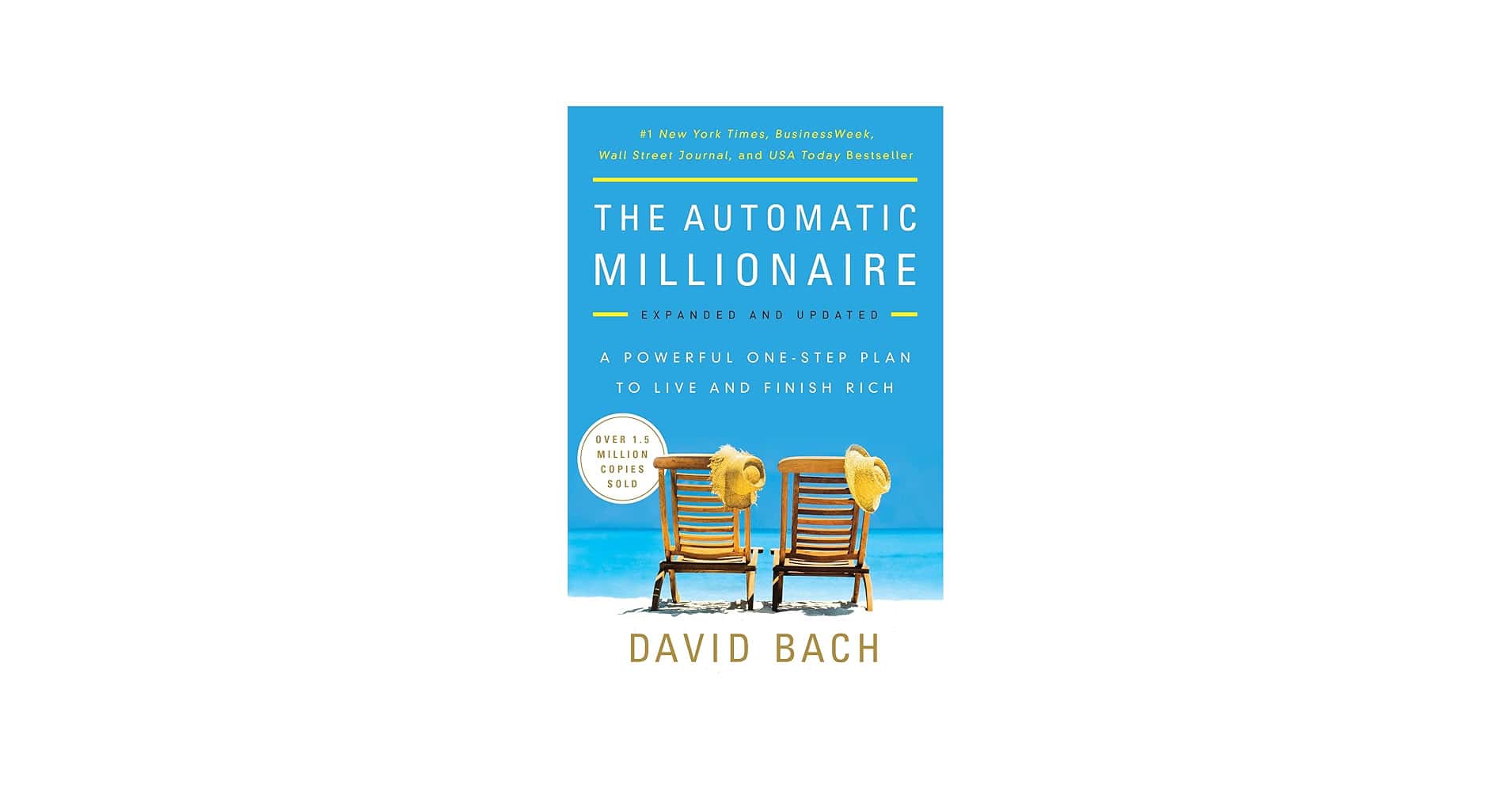
- Star Rating: 4.5/5
- One-Sentence Verdict: The definitive roadmap to building significant wealth by removing human error and the need for willpower through a totally automated financial system.
- Best For: Beginners, corporate employees, and anyone who has failed at traditional, restrictive budgeting.
- Difficulty: Very Easy.
- Buy Book: The Automatic Millionaire
——————————————————————————–
INTRODUCTION: The Secret of the “Average” Multimillionaires
Traditional financial advice often centers on a “Lottery Mindset”—the idea that wealth is something you either inherit, win, or achieve through a high-octane income. However, The Automatic Millionaire argues that income does not create wealth; a system does. Motivation is a finite resource that eventually wears off, but a system works while you sleep, regardless of your willpower.
The foundational evidence for this is the story of Jim and Sue McIntyre. On the surface, they were an average couple: Jim was a low-level manager and Sue was a beautician. Jim’s income never exceeded $53,946 in a single year. Yet, they retired debt-free in their early 50s with a net worth approaching $2 million.
Their wealth wasn’t an accident of the market; it was the result of a system. Their portfolio included:
- $610,000 in Jim’s 401(k)
- $72,000 in Sue’s retirement accounts
- $160,000 in municipal bonds
- $62,500 in cash and bank savings
- $775,000 in real estate holdings (two homes owned free and clear)
While 49% of Americans are waiting for a lottery win to secure their future, the McIntyres proved that wealth is accessible to anyone willing to replace “motivation” with “automation.” The first pillar of this system begins with the smallest daily habits.
——————————————————————————–
THE LATTE FACTOR: Finding Your Hidden Fortune
The “Latte Factor” is often misunderstood as a war on coffee. In reality, it is a strategic metaphor for cash flow. It illustrates that most people already earn enough money to be rich—they are simply “bleeding” it through small, unconscious daily expenditures.
| Daily Expense | Monthly Total | 40-Year Potential (10% + Match) |
| $5.00 (Latte & Muffin) | $150 | $1.2 Million – $1.7 Million+ |
| $10.00 (Juice & PowerBar) | $300 | $2.5 Million+ |
| $20.00 (Combined Habits) | $600 | $5 Million+ |
The goal isn’t to live a life of deprivation, but to find money you already have. Beyond the morning coffee, Bach identifies common culprits like bottled water, cigarettes, and “Jamba Juice” with “juice boosts.” By redirecting these small amounts into an automated investment account, you turn “small change” into a massive fortune. Once this money is found, it must be directed to the most efficient wealth-building vehicles.
Read this too: MONEY Master the Game Summary: Tony Robbins’ 7 Steps to Financial Freedom
——————————————————————————–
PAY YOURSELF FIRST… AUTOMATICALLY
The “Golden Rule” of wealth is to pay yourself first. Most people pay the government, the landlord, and the credit card company, then try to save whatever is left. This is a recipe for poverty because “income shrinkage” ensures that nothing is ever left.
To build wealth, you must understand the difference between the “Left Pocket” (Pre-tax) and the “Right Pocket” (After-tax):
- The Pre-tax Advantage: If you save a dollar in a 401(k) or IRA, you are saving it before the government takes a cut. With an employer match and compound interest, that dollar can grow to $1.38 in just one year.
- The After-tax Reality: If you wait to save what’s left after taxes, you are only putting roughly $0.77 to work for every dollar earned.
To determine your current standing, Bach uses a hierarchy of saving:
- Dead Broke: Saving 0% or spending more than you make.
- Poor: Spending everything you make.
- Middle Class: Saving 5–10% of gross income.
- Upper Middle Class: Saving 10–15% of gross income.
- Rich: Saving 15–20% of gross income.
- Super Rich: Saving 20% or more.
The Priority Sequence for Automation:
- 401(k) / 403(b): Prioritize the employer match—it is literally free money.
- IRA / Roth IRA: For those without company plans or looking to supplement them.
- Emergency Fund (The Security Basket): Aim for at least six months of expenses kept in a separate, automated “holding tank.”
——————————————————————————–
THE AUTOMATIC DEBT-FREE HOME: Bi-Weekly Power
Bach famously asserts that “Rent is dead money.” Homeownership is presented as the ultimate forced-savings vehicle and the fastest path to a six-figure net worth. The key is not just owning the home, but owning it debt-free.
The Bi-Weekly Strategy Math: By paying half of your monthly mortgage every two weeks, you align your payments with your bi-weekly paycheck. Because there are 52 weeks in a year, this results in 26 half-payments, or 13 full payments per year.
- The Result: A 30-year mortgage is typically slashed to roughly 22 years.
- The Savings: On an average home, this saves over $100,000 in interest.
Beware the “Banking Scam”: Do not try to do this manually. When you send manual extra payments, many banks hold the funds in a non-interest-bearing “suspense account” instead of immediately applying them to your principal. To ensure your money works for you immediately, use automated services like PayMap or an Equity Accelerator.
——————————————————————————–
THE “NO-BUDGET” BUDGET: Freedom Through Systems
Most budgets fail because they require constant discipline—a “hamster on the hamster cage” effort that eventually leads to burnout. Bach proposes a paradigm shift: if your savings are deducted before you ever see your paycheck, you don’t need a budget.
- Discipline-Based Saving: Requires manual tracking and high emotional labor. It fails when life gets busy.
- Automatic Millionaire System: “Set it and forget it.” Since wealth-building is handled at the source, the money that hits your checking account is yours to spend guilt-free.
——————————————————————————–
CRITICAL ANALYSIS: Is the Latte Factor Still Relevant?
A common modern critique of Bach’s philosophy is that “skipping coffee” isn’t enough to combat rising housing and education costs. However, this misses the psychological point: The Latte Factor is the entry point for the habit of saving. It proves to the skeptic that they are, in fact, capable of building a surplus.
In the current landscape, modern technology has made Bach’s vision even more accessible. Apps like Acorns or Wealthfront allow for micro-investing and automated “round-ups,” which are the technological evolution of the Latte Factor. In 2026, the principle remains: he who automates first, finishes rich.
——————————————————————————–
PROS AND CONS: A Strategic Evaluation
| Pros | Cons |
| Emotion-Proof: Automation removes human error and the temptation to spend. | 2026 Housing Realities: “Rent is dead money” advice is difficult in high-cost cities; requires aggressive brokerage automation as a substitute. |
| Tax Efficiency: Deep focus on protecting wealth from “income shrinkage” through pre-tax accounts. | Optimistic Returns: 10% market return expectations may be high for conservative modern portfolios. |
| Authority and Math: Relatable stories (The McIntyres) combined with “aha!” math makes wealth feel attainable. | Simplicity: May lack the nuance required for high-net-worth tax strategies or complex estate planning. |
——————————————————————————–
CONCLUSION: The Secret to Keeping More
The core thesis of David Bach’s method is simple: Wealth is not about how much you earn; it’s about how much you keep—automatically. By removing yourself from the “loop” of decision-making, you ensure that your future self is taken care of regardless of your daily willpower.
To begin this journey, you must answer the “Finish Rich Clarity Question”:
“What one thing must happen this year for you to feel you’ve made great financial progress?”
Whether the answer is paying off a credit card, building an emergency fund, or buying your first home, the solution is the same: take yourself out of the equation and automate the first step today.
——————————————————————————–
CALL TO ACTION (CTA): Set It and Forget It
Stop being a “wannabe” and become a “doer.” Follow this checklist to start your automatic journey today:
- Identify Your Latte Factor: Find 5–10 of daily unconscious spending and redirect it.
- Pay Yourself First: Sign up for your 401(k) or IRA. If you are already enrolled, increase your contribution by 1% today.
- Automate Your Home: Contact your lender about a bi-weekly payment plan to save $100k+ in interest.
- Leverage Technology: Use modern automated investing apps to bridge the gap between these principles and your daily life.