

Medical Bills Are Confusing by Design — Here’s How I Finally Understood Mine
The confusion isn’t your fault, and it costs real money. Here’s how tracking my healthcare expenses turned overwhelm into clarity — and control.
If you’ve ever stared at a medical bill and felt a mix of confusion, anxiety, and helplessness, you are not alone, and you are not the problem. Medical billing — especially in the US system — is genuinely, bewilderingly complex. Deductibles, copays, coinsurance, out-of-pocket maximums, “your insurance paid this, you owe that,” bills that arrive months apart for the same visit, EOBs that don’t match the bill. It can feel deliberately opaque. For a long time, I just paid what I was told and hoped it was right. Learning to track medical expenses properly changed that — not by making me a billing expert, but by giving me a clear enough picture to understand my costs, catch mistakes, and stop feeling helpless. Here’s what helped.
The confusion is real (and expensive)
Let me start by validating the feeling: healthcare costs are objectively hard to understand. There are multiple moving parts that interact in non-obvious ways, bills and insurance statements that arrive separately and don’t obviously reconcile, and terminology most of us were never taught. Feeling overwhelmed by it isn’t a personal failing — it’s a rational response to a genuinely confusing system.
And that confusion has a cost. When you don’t understand your medical bills, you can’t tell if they’re correct. You might pay a bill your insurance should have covered, miss that you’ve hit your deductible, or overlook money you’re owed. The opacity works against you financially. Which is exactly why getting even a little clarity is so valuable — not to master the system, but to stop it quietly costing you.
Clarity starts with seeing it all in one place
The single most helpful thing I did was gather all my healthcare costs into one place: every bill, what was billed, what insurance paid, and what my actual share was. That’s it. But seeing it together — instead of as a scattered pile of bills and statements arriving at random — changed everything.
Suddenly I could see the whole picture: my total spending, what I’d actually paid, what I still owed, and how it all fit together. The overwhelm of individual confusing bills became a single, understandable overview. I wasn’t decoding each bill in isolation anymore; I was looking at my healthcare finances as one organized thing. That shift, from scattered chaos to one clear view, is where the anxiety started to lift.
Knowing where you stand on your deductible
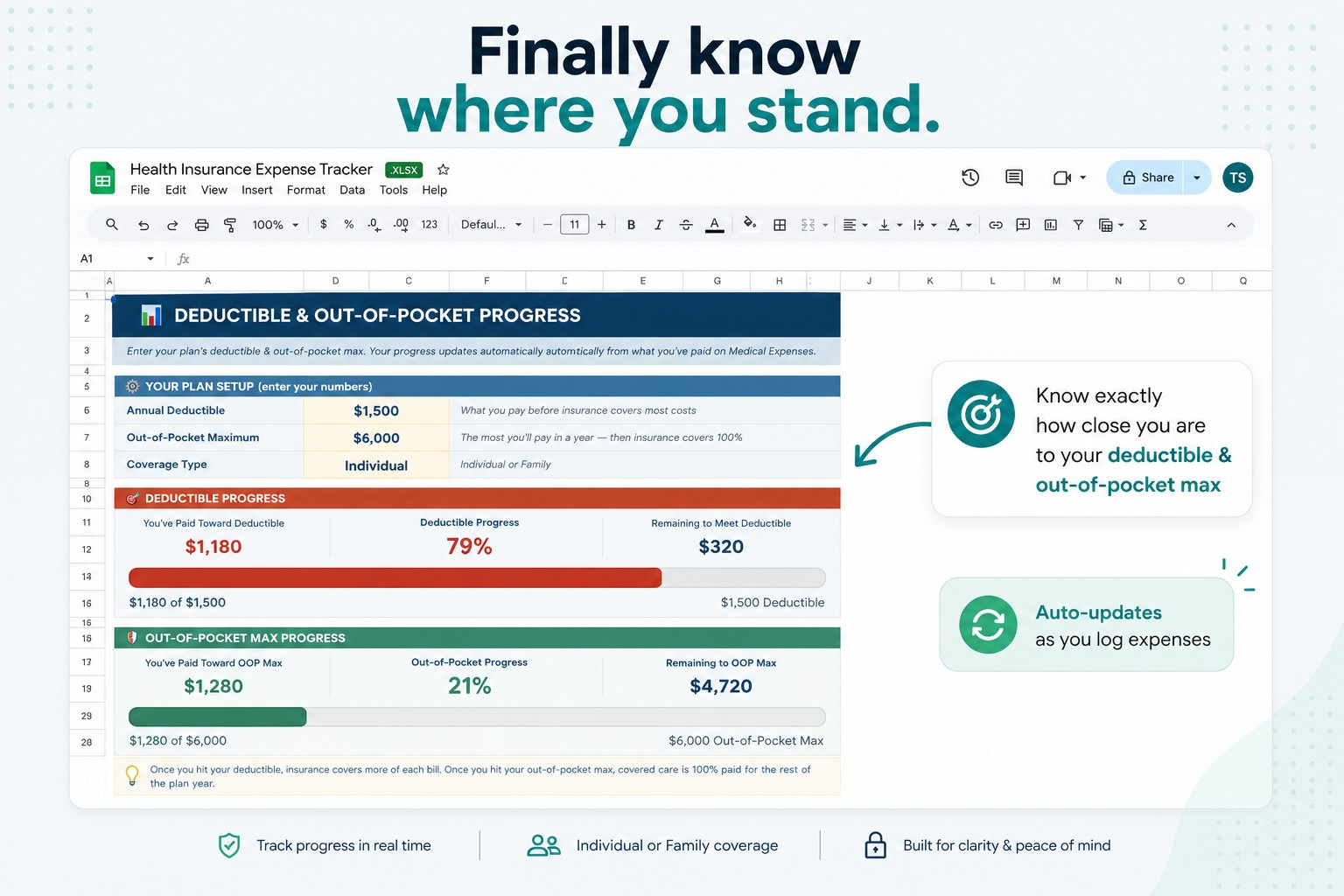
One of the most practically useful things to track is your progress toward your deductible and out-of-pocket maximum. These numbers matter enormously — once you hit your deductible, your costs often change significantly; once you hit your out-of-pocket max, covered costs may be fully covered. But most people have no idea where they stand until they get a bill.
Tracking your spending against these thresholds tells you where you are. That’s genuinely useful for decisions: if you’re close to meeting your deductible, you might handle certain planned care differently; if you’ve hit your out-of-pocket max, you know covered care shouldn’t cost you more. Knowing your position turns you from a passive recipient of bills into someone who understands their own situation. (Of course, the exact rules are in your plan documents and are the authoritative source — tracking helps you see your progress, but always confirm specifics with your insurer.)
Tracking helps you catch errors
Here’s something worth knowing: medical billing errors are common. Bills can be wrong, insurance can be misapplied, you can be charged for things you shouldn’t be. When you’re just paying whatever bill arrives, you’ll never catch these. When you’re tracking — comparing what you expected against what you’re billed, checking bills against your insurance statements (EOBs) — discrepancies become visible.
I’ve caught bills that didn’t match my EOB, charges that looked wrong, and amounts that didn’t add up. Simply having a record to compare against turned “I guess I owe this” into “wait, this doesn’t match — let me question it.” You don’t need to be an expert to catch an error; you just need enough organization to notice when something doesn’t line up. And catching even one billing error can save real money.
This is about control, not more worry
I want to be careful here, because for many people — especially anyone managing a chronic condition or a family’s ongoing care — medical costs are a genuine source of stress. The goal of tracking is not to make you fixate anxiously on healthcare spending. It’s the opposite: to replace the low-grade dread of confusing, unpredictable bills with a sense of calm control. Knowing where you stand is almost always less stressful than not knowing. Organization here is a way to take some power back from a system that can feel powerless, and to make sure it isn’t costing you more than it should.
An important note
Please hear this clearly: tracking your healthcare costs is a personal-organization tool — it is not medical, insurance, tax, or financial advice. Your tracked figures are your own estimates for your clarity. For anything official — what you actually owe, what your plan covers, disputing a bill — rely on your official plan documents, your bills, your EOBs, and contact your insurer directly. And for medical or financial decisions, consult the appropriate qualified professional. Use organization to understand and to ask better questions; rely on official sources and professionals for the answers.
If you want a way to organize it
I built a health expense tracker in Google Sheets to make exactly this manageable — log each bill and your share, see your progress toward your deductible and out-of-pocket max, track prescriptions, HSA/FSA, and reimbursements, all in one calm view:
👉 Health Insurance Expense Tracker for Google Sheets & Excel
Whether you use mine or build your own, gather your healthcare costs into one place. You don’t have to become a billing expert — you just need enough clarity to understand your situation, catch what’s wrong, and feel less at the mercy of a confusing system. That clarity, and the calm and savings it brings, is worth the small effort.
This is a personal-organization perspective — not medical, insurance, tax or financial advice. Rely on your official plan documents, bills and EOBs and contact your insurer for anything official. Has tracking ever helped you catch a medical billing error? Share your experience in the comments.

