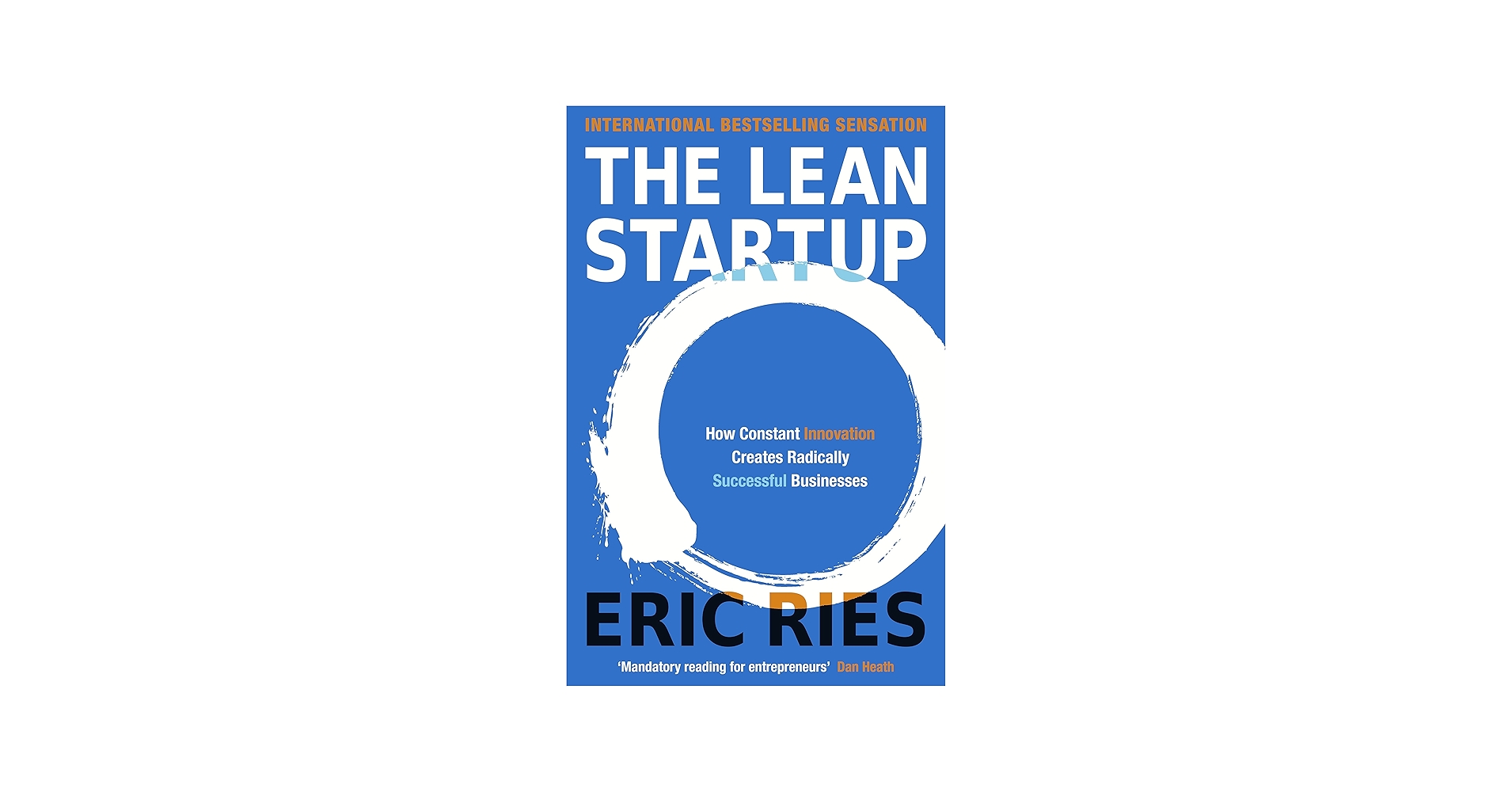
1. The Executive Snapshot
| Metric | Value |
| Star Rating | 4.8/5 — The Silicon Valley Bible |
| One-Sentence Verdict | A rigorous, scientific management framework for engineering successful businesses under conditions of extreme uncertainty by treating vision as a series of testable hypotheses. |
| Best For | Tech founders, SaaS builders, product managers, and corporate “intrapreneurs” looking to scale innovation. |
| Difficulty Rating | Medium. The concepts are conceptually simple but require the brutal discipline to abandon “Success Theater” in favor of cold, hard data. |
Transition: This snapshot provides the high-level “what,” but as any battle-hardened founder knows, the “how” is where most ventures bleed out. To build a sustainable business, we must first stop the hemorrhaging of capital on products destined for the graveyard.
——————————————————————————–
2. Introduction: The Brutal Reality of Startup Failure
In the traditional corporate world, we are taught that success is the byproduct of a “great plan,” a solid strategy, and exhaustive market research. However, in the startup ecosystem—an environment defined by volatility—this “rocket ship” approach to planning is not just obsolete; it is a death sentence. Most startups don’t fail because of poor engineering or lack of effort. They fail because they spend months or years of their lives building high-quality, technically sophisticated products that nobody actually wants. They achieve “failure successfully”—rigorously executing a plan that was fundamentally flawed from day one.
Eric Ries, drawing from his own failures at companies like Catalyst and his eventual success at IMVU, offers a sharp, inclusive definition of a startup: “A human institution designed to create a new product or service under conditions of extreme uncertainty.” This isn’t just for kids in a garage; it applies to any team, including those within a Fortune 500 company, that is tasked with discovering a new source of value. If you are operating under uncertainty, you cannot use 20th-century management tools designed for a stable, predictable environment. Traditional ROI projections and 18-month roadmaps are lethal weapons used by CFOs to murder innovation in its crib.
The core thesis of The Lean Startup is a fundamental paradigm shift: The startup is an experiment. It is not a miniature version of a large corporation. Treating a startup as a scientific inquiry allows us to move past the “just do it” chaos of undisciplined builders and the “analysis paralysis” of traditional planners. We are entering the “Management 2nd Century,” where the ability to learn faster than the competition is the only sustainable advantage.
Transition: To move from this theoretical vision to tactical reality, the first tool in our arsenal is the Minimum Viable Product (MVP)—the primary vehicle for testing assumptions before the runway disappears.
Read also: Why Long-Term Thinking Is Rare but Valuable
——————————————————————————–
3. The Minimum Viable Product (MVP): Validation Over Perfection
The Minimum Viable Product (MVP) is the most bastardized and misunderstood concept in the Lean methodology. Too many founders use it as an excuse for sloppiness, shipping “half-baked” garbage and wondering why it fails. An MVP is not about building a low-quality product to save money; it is a deliberate strategy to begin the process of Validated Learning as quickly as possible.
| What an MVP IS | What an MVP IS NOT |
| The fastest way to move through the Build–Measure–Learn feedback loop. | A low-quality version of the final product to save on costs. |
| A tool to test fundamental business hypotheses (Value and Growth). | Just a prototype for internal technical testing. |
| A product designed for “early adopters” who fill in missing features with imagination. | A product designed for the mass market or “late majority.” |
| A disciplined release that yields validated insight about the customer. | A “sloppy” or undisciplined release without metrics. |
Genchi Gembutsu: Go and See for Yourself
Before even building an MVP, a founder must practice Genchi Gembutsu, a Toyota principle meaning “Go and see for yourself.” Strategy must be based on firsthand knowledge. Take Yuji Yokoya, the chief engineer of the Toyota Sienna. To understand the American minivan market, he didn’t sit in an office in Japan; he drove 53,000 miles across every U.S. state and Canadian province. He discovered that children “rule” the minivan, leading to interior comfort features that drove a 60% sales increase. Startups must do the same: get out of the building and find your “customer archetype.”
Real-World MVP Archetypes
- The Smoke Test / Landing Page: Nick Swinmurn, the founder of Zappos, didn’t build a warehouse or an e-commerce backend to test if people would buy shoes online. He went to a local mall, took photos of shoes, and posted them on a simple site. When a customer ordered, he bought them at retail and mailed them. He validated the Value Hypothesis for less than the price of a dinner.
- The Video MVP: Dropbox faced a massive technical challenge in 2007: seamless file syncing across all platforms. Rather than spending years on code that might fail, Drew Houston created a 3-minute video demo. It was filled with “in-jokes” for tech early adopters and caused their beta waiting list to jump from 5,000 to 75,000 overnight. The demand was validated before the code was written.
- The Concierge vs. Wizard of Oz MVP:
- Concierge MVP: Manual fulfillment is visible to the customer. Food on the Table (a meal-planning service) began with the CEO personally visiting a single customer to hand-deliver recipes and shopping lists, learning her preferences by hand before writing a single line of code.
- Wizard of Oz MVP: The customer thinks they are interacting with an automated system, but humans are doing the work behind the curtain. Arvark (social search) used human operators to find answers for users in the background to test the engagement of social search before building the AI.
Transition: The MVP is the entry point, but it is merely the first turn of the engine. To steer toward success, we must enter the Build–Measure–Learn feedback loop.
Read also: The Strategic Calculus of Long-Term Compounding
——————————————————————————–
4. The Build–Measure–Learn Feedback Loop: The Engine of Steering
In a startup, Learning Velocity is the only metric of productivity that matters. If you are building a product that nobody wants, it doesn’t matter if you are doing it “on time and on budget.” You are just becoming efficient at producing waste. The Build–Measure–Learn feedback loop is the central mechanism for steering a startup toward its vision.
The Three Phases of the Loop:
- Build: Create the smallest possible experiment (the MVP) to test a “leap of faith” assumption.
- Measure: Use Innovation Accounting to see how customers respond. Move beyond “Success Theater” and look at real-world behavior.
- Learn: Decide whether to Pivot (change strategy) or Persevere (keep tuning).
The Two Core Hypotheses
The loop must test two fundamental assumptions:
- The Value Hypothesis: Does the product really deliver value to customers once they use it? (e.g., Facebook’s high engagement: over 50% of users returned daily from the start).
- The Growth Hypothesis: How will new customers discover the product? (e.g., Facebook’s viral takeover: 3/4 of Harvard students joined within the first month with zero marketing spend).
The primary competitive advantage of a startup is the ability to minimize the total time through this loop. Traditional “Waterfall” development leads to a “Big Bang” release that often hits a brick wall of customer indifference. By shrinking the batch size of work, you find the flaws in your strategy months or years earlier.
Transition: To navigate this loop effectively, we need a new way to measure progress—one that doesn’t involve the “pretty” numbers that lead to disaster.
——————————————————————————–
5. Validated Learning and Innovation Accounting
Traditional accounting (ROI, market share, revenue projections) is a lethal distraction in early-stage ventures because it is designed for businesses with a long operating history. Startups have no history. Validated Learning rehabilitates the concept of “learning” by making it the “unit of progress” for startups.
The Three Steps of Innovation Accounting:
- Establishing the Baseline: Use your MVP to get real data on your current status. If your business model requires a 10% conversion rate but your MVP shows 0.1%, that is the “hard truth” baseline you must face.
- Tuning the Engine: Conduct micro-experiments to move metrics toward the ideal. This involves split-testing features to see which specific change moves the needle.
- The Decision Point (Pivot or Persevere): After several attempts at tuning, if the metrics aren’t moving toward the ideal, the strategy is flawed. This is where you decide to pivot.
The Audacity of Zero
One of the greatest dangers in a startup is the “Audacity of Zero.” It is often easier to raise money when you have zero revenue, zero customers, and zero traction because zero invites imagination. As soon as you have a “small number” (e.g., $300 in revenue), people ask, “Will this ever be a big number?” This creates a perverse incentive to postpone shipping to avoid the “small number” reality check. Innovation Accounting is the antidote, proving that progress is happening even when the gross numbers are small.
Transition: To account for innovation correctly, you must distinguish between the numbers that make you look good and the numbers that help you make decisions.
Read also: Why Working IN Your Business Is Slowly Destroying It
——————————————————————————–
6. The Metric Trap: Vanity Metrics vs. Actionable Metrics
Most startups fall into the trap of “Success Theater”—using data to look successful to investors and themselves while the business is actually stalling. This is driven by an obsession with Vanity Metrics.
| Vanity Metrics (The Trap) | Actionable Metrics (The Truth) |
| Total Registered Users: A cumulative number that always goes up, hiding churn. | Cohort Retention: What percentage of users who joined last week are still active? |
| Page Views / Hits: High numbers that don’t correlate to actual value creation. | Conversion Rates: The percentage of users who take a specific, value-creating action. |
| Total Revenue: Can be “juiced” by one-time marketing spend or PR stunts. | CAC vs. LTV: Is the cost to acquire a customer lower than their lifetime value? |
The IMVU Lesson: The Waste of Interoperability
In the early days of IMVU, the team spent months building an “IM add-on” that required interoperability across eight different instant messaging networks (AOL, MSN, Yahoo, etc.). They thought this “network effect” strategy was brilliant. However, by spending $5/day on Google Ads to bring in 100 new users daily, they performed a Cohort Analysis. They discovered a brutal truth: despite adding dozens of new features every week, the conversion rate was stuck at 1%. Customers didn’t want an “add-on”; they wanted a standalone network to make new friends. All that engineering work on interoperability was massive waste—thousands of lines of code thrown in the trash because they hadn’t validated the Value Hypothesis first.
The Three A’s of Metrics
To ensure metrics actually lead to learning, they must be:
- Actionable: A report must demonstrate clear cause and effect. If the numbers go up, you need to know why so you can replicate it.
- Accessible: Reports should be simple enough for every employee to understand. Metrics are people; use cohort analyses that show real human behavior.
- Auditable: We must be able to test the data by hand. If a report says we have 1,000 customers, we should be able to pull up 1,000 records and verify them.
Transition: When the actionable metrics refuse to move despite constant “tuning,” the startup has reached the most difficult moment in its journey: the decision to change course.
——————————————————————————–
7. Strategic Adaptation: Pivot or Persevere
Startups that have enough traction to stay alive but not enough to succeed are in the “Land of the Living Dead.” They consume capital and human passion without ever achieving liftoff. The antidote is the Pivot. A Pivot is a “structured course correction” designed to test a new fundamental hypothesis. It keeps one foot rooted in what was learned while changing the strategy.
Catalog of Pivot Types:
- Zoom-in Pivot: A single feature becomes the entire product (e.g., Voden refocusing on lobbying).
- Zoom-out Pivot: The entire product becomes a single feature of a much larger product.
- Customer Segment Pivot: The product is right, but the customer is wrong (e.g., switching from B2C to B2B).
- Platform Pivot: Changing from an application to a platform (or vice versa).
- Value Capture Pivot: Changing how the company makes money (the monetization model).
- Channel Pivot: Changing how the product reaches the customer (e.g., selling direct instead of through retail).
Case Study: Voden and the 12-Month Grind
David Binetti’s company, Voden, started as a social network for voters. The metrics were dismal: a 4% referral rate and 5% retention. Instead of “achieving failure successfully,” David used Validated Learning.
- Zoom-in Pivot: He realized users liked the “lobbying” aspect but hated the social network. He created “At2Gov,” a social lobbying tool.
- Customer Segment Pivot: He moved from targeting individual activists to targeting large organizations.
- Platform Pivot: He finally built a self-serve platform for anybody to run campaigns. Each pivot was faster than the last because he was learning what didn’t work. This is the definition of Runway: not how many months of cash you have, but how many Pivots you have left.
Transition: While the methodology is powerful, a pragmatic coach must evaluate its limitations.
Read also: Why Financial Education Changes Behavior
——————————————————————————–
8. The Critical Critique: Pros and Cons of Lean
Applying the Lean Startup methodology is a discipline, not a silver bullet. It can be misapplied by those looking for shortcuts.
The Strengths (Pros):
- Massive Reduction of Wasted Capital/Time: By failing fast and early, you preserve resources for the ideas that actually work.
- Disciplined Experimentation: It replaces “gut feel” with a rigorous scientific method, making decision-making objective.
- Organizational Adaptability: It builds companies designed to learn, making them resilient to market shifts.
The Risks/Cons (Risks):
- Misapplication as “Launching Sloppy”: Many founders use “Lean” as an excuse to ship low-quality work that damages customer trust. Remember: if you don’t know who the customer is, you don’t know what quality is.
- The “Analysis Paralysis” Trap: Over-testing every minor variable can lead to a loss of the “True North” vision.
- Brand Damage: For established companies, launching an MVP that doesn’t meet brand standards can alienate their existing customer base. This is often solved by using a sub-brand or “stealth” launch.
Transition: Despite these risks, the core directive remains the same for any modern innovator.
——————————————————————————–
9. Conclusion: Learning as a Competitive Advantage
In the 21st-century economy, the ability to build a product is no longer the bottleneck. Almost anything we can imagine, we can build. The real question is no longer “Can this be built?” but “Should this product be built?” and “Can we build a sustainable business around it?”
In a world defined by extreme uncertainty, the only sustainable competitive advantage is the ability to learn faster than the competition. If you can get through the Build–Measure–Learn feedback loop more times than your rival, you will find the path to success while they are still arguing over their 18-month “rocket ship” plan. Stop wasting your life building things that nobody wants.
Coach’s Directive:
- Stop Over-Planning: Your business plan is a set of “leaps of faith,” not facts. Treat them as such.
- Start Testing: Identify your riskiest assumption—the one that, if false, makes everything else irrelevant—and build an MVP to test it this week.
- Prioritize Validated Learning: If a project doesn’t lead to a validated insight about a customer, it is waste. Cut it.
Face the data, find your “True North,” and start building something that people actually want.
——————————————————————————–