

Reactive maintenance is the most expensive way to own property. Here’s how switching to preventive maintenance saved me money — and a lot of stress.
I learned the true cost of putting things off the hard way. A small service on a water heater — a $120 job I kept meaning to schedule — sat on my mental to-do list for months. Then one morning the water heater failed, took some flooring and a cabinet with it, and the “later” I’d been avoiding turned into a $1,200 emergency, plus the hassle of tenants without hot water and contractors on short notice. That single experience converted me completely to preventive maintenance. Here’s why reactive maintenance quietly drains property owners, and how getting ahead of repairs saves real money.
Reactive maintenance is the expensive default
Most property owners, myself included for years, run on reactive maintenance: you wait until something breaks, then fix it. It feels efficient — why spend money on something that isn’t broken yet? But it’s actually the most expensive way to maintain a property, for a few reasons.
First, small problems become big problems when ignored. A minor leak becomes water damage. A worn part fails and takes other components with it. The cheap early fix, skipped, becomes the expensive late one. Second, emergencies cost more than planned work — emergency call-outs, rush fees, and whatever collateral damage the failure caused. Third, breakdowns happen at the worst times, disrupting tenants and forcing rushed, expensive decisions. Reactive maintenance isn’t saving money by waiting; it’s deferring a smaller cost into a larger one, plus stress.
Preventive maintenance flips the math
Preventive maintenance means doing routine upkeep on a schedule before things break — servicing the HVAC, flushing the water heater, checking the roof, cleaning the gutters, whatever each property needs, at regular intervals. It costs a little, regularly, to avoid costing a lot, occasionally.
The math strongly favours prevention. That $120 service, done on schedule, would have caught the water heater’s issue early — or at least replaced it on my terms, not during a flood. Across a property or a portfolio, the pattern repeats: modest, predictable preventive costs replace unpredictable, expensive emergencies. You trade a series of small known expenses for the avoidance of large unknown ones. Over the years, that trade saves serious money and enormous hassle.
The real problem: remembering to do it
Here’s the catch, and it’s why so many owners know preventive maintenance is smart but don’t actually do it. Preventive tasks are easy to forget. They’re not urgent — nothing is broken — so they slide. “Service the HVAC every six months” is a great intention that quietly evaporates when there’s no system reminding you it’s due. The failure isn’t usually a lack of knowledge; it’s a lack of a reliable reminder.
That’s exactly what got me. I knew the water heater needed servicing. I just had no system flagging that it was overdue, so it stayed out of sight until it failed. The gap between knowing and doing is where reactive costs sneak back in.
The fix: a schedule that flags itself
What finally made preventive maintenance stick for me was a system that tracks it automatically. I set each recurring task’s frequency once — this every six months, that every year — along with when I last did it, and the system calculates the next-due date and flags anything overdue or due soon. No more relying on memory. The schedule tells me what needs attention, when.
That single change moved me from reactive to preventive for good. I’m not trying to remember dozens of intervals across multiple properties; I glance at a dashboard and see what’s due. The tasks get done because they’re visible, and because they’re done, the emergencies mostly stop happening. Prevention only works if you actually do it — and you only do it reliably if something reminds you.
If you want a system that does the remembering
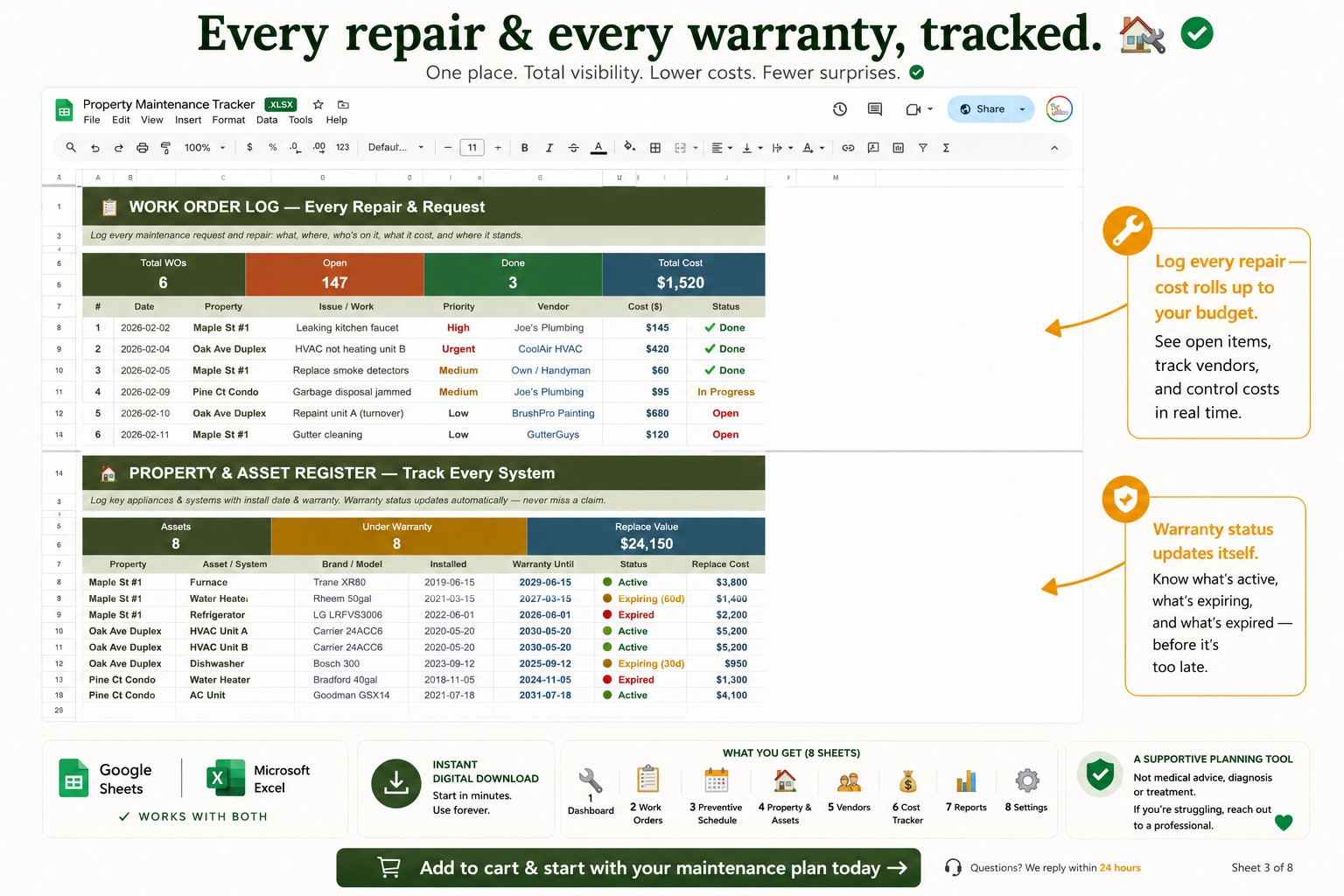
I built my own property maintenance tracker in Google Sheets around exactly this — set each preventive task’s frequency and last-done date, and it auto-calculates next-due dates with overdue and due-soon flags, alongside a work order log, warranty tracking, vendor directory, and cost-versus-budget tracking, across every property:
👉 Property Maintenance Tracker for Google Sheets & Excel
Whether you use mine or build your own, get your preventive maintenance onto a schedule that flags itself. The $120 job done on time is one of the best investments in property ownership — and vastly cheaper than the $1,200 emergency it prevents. Preventive genuinely beats reactive, but only if you have a system that makes sure it happens.
This is my own experience and an editable record-keeping template — not professional maintenance advice. Service intervals are general guidance; always follow manufacturer instructions and local codes, and use licensed professionals where required. What’s the repair you put off that came back to bite you? Tell me in the comments.

